Rabu, 18 Desember 2019

It's sizzling: Australia experiences hottest day on record - NBCNews.com

SYDNEY — Australia experienced its hottest day on record on Wednesday and temperatures are expected to soar even higher as heatwave conditions embrace most of the country.

The Australian Bureau of Meteorology said the average temperature across the country of 40.9 degrees Celsius (105 Fahrenheit) Tuesday beat the record of 40.3 Celsius (104 Fahrenheit) from Jan. 7, 2013.

Let our news meet your inbox. The news and stories that matters, delivered weekday mornings.

“This hot air mass is so extensive, the preliminary figures show that yesterday was the hottest day on record in Australia, beating out the previous record from 2013 and this heat will only intensify,” bureau meteorologist Diana Eadie said in a video statement.

The weather bureau said temperatures in southern and central Australia on Thursday may reach between 8 and 16 degrees higher than normal.

On Wednesday temperatures soared to 47.7 Celsius (118 Fahrenheit) in Birdsville, Queensland, 46.9 Celsius (116 Fahrenheit) in Mandora, Western Australia and similar levels in southern and central Australia.

The highest temperature reliably recorded in any location in Australia was 50.7 Celsius (123 Fahrenheit) in January 1960, at Oodnadatta, a desert settlement in outback South Australia .

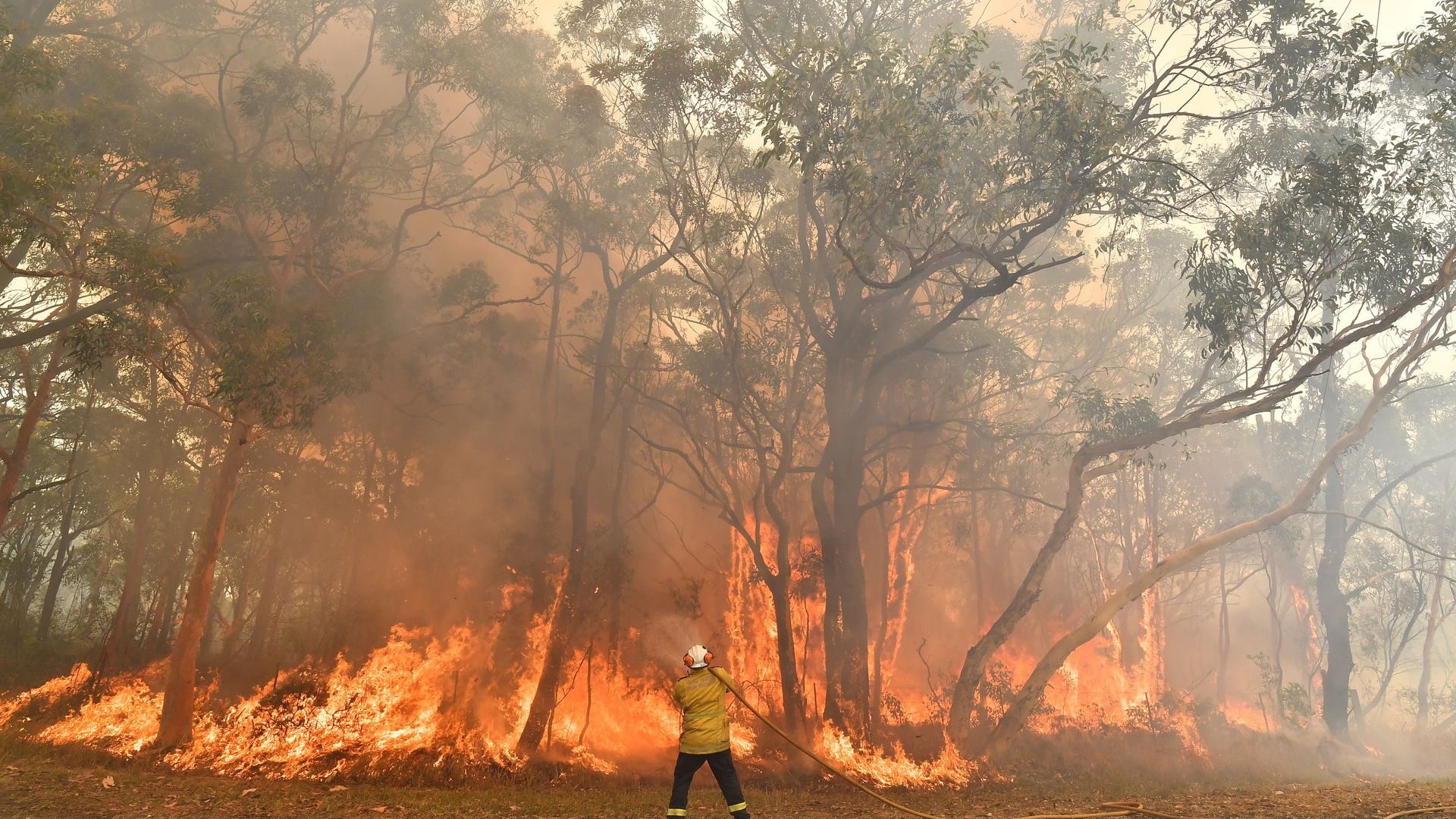
High temperatures and strong winds are also fanning bushfires around Australia, including more than 100 in New South Wales state where heat and smoke have caused an increase in hospital admissions.

Cooler conditions are forecast from Friday.

Let's block ads! (Why?)


https://news.google.com/__i/rss/rd/articles/CBMiYmh0dHBzOi8vd3d3Lm5iY25ld3MuY29tL25ld3Mvd29ybGQvaXQtcy1zaXp6bGluZy1hdXN0cmFsaWEtZXhwZXJpZW5jZXMtaG90dGVzdC1kYXktcmVjb3JkLW4xMTAzNjUx0gEsaHR0cHM6Ly93d3cubmJjbmV3cy5jb20vbmV3cy9hbXAvbmNuYTExMDM2NTE?oc=5

2019-12-18 10:58:00Z
52780507823880

Australia Records Its Hottest Day. At Least for Now. - The New York Times

It is so hot, birds are abandoning the sky.

Hours after Australia set a record for its warmest day across the continent, with even hotter temperatures in the near forecast, Greg Marshall, a garden designer in Adelaide, said he had found birds of different species gathered on the ground Wednesday, under the shade of trees.

It was 106 degrees.

“I’ve been walking around the parklands, turning on the taps at the bottom of the trees,” he said. The birds — “with their beaks open, all gasping for air,” he said — huddled around the faucets, trying to get a drink.

A national heat wave, triggered by a confluence of meteorological factors that extends well beyond Australia’s shores, pushed high temperatures across the country on Tuesday to an average of 105.6 degrees, or 40.9 degrees Celsius, breaking the record of 104.5, or 40.3 Celsius, set on Jan. 7, 2013.

On Thursday, said Dean Narramore of the Australian Bureau of Meteorology, the heat will spread even farther across the central and southern parts of the country, like an inkblot blooming and growing on a page.

As the temperatures have risen, so has the threat of fires, which have ravaged large swathes of the country and shrouded Sydney in smoke.

Late monsoons in India, an imbalance in sea temperatures in the Indian Ocean and strong winds have hampered rainfall in Australia. The country was already in the grip of a yearslong drought.

“Friday looks like it will be a very bad day,” Mr. Narramore said, adding that lightning strikes in bush land could start even more fires.

For weeks, Australians on the eastern coast have been living under a total fire ban as bush fires have raged unabated, burning through houses, killing wildlife and making the air dangerous to breathe. The Air Quality Index, which measures pollution, has exceeded 400 in some parts of Sydney. Readings of 100 and above are considered “poor.”

“All of this is connected,” Mr. Narramore said. “A record-late monsoon in India means the rain will be late coming to Australia, it’s the worst fire season we’ve seen across Australia, it’s warming through climate change, and it’s only the third week of summer.”

Forecasters have said that the heat wave could bring temperatures never before seen in Australia.

The highest temperature ever recorded in the country was 123 degrees on Jan. 2, 1960, in Oodnadatta, a remote outback town in South Australia. On Wednesday, the hottest place on the continent was Birdsville, Queensland, which reached 117 degrees.

Nine of Australia’s 10 warmest years on record have occurred since 2005, with last year the third hottest. As the country bakes and burns, the government has come under criticism for refusing to actively address climate change through sharper emissions cuts.

Prime Minister Scott Morrison generated disapproving headlines on Wednesday after it was reported that he had left Australia for a Hawaii vacation as the authorities raised emergency warnings across the country, fires continued to burn and Australians sweltered.

In Perth, a man drew wide attention on social media after roasting pork inside his old Datsun car, whose interior he said reached 178 degrees.

In Adelaide, people were still outside working, delivering parcels and laboring on building sites, Mr. Marshall said. He normally tours one or two of his gardens during a workday, largely for maintenance. On Wednesday, he visited 12.

“Some of the larger ones are really suffering,” he said. “Right now, we’re waiting for the fire. It’s a tinderbox, and everything’s aligning for Friday. It’s pretty bad.”

Let's block ads! (Why?)


https://news.google.com/__i/rss/rd/articles/CBMiQ2h0dHBzOi8vd3d3Lm55dGltZXMuY29tLzIwMTkvMTIvMTgvd29ybGQvYXVzdHJhbGlhL3JlY29yZC1oZWF0Lmh0bWzSAUdodHRwczovL3d3dy5ueXRpbWVzLmNvbS8yMDE5LzEyLzE4L3dvcmxkL2F1c3RyYWxpYS9yZWNvcmQtaGVhdC5hbXAuaHRtbA?oc=5

2019-12-18 09:38:00Z
52780507823880

Australia records hottest day ever - Axios

This photo taken on December 10, 2019 shows a firefighter conducting back-burning measures to secure residential areas from encroaching bushfires in the Central Coast
A firefighter conducts a back-burn to protect residential areas from encroaching bushfires on the Central Coast in Australian state of New South Wales. Photo: Saeed Khan/AFP via Getty Images

Australia has endured its hottest day on record and worst ever spring for wildfire danger, the Australian Bureau of Meteorology (BOM) said in a climate statement Wednesday.

By the numbers: Preliminary findings show the national average temperature on Tuesday hit a high of 40.9C (106 degrees, beating the previous record of 40.3C (105 degrees) set on Jan. 7, 2013.

  • The driest spring on record has left over 95% of Australia experiencing dangerous fire weather that's well above average and much of the country is in severe drought.

The big picture: Blair Trewin, a senior climatologist with the BOM, said in a video posted to the agency’s website, said many areas would shatter hottest December records and perhaps even the hottest temperature for any time of the year, with Saturday forecast to be a particularly searing day.

  • Perth, the capital of Western Australia, has already smashed its temperature record for December after three consecutive days above 40C (104 degrees) at the start of the week.
  • The dire heat warnings come as firefighters continue to fight wildfires, known in Australia as bushfires. The Washington Post notes that blazes in New South Wales have "emitted massive amounts of greenhouse gases and choked Sydney residents beneath a blanket of smoke."

Read the climate report:

Let's block ads! (Why?)


https://news.google.com/__i/rss/rd/articles/CBMiYmh0dHBzOi8vd3d3LmF4aW9zLmNvbS9hdXN0cmFsaWEtcmVjb3Jkcy1ob3R0ZXN0LWRheS1ldmVyLTMzMDVmODM4LTg2YjUtNDIxNy1iODdiLTRkNDEyZGQxNmFhNS5odG1s0gFiaHR0cHM6Ly9hbXAuYXhpb3MuY29tL2F1c3RyYWxpYS1yZWNvcmRzLWhvdHRlc3QtZGF5LWV2ZXItMzMwNWY4MzgtODZiNS00MjE3LWI4N2ItNGQ0MTJkZDE2YWE1Lmh0bWw?oc=5

2019-12-18 09:31:00Z
52780507823880

Has India's Narendra Modi gone too far with controversial new citizenship law? - CNN

And when Modi backed the passage of a controversial new citizenship law, which prioritizes immigrants from three Muslim-majority countries of virtually every religious stripe over Islam, protests broke out across India.
The Prime Minister, whose Bharatiya Janata Party (BJP) was re-elected in a landslide victory earlier this year, has dominated Indian politics since first sweeping to power in 2014. While he has been hailed for his efforts to bring prosperity to poorer regions and root out corruption, his emphasis on empowering India's Hindu majority has raised concerns among its Muslim minority.
India passes controversial citizenship bill that excludes Muslims
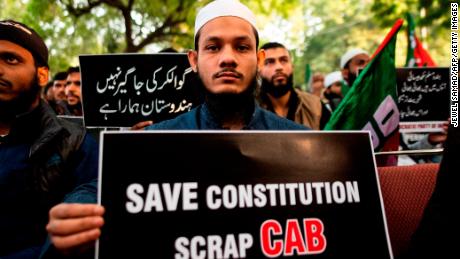
To Modi's critics, the Citizenship Amendment Act (CAA) -- which fast-tracks applications for immigrants, including Hindus, Sikhs, Buddhists, Jains, Parsis and Christians who arrived in India before 2015 -- has become the most brazen example of a Hindu nationalist agenda aimed at marginalizing Indian Muslims. Opponents say it is part of an effort to tear at the fabric of India's secular identity.
Since the law passed through both houses of Parliament last week, demonstrations have swept university campuses in at least nine states. Protesters have taken to the streets across Assam and Tripura over fears that large numbers of Hindus, who migrated to the region in the past few decades, will now be able to get their citizenship fast-tracked. Many there fear it will dramatically recast the religious and ethnic makeup of the northeastern states -- home to 200 distinct indigenous groups.
"In the north, they believe the bill has gone too far and the amnesty will allow too much immigration," Milan Vaishnav, director and senior fellow of the South Asia Program in the Carnegie Endowment for International Peace, told CNN.
The new law will make it more difficult for Muslim migrants to get Indian citizenship. And critics are worried it might pave the way for nationwide citizenship tests, stripping the rights of Muslims who have lived in India for generations but cannot prove their family's lineage -- turning countless people stateless.
Home Minister Amit Shah has repeatedly said that the government will roll out a national citizenship registry.
Modi tried to reassure the public on Monday, saying on Twitter that the new law "does not affect any citizen of India of any religion." And that "no Indian has anything to worry" about.
But when a citizenship registry took place in Assam earlier this year it left 1.9 million people off a list of Indian citizens. The government said at the time that no one would be declared a foreigner if they are not on the list, but that failed to temper concerns.
What is at stake is "the future of liberal democracy in India," Vaishnav said. "And it looks like a side, which has been asleep or at least silent, has really woken up and made sure that their voices are being heard."

The backlash

The protests are sure to have caught Modi -- who has developed a reputation for being a Teflon premier -- somewhat off guard. The leader has enjoyed widespread support, even when his public initiatives have hurt citizens -- and the economy.
Buoyed by a strong grip on power and a faithful Hindu base, Modi's BJP has doubled down on what critics call the party's nationalist agenda, known as Hindutva.
Critics are worried the party is using its stronger mandate to redefine India -- home to the world's second largest Muslim population -- as a religious state and a Hindu homeland.
Progressive Indians watched in horror as Modi stripped Jammu and Kashmir -- India's only Muslim-majority state -- of its partial autonomy in August. Yet "very few people stormed the streets," Vaishnav said.
This, in part, may explain why the government failed to anticipate the potential backlash to the citizenship bill. As protests roiled the country over the weekend, the government shut down the internet in several affected states in a bid to maintain law and order.
"The BJP have been adept at using their grassroots presence to build support for their policies and have been effective at sidelining institutions such as parts of the media," Champa Patel, head of the Asia-Pacific program at the UK-based Chatham House think tank, told CNN.
But they "have been backfooted by the scale of resistance to (the law)," Patel said. "The question now is how will they respond because it's the first real test that they have faced."
Protests broke out at university campuses in at least nine states against the BJP's nationalist agenda.

World is watching

India's government says the law is a humanitarian measure to help persecuted religious minorities from its three neighbouring countries -- Pakistan, Bangladesh and Afghanistan.
And as protests continued in the capital New Delhi on Tuesday, Modi accused political rivals of fomenting dissent and encouraging the discontent.
Meenakshi Ganguly, the South Asia Director of Human Rights Watch, told CNN that the government needs to "understand that a Hindu majoritarian ideology may not be acceptable to a large number of Indian citizens." That is a view shared by more than 500 jurists, lawyers, academics and actors, who have condemned the legislation in a statement seen by Indian media.
But in spite of mounting grievances, analysts think it is unlikely that the BJP will scrap the law. "Modi still remains, head and shoulders, the most popular politician in India," Vaishnav said.
The BJP has a wide mandate since their second consecutive win in the general election, a race fought on a cultural agenda that appealed to their hard-line base. "And I don't think they are going to deviate from it," Vaishnav added.
In the meantime, India lacks a foreplan for what comes next. Its detention centers do not have the capacity needed to house "millions of people that could potentially be caught up," if a nationwide citizenship check is rolled out, Vaishnav said.
In Hindu-nationalist India, Muslims risk being branded infiltrators in their own country
And there appears to be no existing talks with neighboring countries, like Bangladesh, on the issue of deportation, Patel, from Chatham House, added.
As concerns mount, India watchers say Western governments have taken too soft a touch with the country -- widely seen as a potential democratic counterpoint to neighboring China.
"I think what that does is turn a blind eye to just how authoritarian the BJP has been within India," Patel said.
The foreign community "is waiting and watching to see how the (law) will be implemented," Vaishnav added.
"Are you going to see large numbers of Muslims detained or lose their citizenship? It is a game of wait and see."

Let's block ads! (Why?)


https://news.google.com/__i/rss/rd/articles/CBMiV2h0dHBzOi8vd3d3LmNubi5jb20vMjAxOS8xMi8xOC9pbmRpYS9tb2RpLWluZGlhLXByb3Rlc3QtY2l0aXplbnNoaXAtbGF3LWludGwvaW5kZXguaHRtbNIBW2h0dHBzOi8vYW1wLmNubi5jb20vY25uLzIwMTkvMTIvMTgvaW5kaWEvbW9kaS1pbmRpYS1wcm90ZXN0LWNpdGl6ZW5zaGlwLWxhdy1pbnRsL2luZGV4Lmh0bWw?oc=5

2019-12-18 08:48:00Z
52780504582595

Selasa, 17 Desember 2019

Pakistan’s former military ruler Pervez Musharraf is sentenced to death for treason - The Washington Post

Pakistan sentenced Pervez Musharraf, the former military leader, to death for high treason on Dec. 17. Since Musharraf is not in the country, the ruling is mostly a symbolic one.

ISLAMABAD, Pakistan — A special court in Pakistan on Tuesday sentenced former military ruler Pervez Musharraf to death on charges of high treason, stemming from his decision more than a decade ago to suspend the constitution and impose a state of emergency.

The judges’ 2 to 1 decision marked the first time a court has handed down the death penalty to a former army chief or leader of Pakistan. But analysts said the penalty is unlikely to be carried out: Musharraf, who was sentenced in absentia, has been out of the country since 2016 and has been receiving medical treatment in Dubai.

The Pakistani armed forces later issued a strong statement supporting Musharraf and denouncing the legal process against him. The court’s decision “has been received with lot of pain and anguish” by the military’s rank and file, said the statement, which was issued after a meeting of top army leaders. As a former army chief and president of Pakistan who served the country for more than 40 years and fought wars in its defense, Musharraf “can surely never be a traitor,” it said.

The statement added that “due legal process seems to have been ignored” by the court. It said the military expects justice to “be dispensed in line with [Pakistan’s] Constitution.”

Musharraf, 76, ruled nuclear-armed Pakistan from 1999 to 2008 as head of a military-led government after he seized power from then-Prime Minister Nawaz Sharif in a coup. He became a key supporter of Washington in the U.S.-led war on terrorism after the Sept. 11, 2001, attacks on the United States.

The retired general lives in self-imposed exile in the United Arab Emirates and is reported to be seriously ill. In a video statement he recorded from a hospital bed earlier this month, Musharraf described the case against him as unfounded and baseless.

[Court backs Musharraf’s bid to leave Pakistan]

The charges arose from Musharraf’s November 2007 move to suspend the constitution and impose emergency rule, after which numerous judges were placed under house arrest or dismissed, sparking widespread protests. He resigned the following year to avoid a threat of impeachment.

A government law officer, Salman Nadeem, told reporters Tuesday that Musharraf had been found guilty of violating Article 6 of Pakistan’s constitution, which states that any person who suspends the constitution by use of force shall be guilty of high treason.

Aamir Qureshi

AFP/Getty Images

Pakistani policemen stand guard outside a special court in Islamabad on Tuesday after judges there handed down a death sentence against former military ruler Pervez Musharraf.

Legal experts said Musharraf could appeal the verdict to the country’s Supreme Court.

Responding to the judges’ decision, Musharraf’s lawyer, Akhtar Shah, said the case against his client was “unfair, no doubt about that.”

“We have always maintained it was a wrong case,” he told reporters. “Pervez Musharraf has developed this country, he respected the rule of law and freedom of press, and the way he served the country, no one else did.”

The state of emergency was “good for the country during those times” and was enacted only after extensive consultations, he said.

Shah added that Musharraf had wanted to return to Pakistan to record a statement but was not offered sufficient security measures to ensure his safety.

Firdous Ashiq Awan, an adviser to Prime Minister Imran Khan, told Pakistan’s ARY News channel that the government would review the court’s ruling against Musharraf before announcing its position on the matter.

The case against the former leader had been pending since 2013, when a government led by his old rival, Sharif, was in power. Musharraf was indicted in 2014, but the trial was delayed, and he left Pakistan two years later.

Read more

Court backs Musharraf’s bid to leave Pakistan

Ex-president Pervez Musharraf goes to hospital instead of Pakistani court

Today’s coverage from Post correspondents around the world

Like Washington Post World on Facebook and stay updated on foreign news

Let's block ads! (Why?)


https://news.google.com/__i/rss/rd/articles/CBMivwFodHRwczovL3d3dy53YXNoaW5ndG9ucG9zdC5jb20vd29ybGQvYXNpYV9wYWNpZmljL3Bha2lzdGFucy1mb3JtZXItbWlsaXRhcnktcnVsZXItcGVydmV6LW11c2hhcnJhZi1pcy1zZW50ZW5jZWQtdG8tZGVhdGgtZm9yLXRyZWFzb24vMjAxOS8xMi8xNy9hN2JiOTMzNC0yMGE1LTExZWEtYjAzNC1kZTdkYzJiNTE5OWJfc3RvcnkuaHRtbNIBzgFodHRwczovL3d3dy53YXNoaW5ndG9ucG9zdC5jb20vd29ybGQvYXNpYV9wYWNpZmljL3Bha2lzdGFucy1mb3JtZXItbWlsaXRhcnktcnVsZXItcGVydmV6LW11c2hhcnJhZi1pcy1zZW50ZW5jZWQtdG8tZGVhdGgtZm9yLXRyZWFzb24vMjAxOS8xMi8xNy9hN2JiOTMzNC0yMGE1LTExZWEtYjAzNC1kZTdkYzJiNTE5OWJfc3RvcnkuaHRtbD9vdXRwdXRUeXBlPWFtcA?oc=5

2019-12-17 15:51:00Z
52780503981536

Former president of Pakistan sentenced to death for treason - Fox News

Let's block ads! (Why?)


https://news.google.com/__i/rss/rd/articles/CBMiK2h0dHBzOi8vd3d3LnlvdXR1YmUuY29tL3dhdGNoP3Y9Y1owZDkwZ09UdmPSAQA?oc=5

2019-12-17 14:11:38Z
52780503981536

Why are so many Indians protesting against the citizenship law? - Al Jazeera English

It has been a week of violent protests across India over a controversial "anti-Muslim" citizenship law, which critics say violates the country's secular constitution.

The law passed last week aims to grant citizenship to "persecuted" Hindus, Parsis, Sikhs, Buddhists, Jains and Christians - and not Muslims - who arrived in India before December 31, 2014, from Bangladesh, Pakistan or Afghanistan.

The opposition parties argue the law is discriminatory - even the United Nations has said so - and singles out nearly 15 percent Muslim minority among India's 1.3 billion people.

Although the law has triggered protests across the country, the protesters have different reasons to take to the streets. Here are the three main reasons:

Anger against 'foreign migrants'

In the northeastern state of Assam, which shares borders with Bangladesh, Myanmar and China, protesters in the main city of Guwahati and other areas hit the streets fearing the new law will encourage Hindus from Bangladesh to settle in the region.

191216080909659

The citizenship law protests began in Assam, where six people have died so far, four of them in police firing as mobs torched buildings and train stations.

Troops were deployed in the state and mobile internet had to be suspended in at least 10 districts. The ban has now been lifted, though the state remains tense.

Assamese say the citizenship law allowing Hindus from Bangladesh to settle there will burden resources and threaten their language, culture and tradition.

In Assam, the anger over the citizenship law follows a contentious National Register of Citizens (NRC) exercise that was intended to weed out undocumented immigrants mainly from Bangladesh.

Nearly 2 million people were excluded from the NRC list, who now face a long and arduous legal process to prove their citizenship or be detained or deported.

Residents now fear the new citizenship law will provide protection to Bengali-speaking Hindus left off Assam's NRC list and leave Bengali-speaking Muslim migrants vulnerable to deportation.

Tripura, another northeastern state, also witnessed protests against the citizenship law.

200 million Muslims fear marginalisation

The second reason why there is deep resentment and anger against the citizenship law, especially among Muslim students, is because the legislation is seen as part of Prime Minister Narendra Modi's agenda to marginalise India's 200 million Muslims.

India's Home Minister Amit Shah has pledged to apply the NRC process nationwide to rid India of "infiltrators" and "termites" as a follow-up to the citizenship legislation, triggering widespread fears among Indian Muslims of being targeted and harassed by the Hindu nationalist government.

191216150934526

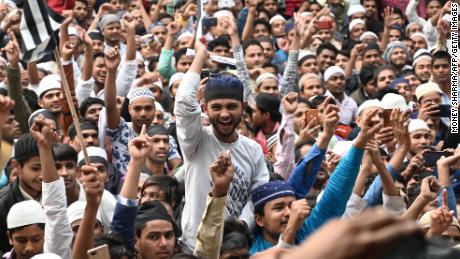
Since the law was passed on December 12, thousands of Muslims across India hit the streets, responding to calls made by Muslim and civil society groups against the government's move.

At New Delhi's Jamia Millia Islamia (JMI) and Uttar Pradesh state's Aligarh Muslim University (AMU) - India's largest minority institution situated 130km (81 miles) from the Indian capital - thousands of students have been agitating against the law.

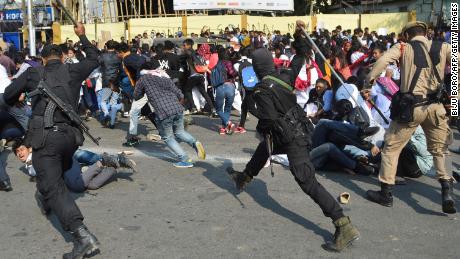
On Sunday, in near-simultaneous attacks, police in riot gear stormed into the two campuses, firing tear gas shells and launching a baton charge on the protesting students. More than 100 students were wounded in the police action, some critically.

At JMI, multiple videos shot by students showed police smashing their way into the main library and mosque as hundreds of terrified students barricaded doors and hid inside bathrooms to protect themselves.

Various media outlets, including The Washington Post, reported on Monday that at least two JMI demonstrators were taken to hospitals with bullet wounds. 

Dozens of students were detained despite their injury and taken to police stations, triggering a major night-long demonstration outside the headquarters of the Delhi police.

"India's constitution is against any such law that discriminates on the basis religion, caste, creed or gender. This [citizenship law] is a clear attempt to declare Muslims as second-class citizens," Anupam Tiwari, a 21-year-old JMI student, told Al Jazeera.

Solidarity protests across India

A third and final form of protests essentially grew out of anger among university students and teachers over the attacks on JMI and AMU.

As soon as photos and videos shot by students under siege at JMI and AMU spread on social media, a rash of protests broke out in universities and colleges in other parts of India, including JMI.

Thousands of students marched on their campuses or on the streets on Monday in solidarity with JMI and AMU students, and to uphold the secular principles of the Indian constitution.

Even the end of the academic session did not deter many students as they forced the cancellation of examinations in several universities and colleges, according to Indian media reports.

Solidarity protests are being organised in nearly two dozen cities across India, including New Delhi, the financial hub of Mumbai, Ahmedabad in Gujarat state and Thiruvananthapuram in Kerala.

A number of civil society organisations and individuals have also joined the protests in these cities, in what has become the biggest political challenge for Prime Minister Modi's government since it came to power nearly six years ago.

India protests spread across universities

Let's block ads! (Why?)


https://news.google.com/__i/rss/rd/articles/CBMiXmh0dHBzOi8vd3d3LmFsamF6ZWVyYS5jb20vbmV3cy8yMDE5LzEyL2luZGlhbnMtcHJvdGVzdGluZy1jaXRpemVuc2hpcC1sYXctMTkxMjE3MDcwNDIzMTAxLmh0bWzSAWJodHRwczovL3d3dy5hbGphemVlcmEuY29tL2FtcC9uZXdzLzIwMTkvMTIvaW5kaWFucy1wcm90ZXN0aW5nLWNpdGl6ZW5zaGlwLWxhdy0xOTEyMTcwNzA0MjMxMDEuaHRtbA?oc=5

2019-12-17 12:36:00Z
CAIiEGpyRfYBePKyuA5ihZhK_G8qFAgEKgwIACoFCAowhgIwkDgw0O8B