LONDON (Reuters) - British Prime Minister Boris Johnson will “get Brexit done” by Jan. 31 and then agree a new trade deal with the European Union by the end of 2020, cabinet office minister Michael Gove said on Sunday, vowing to deliver on the government’s top priority.
FILE PHOTO: Britain's Prime Minister Boris Johnson gestures as he speaks to supporters on a visit to meet newly elected Conservative party MP for Sedgefield, Paul Howell, at Sedgefield Cricket Club in County Durham, north east England on December 14, 2019, following his Conservative party's general election victory. Lindsey Parnaby/Pool via REUTERS/File Photo
Johnson and his team were triumphant last week when he won a commanding majority of 80 at an early election he said he was forced to call to break the Brexit deadlock. Winning over many traditionally Labour voters in northern and central England, Johnson has proclaimed he will lead a “people’s government”.
First, the Conservative leader must make good on his often-repeated promise to “get Brexit done” and then turn to realizing another priority - to increase funding into Britain’s much loved but struggling public health service, a pledge he plans to enshrine in law.
“I can absolutely confirm that we will have an opportunity to vote on the Withdrawal Agreement Bill in relatively short order and then we will make sure that it passes before January 31st,” Gove told Sky News.
Asked about a new trade accord with the EU, Gove said: “It will be concluded next year. We will be in a position to leave the European Union before the 31st of January next year and then we will have concluded our conversations with the EU about the new framework of free trade and friendly cooperation that we will have with them by the end of next year.”
The EU’s chief negotiator, Michel Barnier, has cast doubt over whether the trade talks will be so swiftly concluded, saying last month that the negotiations would be “difficult and demanding” and warning Britain the bloc “will not tolerate unfair competitive advantage”.
Johnson, who celebrated his victory by visiting Sedgefield, a former Labour bastion that was the parliamentary seat of ex-prime minister Tony Blair but voted Conservative this time, will set out his program on Thursday in a Queen’s Speech.
Rishi Sunak, a deputy finance minister, said the government aimed to re-submit the Withdrawal Agreement Bill to parliament for ratification before Christmas to allow ministers to start work on other priorities such as “leveling up” the country.
LABOUR SOUL-SEARCHING
After more than three years of debate over Brexit, Johnson faces a struggle to unite a country where disagreements over how, when or whether Britain should leave the EU have torn towns, villages and even families apart.
For the opposition Labour Party, Thursday’s election was its worst result since 1935 and underlined how its equivocal Brexit policy and its socialist leader, Jeremy Corbyn, had proven an electoral disaster for many traditional supporters.
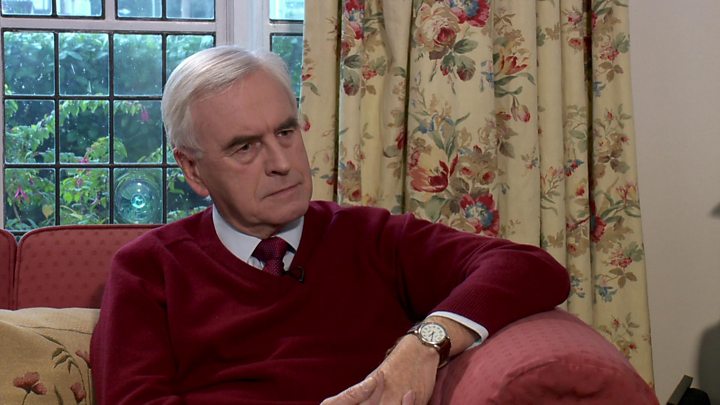
“Let me make it clear that it’s on me. Let’s take it on the chin,” Labour’s finance chief John McDonnell told the BBC’s Andrew Marr Show. “I own this disaster.”
He said there would be a new leader in place by early next year, and already some said they were considering running.
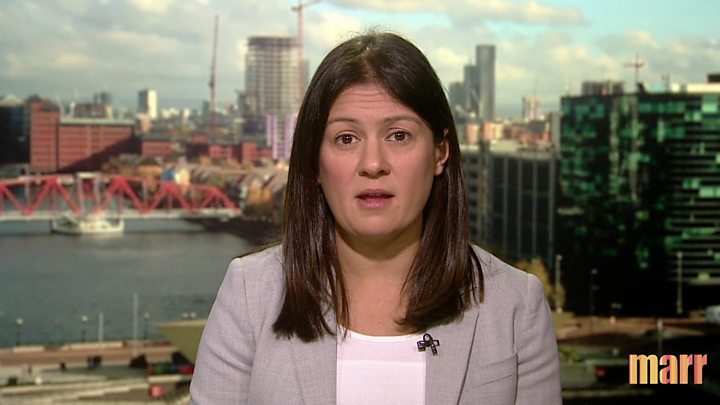
Lisa Nandy, a lawmaker for the northern town of Wigan, said she could enter the race, while justice policy chief Richard Burgon said he would back Rebecca Long-Bailey, Labour’s business policy chief, if she decided to run for the leadership.
Corbyn, who apologized to Labour supporters in two newspapers on Sunday, has said he will step down as soon as a new leader has been elected by the party membership.
“I will make no bones about it. The result was a body blow for everyone who so desperately needs real change in our country...I’m sorry that we came up short and I take my responsibility for it,” he wrote.
But Corbyn added: “I remain proud of the campaign we fought ... And I’m proud that our message was one of hope, rather than fear.”
Reporting by Elizabeth Piper; Editing by Mark Heinrich
SEOUL—At February’s nuclear summit in Vietnam, President
Trump
was applauded by Washington for walking away from the table instead of taking a bad deal. But now, North Korean leader
Kim Jong Un
might be the one prepared to wait.
Pyongyang has kept its economy afloat by sidestepping sanctions, using its local resources more efficiently and finding alternative ways to generate foreign cash.
In an effort to keep pressure on the U.S., North Korea has warned of making a perilous shift to its approach next year, when Mr. Trump will be facing re-election. On Friday, Pyongyang conducted a second significant test in a week at a satellite-launch facility, behavior that military experts believe could portend a long-range weapon launch.
One senior official warned in state media recently that the Trump administration’s next move will determine “what Christmas gift it will select.” The country’s U.N. ambassador said denuclearization was off the negotiating table earlier this month.
“I don’t think North Korea is under any pressure. They’re not in a rush for a deal,” said Robert Carlin, a former U.S. intelligence analyst who has been involved in prior negotiations with North Korea. “I’ve never seen these guys panic.”
Pyongyang hasn’t tested long-range or nuclear missiles in more than two years, a development that the Trump administration says is proof its diplomatic approach is working.
Talks between the U.S. and North Korea raised hopes that Kim Jong Un will stop developing or even surrender his nuclear weapons. But security experts point to satellite images that they say show North Korea ramping up production of its arsenal over the past year. Photo composite: Sharon Shi
The North has given the U.S. until the end of the year to bring a more appealing offer. In an April policy speech, Mr. Kim warned that the U.S. would face the prospect of a “gloomy and very dangerous” outcome if the Trump administration didn’t change its negotiating stance.
The North has upped its brinkmanship this month. The Friday test was Pyongyang’s second in a week at its Sohae facility, a site where it has previously launched satellites into orbit. The test on Dec. 7 was likely of a rocket engine that could be used for a long-range weapon, military experts said.
After the North’s test last weekend became public, Mr. Trump tweeted that Mr. Kim could lose everything by choosing hostility. It prompted a Wednesday retort by a senior Pyongyang official: “We have nothing more to lose,” the official was quoted as saying in state media.
Denuclearization talks haven’t made discernible progress after February’s summit between Messrs. Trump and Kim ended without a deal. The two leaders met again in June at Korea’s demilitarized zone, promising to revive negotiations. But since then, the U.S. and North Korea have convened just once in October, when Pyongyang broke off talks and said it wouldn’t continue them unless Washington makes a significant concession.
Pyongyang, which has unleashed more than a dozen weapons tests this year, has subsequently accused Washington of stalling. The U.S. has said it is prepared to be flexible in disarmament talks if the North avoids provocations and takes concrete steps toward a deal.
With just weeks before the year-end deadline,
Stephen Biegun,
the U.S. special representative for North Korea and Mr. Trump’s nominee as the No. 2 State Department official, arrives in Seoul for a multiday visit starting Sunday. He is scheduled to meet with Seoul officials to discuss North Korea.
North Korean leader Kim Jong Un has promised his country an economic turnaround that can’t occur while sanctions remain in place.
Photo:
athit perawongmetha/Reuters
Pyongyang, seeking leverage in talks, often makes exaggerated threats against Washington and sets arbitrary deadlines. But the North’s dialed-up rhetoric of late may have less to do with desperation than trying to put the blame for inaction on the U.S., security experts said.
“We are done with negotiations for the time being,” said Joshua Pollack, a senior research associate at the Middlebury Institute of International Studies in Washington. “The North Koreans have been on a public diplomacy play to prepare, especially the Chinese and Russians, for what’s coming next.”
SHARE YOUR THOUGHTS
What would you hope from the next summit between President Trump and North Korean leader Kim Jong Un? Join the conversation below.
North Korea said it would hold a plenary session later this month of the Central Committee of the Workers’ Party of Korea, its national ruling party. Some close Pyongyang watchers believe Mr. Kim could use that meeting—or his annual Jan. 1 speech—to articulate what his country’s new path might entail.
Pyongyang is applying pressure before the year-end deadline in hopes Mr. Trump will lower the asking price for sanctions relief, security experts said.
“Kim’s likely thinking he’ll continue to tighten the vise to see if Washington will eventually crack on its own,” said Soo Kim, a North Korean expert at Rand Corp., the policy think tank, and a former Central Intelligence Agency analyst.
But the North Korean leader doesn’t have an infinite amount of time, either. Mr. Kim has promised his country an economic turnaround that can’t occur while sanctions remain in place.
Pyongyang appears to be betting that Mr. Trump would like to avoid a North Korean confrontation while campaigning for a second term in the White House, said Kim Sung-han, a former South Korean vice minister of foreign affairs and now a graduate-school dean at Korea University.
“Kim keeps sending a message that he is ready to mess up with Trump’s path to re-election by resuming long-range missile and nuclear tests after the deadline,” Prof. Kim said.
The leader and shadow chancellor said they would step down in the new year.
The race for their replacements has already begun, with Wigan MP Lisa Nandy saying for the first time she was "seriously thinking about" running.
Mr McDonnell said it would be up to Labour's National Executive Committee to decide the mechanics of the leadership election, but he expected it to take place in eight to 10 weeks' time.
Labour suffered its worst election result since 1935 on Thursday and saw its vote share fall by eight points.
The Conservatives won a Commons majority of 80 - the party's biggest election win for 30 years - sweeping aside Labour in its traditional heartlands.
Mr Corbyn apologised to Labour supporters in two articles in the Sunday papers, calling it a "body blow for everyone who so desperately needs real change in our country".
Writing an open letter in the Sunday Mirror, he said he took his "responsibility" for the result, but insisted he remained "proud" of the party's campaign.
He doubled down in the Observer, saying his own election campaign had successfully re-set the terms of debate and his manifesto would be seen as "historically important".
But Mr McDonnell has argued "it's on me" as he apologised for the performance, on the BBC's Andrew Marr Show.
The shadow chancellor said he was sorry for "not being able to articulate" the party's campaign message ahead of the poll.
However, he also blamed the "media portrayal" of Mr Corbyn, saying "of course the system will throw the kitchen sink at you" if you challenge it.
Former Labour MP Caroline Flint - who lost her seat on Thursday - placed much of the blame at the leadership's door.
She also criticised the party's position on Brexit for leaving some voters behind, telling Sky's Sophy Ridge that "ardent Remainers", such as shadow Brexit secretary Sir Keir Starmer and shadow foreign secretary Emily Thornberry, "contributed to sacrificing" seats.
She accused Ms Thornberry of telling one her colleagues from a Brexit-backing area: "I'm glad my constituents aren't as stupid as yours."
Ms Thornberry said the accusation was "a total and utter lie". She added: I have never said this to anyone, nor anything like it, and I hope needless to say, it is not something I would ever think."
Ms Flint added: "I don't believe anybody who have been the architects of our European policy in the last few years is credible to be leader. I don't think they can win back these seats."
Instead, she said Ms Nandy and shadow business secretary Rebecca Long-Bailey were "worth looking at".
Media playback is unsupported on your device
Ms Nandy told the BBC's Andrew Marr she was considering a leadership bid after the "most shattering" defeat for Labour.
"In towns like mine, the earth was quaking as the entire Labour base crumble beneath our feet," she added.
Ms Nandy made a number of proposals - including moving the party's headquarters out of London - to help "rebuild that coalition" between "the Lewishams and the Leighs", and to regain a Labour Party that "speaks for both".
A number of other candidates are expected to join the race, including Salford and Eccles MP Ms Long-Bailey and Birmingham Yardley MP Jess Phillips.
Ms Phillips wrote in the Observer an appeal to people to join Labour to change it, arguing too many working-class people do not believe the party is better than the Tories.
Asked about the contenders, Mr McDonnell said he would "prefer others" to Ms Phillips, naming Ms Long-Bailey, shadow education secretary Angela Rayner and shadow women's and equalities minister Dawn Butler as possibilities.
He said Ms Phillips was "really talented", but added: "I want someone who actually has been really solidly involved in the development of existing policy - that's why Becky and Angie and Dawn and others have been so good."
Mr McDonnell said it "should be a woman leader next" and was "most probably time for a non-metropolitan" leader, adding: "I think it is time for a non-London MP, we need a northern voice as much as possible."
Shadow justice secretary Richard Burgon also backed Ms Long-Bailey and said he was considering running to be her deputy.
"Colleagues have approached me about that," he told Sky.
Back to the Commons
Meanwhile, the Conservatives are preparing for the first week of their new government.
Chief Secretary to the Treasury, Rishi Sunak, told Andrew Marr it was their "intention" to bring back Boris Johnson's Brexit bill to Parliament "before Christmas" - although he would not confirm the date.
"As soon as possible would be perfect," he said. "But obviously those conversations are happening between the relevant parties and the House authorities as we speak."
MPs will return to Westminster on Tuesday and begin the process of swearing in, before the Queen formally opens Parliament on Thursday.
Mr Johnson's Queen's Speech will include a commitment by the party to put its NHS spending plan into law as a symbol of commitment to the health service.
Downing Street has confirmed there will be a review of Whitehall departments - and the Sunday papers report that the prime minister will work over Christmas on plans to merge and split different government offices.
The Sunday Telegraph says the PM's chief adviser Dominic Cummings is preparing an overhaul of the civil service to ensure it delivers on Mr Johnson's agenda.
But Mr Gove said the government would not grant Scotland another referendum on independence, despite the success of the SNP in Thursday's election.
The party, which campaigns for an independent Scotland, won 48 seats - up from 35 - and its leader, Nicola Sturgeon, said she had "earned the right to pursue the plan" for another vote.
Ms Sturgeon, who is also First Minister of Scotland, said: "They will rage against reality for as long as they can but Scotland has chosen a very different kind of future than most of the rest of the UK, and they cant stand in the way of the will of the Scottish people.
"Fundamentally democracy has to be offered and respected."
Meanwhile, the Sunday Times claims up to a third of cabinet ministers face the sack in February, Whitehall departments could be abolished and civil servants replaced by external experts.
It's also been confirmed that the government has ordered a review to consider decriminalising non-payment of the BBC licence fee - which costs £154.50 annually.
What will happen this week?
Tuesday
Proceedings begin when MPs gather for their first duty: to elect the Speaker, Sir Lindsay Hoyle, who replaced John Bercow in November. Technically, MPs can hold a vote on this motion but this has never happened in practice.
Later in the day, the Speaker will begin the process of swearing in MPs, who are required to take an oath of allegiance to the Crown, or, if they object to this, a solemn affirmation. Those who speak or vote without having done so are deprived of their seat "as if they were dead" under the Parliamentary Oaths Act of 1866.
Two to three days are usually set aside for this process.
Thursday
This is the earliest possible day for Parliament's State Opening. The Queen's Speech is the centrepiece of this, when she will read a speech written by ministers setting out the government's programme of legislation for the parliamentary session. A couple of hours after the speech is delivered, MPs will begin debating its contents - a process which takes days.
Friday
Depending on how rapidly Boris Johnson wants to move, the debate on the Queen's Speech could continue into Friday.
After the debate on the Queen's Speech is concluded, MPs will vote on whether to approve it. Not since 1924 has a government's Queen Speech been defeated.
In some cases your question will be published, displaying your name and location as you provide it, unless you state otherwise. Your contact details will never be published. Please ensure you have read the terms and conditions.
Use this form to ask your question:
If you are reading this page and can't see the form you will need to visit the mobile version of the BBC website to submit your question or send them via email to YourQuestions@bbc.co.uk. Please include your name, age and location with any question you send in.
INCHEON, South Korea (Reuters) - Stephen Biegun, the U.S. special envoy for North Korea, arrived in South Korea on Sunday as Pyongyang stepped up pressure on Washington to make concessions to revive stalled denuclearization talks ahead of a year-end deadline.
U.S. Special Representative for North Korea Stephen Biegun arrives at Incheon International Airport in Incheon, South Korea, December 15, 2019. REUTERS/Kim Hong-Ji
Biegun’s arrival came a day after North Korea said it made another “crucial test” at a rocket launch site to develop a strategic weapon to deter U.S. nuclear threats.
Analysts said such tests could help North Korea build more reliable intercontinental ballistic missiles (ICBMs) capable of reaching the United States.
Biegun did not make any comments upon arrival at an airport near Seoul on Sunday afternoon.
Biegun plans to meet with South Korean President Moon Jae-in on Monday, as part of his three-day stay before leaving for Tokyo to consult with his Japanese counterpart. It is unclear whether he will meet with North Korean officials at the inter-Korean border.
Biegun’s trip led to speculation he might try to salvage negotiations by reaching out to North Korea, or by publicly sending a message.
North Korean leader Kim Jong Un and U.S. President Donald Trump met three times since last year to negotiate an end to Pyongyang’s nuclear and missile programs, but there has been scant progress.
North Korea has vowed to take an unspecified “new path” if the United States fails to address its demands before the end of the year.
Tension has been rising in recent weeks as Pyongyang has conducted a series of weapons tests and stepped up criticism of the United States, stoking fears the two countries could return to a collision course that they had been on before launching diplomacy last year.
(This story has been refiled to remove an extraneous number in paragraph two)
Reporting by Hyunjoo Jin and Dae-woong Kim; Editing by Lincoln Feast
At a town hall event on Saturday where an Armenian organization was thanking U.S. government officials for their support of resolutions recognizing the Armenian genocide, scuffles broke out as Rep. Adam B. Schiff (D-Burbank), a co-sponsor of a resolution on the issue, spoke in the auditorium at the Glendale Central Library.
As Schiff began speaking, a man and two women held up signs reading,"Don’t Impeach.” When they were asked to take down the signs, they refused.
Then, about a dozen people scattered throughout the auditorium began yelling, “Liar.”
When some in the audience asked them to refrain from yelling, scuffles broke out throughout the room, and the audience members who were yelling at Schiff removed their jackets, revealing shirts supporting President Trump.
Advertisement
After about 15 minutes, the scuffles settled down, and the event continued.
There were three Glendale police officers at the event who helped deal with the situation, according to the Police Department. No injuries were reported, police said.
The event was organized by the Armenian National Committee of America - Western Region to thank the U.S. House of Representatives for recently passing a resolution affirming its recognition of the Armenian genocide and celebrating the U.S. Senate’s unanimous recognition Thursday of the genocide.
Schiff said he appreciated the opportunity to take part in the event.
Advertisement
“I was grateful for the opportunity to share in the community’s celebration of the historic passage of the Armenian Genocide resolution in both the House and Senate, and thankful for the recognition of the efforts of so many people who made this day possible,” he said in a statement.
“Unfortunately, some came to the event with the intent to disrupt, but the Armenian community has had to overcome far greater challenges along the road to recognition than to be deterred by a few angry voices,” said Schiff, who as chairman of the House Intelligence Committee has helped lead the Trump impeachment investigation.
In a statement, the Armenian committee said what made the act that much more “egregious” was that descendants of genocide survivors were in the room, many of them elderly, who had waited for the passage of such resolutions their entire lives and had attended the event to express their gratitude to all those who supported the cause for decades.
“While, as Americans, we value our right to freedom of speech, today’s actions by a select few were designed to disrupt an event that had no connection to recent political divisions and disrespected the memory of the victims of the Armenian Genocide,” the statement said.
“Though asked to leave, the disrupters instead remained and continued to behave in an appalling manner which lacked any semblance of human decency,” the statement added.
The committee said the issue transcends partisan politics in its appeal to properly honor and acknowledge the 1.5 million Armenians, Greeks and Assyrians who were massacred from 1915-23 under the Ottoman Empire, now modern-day Turkey.
“Our democracy deserves better than the disgraceful behavior of those who tried to disrupt a non-partisan, non-political event meant to express unity and gratitude on a purely humanitarian issue, and we strongly condemn any attempt to hijack its message,” the committee said.
(CNN) — With hindsight, it looks embarrassingly inappropriate, but long before New Zealand's White Island volcano erupted killing at least 16 people this week, it was once humorously marketed as a fun destination for risk takers.
The volcano, also known as Whakaari, has for decades been an attraction for travelers visiting by boat or helicopter from the town of Whakatane on New Zealand's northern coast.
It's not the world's only active volcano to attract tourists -- countries from Indonesia to Iceland regularly host visitors willing to dice with danger in their efforts to glimpse the natural spectacle of a smoldering or lava-spewing peak.
"Handle with scare" -- a brochure used to promote tours of White Island.
John Malathronas
But Monday's tragic events have spotlighted the tourism industry that's built up around White Island and other volatile attractions.
Perhaps emblematic of the willingness of both tourist and tour company to dance around the potentially lethal risks involved, is some of the material that has been used to promote White Island in the past.
During a visit made by this writer in 2006, it was being heavily marketed on the perils that tourists would face via literature that now seems toe-curlingly bad, particularly in light of this week's deaths.
"Single White Female," reads the headline on a jokey advertorial promoting tours of the volcano that's written in the style of a lonely hearts column.
"Steamy, very active, 200,000-year-old seeking similar to increase alert level rating," the piece, credited to a local tour guide, said. "Dormant/extinct volcanoes need not apply."
It goes on: "My curvaceous andesite bumps and mounds roll voluptuously down to the water. I have the aroma of hot sulphur and I change my look with my mood. If I'm feeling active, I wear layers of slippery grey ash..."
The lonely hearts ad isn't what tourists to New Zealand would've seen just before Monday's eruption. It appears on the back of a 32-page brochure-slash-newspaper, Discover White Island, that was originally printed in 2003 but being distributed at the time of my visit.
'Handle with scare'
"Single White Female" -- a joke lonely hearts ad used to promote the volcano.
John Malathronas
White Islands Tours -- which ceased operations after the December 9 eruption -- wasn't downplaying the risk of visiting the island -- headlining the newspaper distributed in 2006 with bold red letters that screamed: "Volcano, handle with scare."
For backpackers and other thrill seekers touring New Zealand, this whiff of danger has placed White Island firmly on adventure itineraries alongside bungee jumping, jetboating and white water rafting.
It was only when I boarded the tour boat and signed a disclaimer that absolved anyone but myself of any responsibility that the reality of the trip's dangers hit home, but not enough to dissuade me or my fellow tourists from continuing.
Visitors were equipped with gas masks for a tour of the island.
John Malathronas
Although my visit was incident-free, it would've been more or less identical to that experienced by those caught up in this week's disaster, right up until the point when the volcano erupted.
En route to the island, a school of dolphins appeared in the swell alongside the boat as our guide distributed gas masks and hard hats.
We were then given some basic facts and figures about our destination. Its size -- 11 miles by 10 miles. And its history: bought by a man called George Buttle in 1936. The island is still a private reserve belonging to the Buttle Family Trust.
According to my notes from the trip, the guide stressed that the volcano was "very much alive," and that the terrain we would be crossing had been formed relatively recently during a period of near-continuous volcanic activity between 1975 and 2000.
"The activity level now stands at one," he said. "Three means there's constant emissions. Five signals disaster. But remember: We can never rule out an eruption."
"The danger comes from the main crater that's covered by a shallow lake. An eruption would lead to a steam explosion and scald us to death."
New Zealand monitoring service GeoNet operates a five-point alert system for volcanoes. One means minor volcanic unrest, five means major volcanic eruption. At the time of Monday's eruption, it was set to two -- minor to heightened volcanic unrest -- an acceptable level for tours to continue under existing safety guidelines.
Corrosive air
After a couple of hours sailing, our party landed at White Island's Crater Bay, where we were greeted by what looked like an alien landscape.
The sea was lemon yellow, the rocks cinnamon brown, the sand pitch black and the air thick with the smell of an open latrine.
What was eerie, though, was the silence. I was expecting a roar, at least a muted grumble, but no, the island was silent.
The island resembles an alien landscape.
John Malathronas
"Wrap everything, especially your camera, in plastic bags," the guide warned. "Take it out for a photo and put it back in again. The air is corrosive."
"What about us?" I asked.
"You are alive and have repair mechanisms in place. Your lenses don't."
The guide led us through the skeletal, rusty remains of a factory. Despite the risks, people have been mining sulfur here on and off since the 1880s.
"Back in September 1914 a sudden slag flow buried the living quarters and killed 10 miners," we were told. "Only their cat survived."
"Mining resumed in 1923 but was abandoned in the 1930s. It became too dangerous to continue."
At some point he showed us a rivulet running through the ground.
"It's been raining, so you'll see a lot of small streams," he said. "Step over them. They're pure battery acid. Stick to the path and follow me."
With pewter-gray ash and scoria covering much of the land; the scene could've been described as lunar if it weren't for the mist over the steam vents.
These vents came in every shade of yellow -- from banana to butterscotch and all variations in between.
"Don't go anywhere near the vents," our guide said. "The coolest ones clock 95 C (100 F). The superheated ones can reach 200 C (400 F). Some go deep down to 600 feet below sea level."
Some of the big vents have names, we were told. There was Gilliver, Rudolf and Donald Duck.
Others were large enough to be classified as craters, with names like Big John or Noisy Nellie.
'Everything rusts'
Writer John Malathronas on White Island.
John Malathronas
Our guide showed us debris from an eruption in 2000.
"It only lasted for 12 seconds but spewed out five-foot-long rocks hundreds of feet away," he said. "I was here three days later. The rocks were still warm and you could pry them apart like toffee."
At some point, we reached a white line painted on the ground and were told to stop.
"From here on, the crust is thin," the guide said. "Walk further and the ground might give in under your feet."
In front of us lay the main crater cloaked under a vapor cloud, a gate to the center of the Earth.
Boat trips have long carried visitors to White Island.
John Malathronas
We stood there silently, taking photos before slowly heading back, skirting the white line.
Back on the boat, the guide changed his sneakers. He used a separate pair just for White Island. "Plastic laces, holes with no metal eyelets; everything rusts there," he said.
On the return journey to Whakatane, we were served warm soup to soothe our stinging throats followed by a meal of rice and baked fish.
This time the entertainment came from above as a company of gannets nosedived into the sea with spectacular plunges.
"Despite the eruptions, this gannet colony is well established," the guide said. "Amazingly, it's on the safest part of the island. This is where the miners built their cabins when they returned in the 1920s."
Today, looking back at my diary of my 2006 trip, I'm struck by a quote I scribbled down that's attributed to the island's late owner, George Buttle.
He supposedly said: "Strange as it may seem, the island is unbelievably beautiful."
In its own extra-terrestrial kind of way, it was. And I'm glad I've been there.
But like so many visitors over the years, I know that I've played with fire for the fun of it.
As New Zealand divers carry out a high-risk recovery operation to recover the body of a person killed in Monday's volcanic eruption on White Island, police have announced that the official death toll has risen to 15.
A team of nine police divers were searching contaminated waters for a body spotted in the water near the island. The water is contaminated because of the eruption and visibility is limited — between zero and 6.5 feet, according to a police statement.
"Divers have reported seeing a number of dead fish and eels washed ashore and floating in the water," Deputy Commissioner John Tims of New Zealand Police said. "Each time they surface, the divers are decontaminated using fresh water."
The divers are also operating under the threat of another eruption. GeoNet, which monitors volcanic activity in New Zealand, estimated on Saturday that there is a 35 to 50% chance of another eruption on the island in the next 24 hours. That's a decrease from Friday, when the experts estimated a 50 to 60% likelihood of an eruption in the next day.
Authorities were able to recover six bodies from the island on Friday, meaning that two people remain unaccounted for. The police said that even as divers continue to try to find human remains on Saturday, no land-based searches will be conducted on the island, also known by its Maori name, Whakaari.
Col. Rian McKinstry from the New Zealand Defence Force told Stuff that on Friday, the recovery team used hazmat suits with a special protective layer containing charcoal to filter out noxious gases. The team also used oxygen masks.
When the volcano on White Island erupted on Monday afternoon, 47 people – many of them tourists from around the world — were there exploring. Some of the survivors are suffering from major burns to their skin and lungs. Major questions persist about why so many people were freely wandering around in an area that was known to be an active volcano.
Police formally identified the first victim of the eruption on Saturday – Krystal Eve Browitt, a 21-year-old Australian citizen. The young woman had been on a cruise with her parents and sister, according to The Sydney Morning Herald. Her mother had stayed behind on the cruise, and her other two family members are believed to be receiving treatment for their injuries in an Australian hospital.
Browitt's high school principal from Kolbe Catholic College says that she was a "much-loved member of the Kolbe community that her teachers describe as a beautiful soul," the Herald reported.
The fifteenth fatality from the eruption, which police confirmed Saturday, was a person who was being treated for injuries at a hospital in New Zealand.
New Zealand's Prime Minister, Jacinda Ardern, has called for a minute of silence on Monday at exactly a week after the eruption started.
"Wherever you are in New Zealand, or around the world, this is a moment we can stand alongside those who have lost loved ones in this extraordinary tragedy," Ardern said in a statement. "Together we can express our sorrow for those who have died and been hurt, and our support for their grieving families and friends."
As NPR's Colin Dwyer reported, of the 47 people where were on the island at the time, 24 were from Australia and nine from the U.S. Others were from China, Malaysia, Germany, the U.K. and New Zealand.