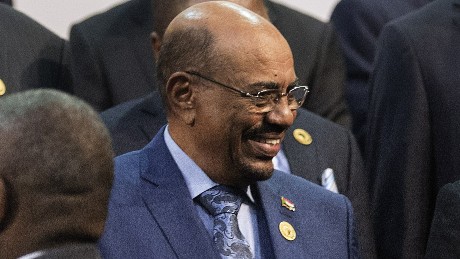
The 75-year-old dictator will be sent to a correctional facility, as anyone over the age of 70 cannot go to prison under Sudanese law.
Bashir was still held in the maximum-security Kobar Prison while he faced these charges -- and will return there on Saturday as he faces another upcoming trial.
The former leader, who appeared in a metal cage inside a courtroom in the capital Khartoum, will next face a charge of plotting the 1989 coup that brought him to power.
Once this separate verdict is delivered, he will then serve the two-year correctional facility sentence handed down Saturday -- along with any additional sentences.
Bashir's defense team was escorted out of the courtroom ahead of Saturday's verdict, after it disrupted the judge, standing up and shouting "this is just politics," a CNN journalist at the trial reported.
Beyond those two cases, Bashir has not yet been charged with the 2019 crackdown that left scores of protesters dead and toppled his regime. If he is charged with the killings in that crackdown, Bashir could face the death penalty.
While Sudanese law prohibits anyone over 70 facing the death penalty, it could still be invoked in some particularly serious crimes, regardless of age.
Bashir was ousted in a military coup in April following a lengthy popular uprising.
Under his iron grip, an entire generation grew up in the shadow of war, where the threat of torture in infamous "ghost houses" was never far away, and press freedom nonexistent.
The dictator has been imprisoned in the same notorious Khartoum jail where generations of political dissidents were held under his three-decade rule.
Following his ouster, the Transitional Military Council (TMC) moved in, announcing a three-year transitional period.
But protesters continued their call for civilian rule.
Sudanese women played a pivotal role in the protest movement -- by some estimates accounting for up to 70% of demonstrators.
A CNN investigation earlier this year revealed that was a systematic attempt from soldiers to target female protesters, who were taken to secret detention sites, photographed naked, and in some cases raped.
Yassir Abdulla reported from in Khartoum, Raja Razek reported from Atlanta and Sheena McKenzie wrote in London.
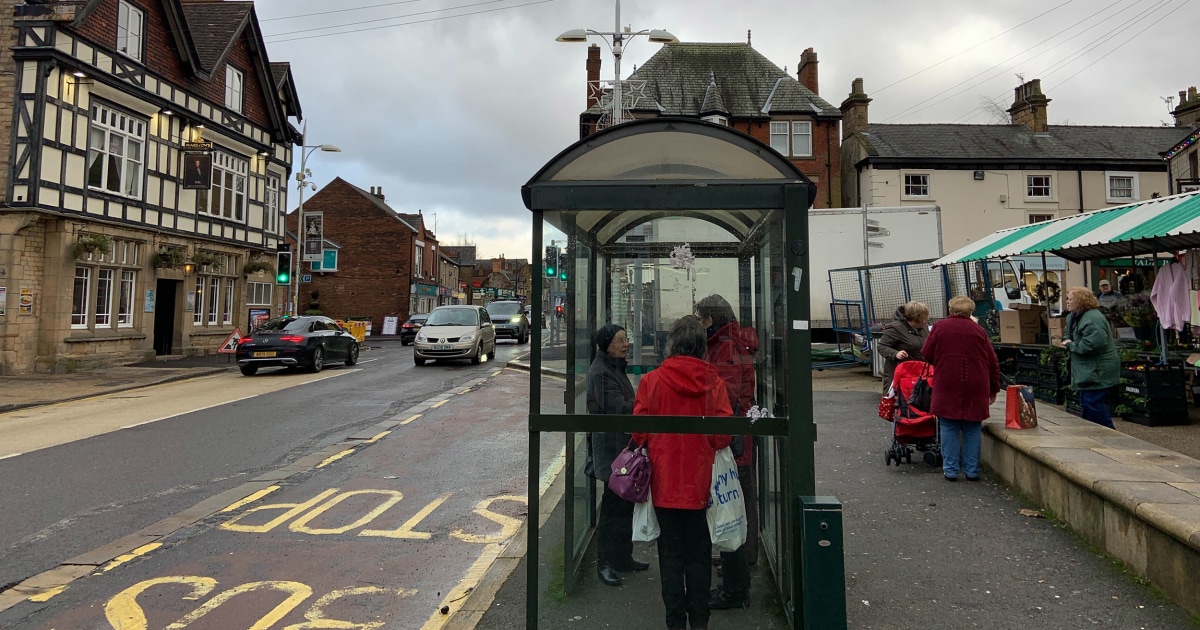
BOLSOVER, England — Standing outside his local pub in this seemingly forgotten English town, John Puntis is discussing his family history. It's a story that goes some way to explain the earthquake that just reshaped the political landscape across the United Kingdom.
On Friday, the country awoke to Prime Minister Boris Johnson winning a resounding victory in the nationwide general election. His Conservative Party flipped dozens of seats that for decades had been considered untouchable bastions of the left-wing Labour Party.
That shift appears partly down to people like Puntis. Like his father and grandfather before him, he was once a diehard Labour-voting miner before the local coal pits closed in the 1980s.
John Puntis, a lifelong Labour voter, explains why he switched to the Conservatives. Alex Smith / NBC News
This week he broke with family tradition and for the first time voted against Labour, a party once synonymous with working-class community spirit.
Switches like this helped his hometown of Bolsover stun the nation and elect its first Conservative Party lawmaker since the constituency was created in 1950. This trend repeated as the Conservatives proceeded to smash through Labour's "red wall" of stronghold working-class seats that once stretched from coast to coast.
"It's groundbreaking," Puntis, 61, said cheerfully, dressed in a red jacket on this chilly, grey morning around three hours' drive north of London. Speaking with a matter-of-fact but friendly manner about the election the night before, he explained, "I've always voted Labour before, but I’m pleased we have a Conservative member of Parliament because now we can get on with Brexit."
Almost all of these conquered Labour strongholds voted to leave the European Union in 2016. For many, that referendum was a proxy for other simmering grievances relating to immigration and the idea Europe had too much control over their lives.
In Bolsover, one of the least well-educated, least ethnically diverse constituencies in the country, some people say they feel forgotten by politicians in London. They are confused, frustrated and angry, some say, at why, after three years of debate and delay, Brexit still hasn't been delivered.
Let our news meet your inbox. The news and stories that matters, delivered weekday mornings.
To them, the simple Conservative campaign promise to "get Brexit done" appealed.
"I think most people here voted for Brexit rather than for the local candidate," said Chris Christopher, 34, who runs a fruit and vegetable shop on the town's main street. "It's still going to be a massive shock around here because we've been Labour for so long."
Chris Christopher.Alex Smith / NBC News
Many people in this deprived area appeared to have few qualms about voting for a Conservative Party responsible for a decade of punishing austerity cuts, which slashed budgets for police, housing, welfare and other services.
These policies have been "entrenching high levels of poverty and inflicting unnecessary misery in" the world's sixth richest country, according to the United Nations.
Johnson, a privately educated Oxford University graduate of immense privilege, has promised to inject cash and resources into these ailing systems — but several campaign promises have already been exposed as somewhat tenuous.
It was a dirty campaign blighted by tricks and untruths by all major parties but most notably the Conservatives. It appears to have paid off.
A few miles up the road, the constituency of Don Valley elected a Conservative for the first time since 1922. Great Grimsby turned blue after voting Labour since 1945. And even former Prime Minister Tony Blair's old seat of Sedgefield was swallowed up by the Conservative advance.
In Bolsover, the outgoing Labour lawmaker, Dennis Skinner, 87, has been in office since 1970.
Dennis Skinner, Labour party MP listens to speeches on the third day of the Labour party conference in Liverpool, north west England.Oli Scarff / AFP via Getty Images file
His local and national notoriety can be measured in him having his own nickname, "the Beast of Bolsover." He represents the old Labour of industrialism and trade unions, rather than the modern party that's seen as speaking for urban college graduates with liberal social attitudes.
Skinner's supporters will point to his age and recent hip replacement surgery that meant he had a reduced presence on the campaign trail. He was defeated by Conservative Mark Fletcher.
Flipping these Labour strongholds was key to Johnson securing his party's biggest win since 1987. For Labour, the night was a catastrophe. Its veteran socialist leader, Jeremy Corbyn, led the party to its worst performance at a nationwide general election since the 1930s.
"I voted for Labour but I don't trust Jeremy Corbyn," said Karen Hepworth, 62, who runs a market stall selling knitwear in Bolsover's square. Labour's campaign policy was to renegotiate a new Brexit deal with the E.U. and put it back to the people for another vote.
"Why do we need another referendum?" Hepworth asked in exasperation, echoing a seemingly widespread dislike of the Labour leader in Bolsover that tracks with national polls.
Although the Conservative victory was unambiguous, there is uncertainty ahead for the U.K.
In Brexit, Johnson's next hurdle is negotiating new trade deals with the E.U., Washington and elsewhere. He has little time to strike these deals, opening the possibility that he may be forced into concessions that could anger the hard-line Brexiteer wing of his party.
Meanwhile, in Scotland and Northern Ireland, there were gains Friday for nationalist lawmakers who want to separate from the U.K. and, in Northern Ireland's case, reunite with the Irish Republic to the south.
In this sense, the vote will do little to dampen fears, or hope, depending on your perspective, that the U.K. might be in danger of breaking apart.
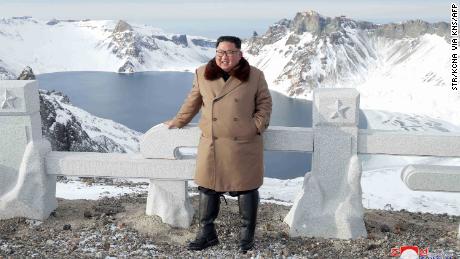
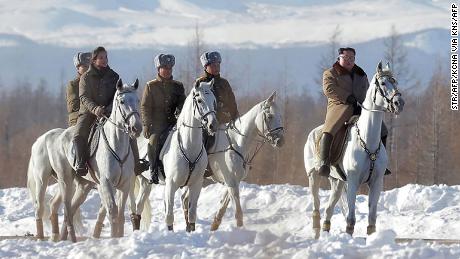
It was not immediately clear what was tested, but the Korean Central News Agency (KCNA) reported that the test would bolster North Korea's "reliable strategic nuclear deterrent."
The launch occurred at around 10:45 p.m. local time (8:45 a.m. ET) Friday, according to KCNA.
In a statement provided to CNN, South Korea's Ministry of Defense said it was working with United States intelligence agencies to monitor activity in areas of interest, but was unable to "confirm specifics."
News of the test follows a similar launch on December 7 that was labeled by North Korea as "very important."
"The research successes being registered by us in defense science one after another recently will be applied to further bolstering up the reliable strategic nuclear deterrent of the Democratic People's Republic of Korea," KCNA said in a report Saturday.
Earlier this month, North Korea warned it would send the US a "Christmas gift," the contents of which would depend on the outcome of ongoing talks between Washington and Pyongyang.
In 2017, North Korea referred to its first test launch of an intercontinental ballistic missile (ICBM) as a "gift" for the US on the Fourth of July holiday. That launch sparked what became a tense, months-long standoff between the two sides.
North Korea's ambassador to the United Nations said last week that denuclearization was off the table in negotiations with the US, which he claimed had been a "time-saving trick" to benefit a "domestic political agenda."
Meanwhile, a satellite image obtained by CNN earlier this month indicates North Korea may be preparing to resume testing engines used to power satellite launchers and intercontinental ballistic missiles.
The commercial satellite imagery, which was captured by Planet Labs, showed new activity at Sohae Satellite Launching Station and the presence of a large shipping container at the facility's engine test stand, according Jeffrey Lewis, director of the East Asia Nonproliferation Program at the Middlebury Institute, which works in partnership with the imaging company.
While engine tests are considered to be less provocative than those involving missiles or satellites, Lewis said that the activity at Sohae is a significant development and a step toward weapons launches of a more threatening nature.
In November, North Korea fired two projectiles that were "presumed to be fired from a super-large caliber multiple rocket launcher," South Korean army officials said.
The uptick in weapons testing comes amid increasing friction between North Korea and its main adversaries, South Korea and the United States. Nuclear negotiations between Washington and Pyongyang have been at an impasse for weeks, and North Korea recently stated it is no longer interested in holding talks with the US.
US President Donald Trump and North Korean leader Kim Jong Un revived their war of words last week. A senior member of the North Korean government again described Trump as a "dotard" after the US President called Kim "Rocket Man."
China has been uncharacteristically quiet ever since news broke that the U.S. had agreed to a phase one trade deal in principle with the Chinese. But that will change soon on Friday.
Chinese officials are set to hold a press conference regarding the trade talks on Friday, at 10:30 pm Beijing time.
A notice to reporters said China will discuss "issues on relevant progress of China-US economic and trade consultation."
Stock futures were higher, but gains were capped as traders awaited a firmer confirmation from the Chinese side.
The deal agreed to in principle by the U.S., which Trump has reportedly signed off on, would delay another round of duties set to kick in on Sunday. It would also slash some existing tariffs in half.
This comes as CNBC's Eunice Yoon learned through a source that China has concerns regarding hard targets the U.S. is pushing for in terms of agricultural purchases. China has committed to buying $40 billion in agricultural products. President Donald Trump, however, wanted a number closer to $50 billion.
The source told Yoon that China is afraid those purchases could put them in conflict with other trading partners. There is also concern that Trump could eventually reimpose tariffs on Chinese goods despite a phase one deal being signed.
Hu Xijin, editor-in-chief of the Global Times who seems to have inside knowledge of the trade war, said the trade talks "have moved a step forward, but how to define this step, and what real significance does it have, the answers lie in joint efforts of China and the U.S." Hu's Twitter account has been followed by many Wall Street traders and market participants for insight on the trade battle.
In an earlier Tweet, Hu said it's "a delicate situation."
In a regular press briefing Friday, China's Foreign Ministry spokesperson Hua Chunying said the Chinese "always insist consultations must be based on the principles of equality and mutual respect, and agreements must be mutually beneficial and win-win." She didn't elaborate further on the limited deal.
China's foreign minister Wang Yi, in a speech Friday at an annual symposium in Beijing on international affairs, said the U.S. and China should find a way to "coexist peacefully," adding that there are "deep-level issues" that need to be resolved. He didn't mention the phase one deal.
Stocks around the world rose globally on Friday amid hopes both sides will move forward with the deal. Dow Jones Industrial Average futures traded more than 100 points higher. In Europe, the Stoxx 600 index was up more than 1.5%. Japan's Nikkei surged 2.6% while the Shanghai Composite jumped 1.8%.
A sudden burst in London-listed companies brought European markets to record peaks early Friday, Reuters reported, as investors celebrated the probable end of more than three-and-a-half years of political turmoil in Britain once the United Kingdom settles on a deal to leave the European Union.
“This election means that getting Brexit done is now the irrefutable, irresistible unarguable decision of the British people. With this election, I think we put an end to all those miserable threats of a second referendum,” Johnson told supporters.
“In this election, your voices have been heard and it’s about time too because we politicians have squandered this three years in squabbles about Brexit,” he continued. “I will put an end to all of that nonsense and we will get Brexit done on time by the 31st of January. No ifs, no buts, no maybes. Leaving the European Union as one United Kingdom, taking back control of our laws, borders, money, our trade, immigration system, delivering on the democratic mandate of the people.”
Johnson also promised that his Conservative Party’s top priority is to massively increase investments in the National Health Service and “make this country the cleanest, greenest on Earth with our far-reaching environmental program.” “You voted to be carbon neutral by 2015 and you also voted to be Corbyn neutral by Christmas and we’ll do that, too,” he said.
The prime minister is scheduled to meet with Queen Elizabeth II at Buckingham Palace, where she will formally ask him to form a new government in her name. President Trump also tweeted his support for Johnson after his victory, hinting that “Britain and the United States will now be free to strike a massive new Trade Deal after BREXIT.”
Labour Party Chairman Ian Lavery told the BBC that he believes his party’s decision to support a second referendum on Brexit ultimately established distrust with voters, ultimately pushing them to put their faith in the Conservative Party at the ballot box in 2019.
“The fact that we went for a second referendum is the real issue in the Labour party. People feel like there’s a lack of trust, people feel like they are let down,” Lavery said.
Former Prime Minister David Cameron also congratulated Johnson, saying that election result "gives us a very strong and decisive government."
The Conservative Party won 43.6 percent of the popular vote compared to the Labour Party’s 32.2 percent following Thursday night’s election. The Tories won by an 11.3 margin, the largest for the Conservatives since 1987. This compares to 2017, when the Labour Party lost the popular vote by only 2.4 percent.
Celebrations at a Conservative results party at a pub in central London.Credit...Andrew Testa for The New York Times
Conservatives celebrate their biggest win since Margaret Thatcher.
With all but one district declared on Friday morning, Prime Minister Boris Johnson’s Conservatives had won 364 seats — 47 more than they won in the last election, in 2017.
The victory is the party’s biggest since Margaret Thatcher captured a third term in 1987 — “literally before many of you were born,” Mr. Johnson told supporters Friday morning. It gives him a comfortable majority in the 650-seat House of Commons.
“We did it,” he said. “We smashed it, didn’t we?”
Jeremy Corbyn’s Labour Party had to reach even farther back to find a more extreme result. It won 203 seats, down 59 from the previous vote, in its worst showing since 1935. It had not suffered a similar drubbing since 1983, when it took 209 seats.
The Scottish National Party captured 48 of Scotland’s 59 seats, a gain of 13. The Liberal Democrats, who were hoping to ride an anti-Brexit stance back to prominence, won just 11 seats, one fewer than in 2017.
The Conservatives collected 43.6 percent of the popular vote, to 32.2 percent for Labour. That 11.3 percentage point margin was also the largest for the Tories since 1987 — a dramatic shift from 2017, when Labour lost the popular vote by just 2.4 percent.
Boris Johnson promises Brexit, and a life after it.
Speaking to his constituents in Uxbridge early Friday morning, Prime Minister Boris Johnson said that the election results appeared to have given his government “a powerful new mandate to get Brexit done.”
Later in the morning, he told supporters, “we put an end to all those miserable threats of a second referendum” that might have reversed the results of the 2016 vote on Brexit.
“We will get Brexit done on time on the 31st of January — no ifs, no buts, no maybes,” he added.
He visited Buckingham Palace and met with Queen Elizabeth II, who formally asked him to form a new government.
He also promised that his government would spend more at home after a decade of austerity under Conservative governments — in particular on Britain’s National Health Service, known commonly as the N.H.S., a cherished program whose conditions have deteriorated.
Mr. Johnson said that he would seek “to unite this country and to take it forward and to focus on the priorities of the British people, and above all on the N.H.S.”
As hospital beds have overflowed, waiting times have gone up and vacancies have gone unfilled, many Britons have grown fearful that the health service could be privatized or otherwise overhauled — for instance by a trade deal with the United States that could drive up drug prices. (President Trump, tweeting congratulations on Friday morning, said Britain could “strike a massive new Trade Deal” after Brexit.)
Mr. Johnson insisted he would protect the health service, echoing his campaign promises to hire 50,000 more nurses and 6,000 doctors.
He promised again to hire more police officers, whose ranks have also thinned, and vowed “colossal new investments in infrastructure and science.”
“Let’s spread opportunity to every corner of the U.K.”
Jeremy Corbyn says he will step aside — but not yet.
Speaking in his constituency of Islington in London, the Labour Party leader Jeremy Corbyn said that he would step down before the next general election, but would stay at the party’s helm for now, as it reflects on how to move forward from its dismal showing.
Mr. Corbyn is already under intense pressure to resign. His has been accused of poor leadership and of failing to handle accusations of anti-Semitism in the party ranks.
“I will not lead the party in any future general election campaign,” he said. “I will discuss with our party to ensure there is a process now of reflection on this result and on the policies that the party will take going forward and I will lead the party during that period to ensure that discussion takes place and we move on into the future.”
It was not clear how long Mr. Corbyn meant to stay on as party leader. The next election could be as long as five years away.
Some members of the Labour Party were quick to criticize him on Thursday night.
“The Labour Party has huge, huge questions to answer,” Ruth Smeeth, a former lawmaker, told Sky News. She immediately laid blame on Mr. Corbyn.
“Jeremy Corbyn should announce that he’s resigning as the leader of the Labour Party from his count today,” she said. “He should have gone many, many, many months ago.”
The Conservative victory buoyed the pound and stocks.
The pound jumped in value on Thursday night and remained high on Friday, buoyed by the receding prospect of a chaotic exit from the European Union without a divorce agreement. At midmorning, it stood at about $1.34, up from about $1.32 a day earlier.
Equity markets were similarly been lifted by the broad Conservative victory, with the FTSE 250 up more than 4 percent. The FTSE 100, which includes companies that rely more heavily on overseas earnings that would be dampened by a stronger pound, rose less sharply.
If the Conservatives manage to pass the withdrawal agreement bill as planned, the gains are likely to hold up through the end of the year, said Peter Dixon, an economist at Commerzbank. Easing global trade tensions should support markets too, after the United States and China, which have been locked in a trade war, settled on a partial deal.
Prospects look more uncertain for the new year.
The current deadline gives the British government has just 11 months to negotiate a complex deal on its long-term trading relationship with the European Union. The two sides may struggle to meet the Dec. 31, 2020 deadline, once again raising the prospect of a damaging “no-deal” Brexit.
“If negotiators get stuck or bogged down or become more fractious, there’s a prospect of more volatility in the currency,” Mr. Dixon said. “The risk of an accidental no-deal Brexit might keep the market on their toes.”
In the longer term, bond yields could also start to edge up if the Scottish secessionist movement gains momentum now that the Scottish National Party has won most of the seats in Scotland.
“The one thing which certain investors, maybe bond market investors, will look at again is the integrity of the U.K. following the strong Scottish result for the S.N.P.,” Mr. Dixon added.
European leaders welcome decisive vote.
European leaders on Friday welcomed the clarity of the British election result, which came during the last day of their summit meeting in Brussels, in hopes that it would make way for resolution of the Brexit deal.
Prime Minister Boris Johnson now has the majority needed to ratify his withdrawal agreement with Brussels by the Jan. 31 deadline laid out by Europe.
Charles Michel, president of the European Council, congratulated Mr. Johnson on Twitter and said that he expected British Parliament to vote on the deal “as soon as possible.”
But that will only start the clock on new negotiations about Britain’s future trading and security relationship with the bloc. Mr. Johnson has said that will be quick and easy, but few experts agree. It can be quick, Brussels argues, only if Britain agrees to keep its regulations and tariffs the very close to those of the European Union.
European leaders remain unsure whether Mr. Johnson, with a resounding mandate, will stick to his campaign pledge to finish any trade negotiation with the European Union by the end of 2020, or choose next summer to seek a year’s delay for longer talks. So long as they are negotiating, Britain is in a “transition” period, and its relationship with the European Union is essentially unchanged, even if it will be legally out of the bloc.
Xavier Bettel, Luxembourg’s prime minister, said he hoped that Mr. Johnson would deliver on his campaign promises, as “people need to have clarity.”
“I hope that with yesterday’s results, they do,” he said. “The excuse that there is no clear majority in London doesn’t last anymore.”
But talks on the future relationship between Britain and the European Union are “not going to be simple,’’ he said.
Big gains for the Scottish National Party raise big questions.
The Scottish National Party’s success — it won 48 of the 59 seats that it contested — will intensify the debate over independence for Scotland, which voted against Brexit and has largely rejected Britain’s major parties.
In a 2014 referendum, 45 percent of the voters in Scotland backed independence, and as Brexit approaches, the Scottish National Party, which backs independence, has insisted on a second referendum.
Mr. Johnson has said a national government under him would not hold a Scottish independence vote, but the Scottish government has suggested that it might go ahead with one.
“The people of Scotland will have made very clear that they didn’t want Boris Johnson as P.M., that they don’t want Brexit, and they want Scotland’s future to be in Scotland’s hands,” Nicola Sturgeon, leader of the Scottish National Party, told Sky News late Thursday night. “There is a mandate now to offer the people of Scotland a choice over their own future.”
Before 2015, the Scottish National Party had never won more than seven seats in Parliament. But under Ms. Sturgeon, it has now dominated the Scottish vote in three successive elections.
Voters in Corbyn stronghold woke up to disappointment.
On Friday morning, voters in and around the heavily pro-Labour north London constituency represented by Jeremy Corbyn, the party’s leader, woke up dismayed by its losses nationally.
“He failed to lead a proper campaign,” said Sarah Rose, a 43-year-old sociologist, said of Mr. Corbyn as she walked her dogs in Clissold Park. “He failed to tackle accusations of anti-Semitism, and he failed to have a sensible position on Brexit. It’s devastating.”
As expected, Mr. Corbyn won a landslide re-election in this Labour stronghold, but many people said they had doubts about continuing to support him. And as commuters headed to work in a cold drizzle, Labour sympathizers said the party needed to think long and hard about the outcome.
“Nobody here was thinking that Labour would have a majority, and it’s now clear that nobody wants a future with Corbyn,” said Tom Findlay, a 46-year-old music producer and psychotherapist.
He said he went to bed after the first exit polls on Thursday night confirmed a sweeping defeat for Labour. After he woke up early on Friday, his disappointment deepened when he heard that Mr. Corbyn would cling, for now, to his leadership position.
Mr. Corbyn told supporters he would not lead the party into another election, but that he would still oversee a “process of reflection.” He didn’t specify when he would step down.
“It’s typical of his arrogance: he is planning to stay a little bit longer while it’s so clear that he has been rejected,” Mr. Findlay said.
But he tried to see a silver lining. Many people in his part of London were devastated, he said, adding, “it’s going to be good for my therapy business, unfortunately.”
Businesses are relieved but still nervous.
Britain’s businesses welcomed the strong result for the Conservatives and the Brexit certainty it is expected to bring, at least for now. But they remain fearful of facing another Brexit deadline at the end of next year.
“The starting point must be rebuilding business confidence, and early reassurance on Brexit will be vital,” said Carolyn Fairbairn, the director general of the Confederation of British Industry, the country’s biggest business association.
Parts of the economy have been in limbo for much of the past three years, as negotiations with the European Union dragged on, and Parliament was unable to muster majority support for any one approach.
Both the Conservatives and Labour have worried the business community at different points. Labour had promised to nationalize some industries, while Boris Johnson had unnerved businesspeople with his determination to plow on with leaving the European Union, even without an agreement.
Now, companies want to know that they won’t be staring down another potentially disastrous deadline next year.
“Firms will continue to do all they can to prepare for Brexit, but will want to know they won’t face another no deal cliff-edge next year,” Ms. Fairbairn said.
The British Retail Consortium, which represents supermarkets, called for some reassurances on the trade deal the government will have to negotiate with the European Union.
More women than ever will take seats in Parliament.
Britain will have a record number of female members of Parliament after Thursday’s vote, when women won at least 220 of the 650 seats, according to the Press Association.
At just over one-third of the House of Commons, women remain far short of parity with men, but they have made tremendous gains since the mid-1980s, when there were only 23 in Parliament. In the last general election, in 2017, women won 211 seats, a record at the time.
This year’s increase comes at a time when many people feared that women were being driven away from politics in a climate of heightened divisions. Online threats and abuse have risen sharply, and were disproportionately directed at female candidates.
An analysis of Twitter during the campaign, conducted by PoliMonitor, showed that all candidates received about four times as much abuse as in the 2017 election. The hostility aimed at women, the study said, was often based specifically on their sex or appearance.
Reporting was contributed by Richard Pérez-Peña, Megan Specia, Benjamin Mueller, Steven Erlanger, Ceylan Yeginsu, Amie Tsang, Stephen Castle, Elian Peltier and Alan Yuhas.
Celebrations at a Conservative results party at a pub in central London.Credit...Andrew Testa for The New York Times
Conservatives celebrate their biggest win since Margaret Thatcher.
With all but one district declared on Friday morning, Prime Minister Boris Johnson’s Conservatives had won 364 seats — 47 more than they won in the last election, in 2017.
The victory is the party’s biggest since Margaret Thatcher captured a third term in 1987 — “literally before many of you were born,” Mr. Johnson told supporters Friday morning. It gives him a comfortable majority in the 650-seat House of Commons.
“We did it,” he said. “We smashed it, didn’t we?”
Jeremy Corbyn’s Labour Party had to reach even farther back to find a more extreme result. It won 203 seats, down 59 from the previous vote, in its worst showing since 1935. It had not suffered a similar drubbing since 1983, when it took 209 seats.
The Scottish National Party captured 48 of Scotland’s 59 seats, a gain of 13. The Liberal Democrats, who were hoping to ride an anti-Brexit stance back to prominence, won just 11 seats, one fewer than in 2017.
The Conservatives collected 43.6 percent of the popular vote, to 32.2 percent for Labour. That 11.3 percentage point margin was also the largest for the Tories since 1987 — a dramatic shift from 2017, when Labour lost the popular vote by just 2.4 percent.
Boris Johnson promises Brexit, and a life after it.
Speaking to his constituents in Uxbridge early Friday morning, Prime Minister Boris Johnson said that the election results appeared to have given his government “a powerful new mandate to get Brexit done.”
Later in the morning, he told supporters, “we put an end to all those miserable threats of a second referendum” that might have reversed the results of the 2016 vote on Brexit.
“We will get Brexit done on time on the 31st of January — no ifs, no buts, no maybes,” he added.
He also promised that his government would spend more at home after a decade of austerity under Conservative governments — in particular on Britain’s National Health Service, known commonly as the N.H.S., a cherished program whose conditions have deteriorated.
Mr. Johnson said that he would seek “to unite this country and to take it forward and to focus on the priorities of the British people, and above all on the N.H.S.”
As hospital beds have overflowed, waiting times have gone up and vacancies have gone unfilled, many Britons have grown fearful that the health service could be privatized or otherwise overhauled — for instance by a trade deal with the United States that could drive up drug prices. (President Trump, tweeting congratulations on Friday morning, said Britain could “strike a massive new Trade Deal” after Brexit.)
Mr. Johnson insisted he would protect the health service, echoing his campaign promises to hire 50,000 more nurses and 6,000 doctors.
He promised again to hire more police officers, whose ranks have also thinned, and vowed “colossal new investments in infrastructure and science.”
“Let’s spread opportunity to every corner of the U.K.”
Jeremy Corbyn says he will step aside — but not yet.
Speaking in his constituency of Islington in London, the Labour Party leader Jeremy Corbyn said that he would step down before the next general election, but would stay at the party’s helm for now, as it reflects on how to move forward from its dismal showing.
Mr. Corbyn is already under intense pressure to resign. His has been accused of poor leadership and of failing to handle accusations of anti-Semitism in the party ranks.
“I will not lead the party in any future general election campaign,” he said. “I will discuss with our party to ensure there is a process now of reflection on this result and on the policies that the party will take going forward and I will lead the party during that period to ensure that discussion takes place and we move on into the future.”
It was not clear how long Mr. Corbyn meant to stay on as party leader. The next election could be as long as five years away.
Some members of the Labour Party were quick to criticize him on Thursday night.
“The Labour Party has huge, huge questions to answer,” Ruth Smeeth, a former lawmaker, told Sky News. She immediately laid blame on Mr. Corbyn.
“Jeremy Corbyn should announce that he’s resigning as the leader of the Labour Party from his count today,” she said. “He should have gone many, many, many months ago.”
The Conservative victory buoyed the pound and stocks.
The pound jumped in value on Thursday night and remained high on Friday, buoyed by the receding prospect of a chaotic exit from the European Union without a divorce agreement. At midmorning, it stood at about $1.34, up from about $1.32 a day earlier.
Equity markets were similarly been lifted by the broad Conservative victory, with the FTSE 250 up more than 4 percent. The FTSE 100, which includes companies that rely more heavily on overseas earnings that would be dampened by a stronger pound, rose less sharply.
If the Conservatives manage to pass the withdrawal agreement bill as planned, the gains are likely to hold up through the end of the year, said Peter Dixon, an economist at Commerzbank. Easing global trade tensions should support markets too, after the United States and China, which have been locked in a trade war, settled on a partial deal.
Prospects look more uncertain for the new year.
The current deadline gives the British government has just 11 months to negotiate a complex deal on its long-term trading relationship with the European Union. The two sides may struggle to meet the Dec. 31, 2020 deadline, once again raising the prospect of a damaging “no-deal” Brexit.
“If negotiators get stuck or bogged down or become more fractious, there’s a prospect of more volatility in the currency,” Mr. Dixon said. “The risk of an accidental no-deal Brexit might keep the market on their toes.”
In the longer term, bond yields could also start to edge up if the Scottish secessionist movement gains momentum now that the Scottish National Party won most of the seats in Scotland.
“The one thing which certain investors, maybe bond market investors, will look at again is the integrity of the U.K. following the strong Scottish result for the S.N.P.,” Mr. Dixon added.
European leaders welcome decisive vote.
European leaders on Friday welcomed the clarity of the British election result, which came during the last day of their summit meeting in Brussels, in hopes that it would make way for resolution of the Brexit deal.
Prime Minister Boris Johnson now has the majority needed to ratify his withdrawal agreement with Brussels by the Jan. 31 deadline laid out by Europe.
Charles Michel, president of the European Council, congratulated Mr. Johnson on Twitter and said that he expected British Parliament to vote on the deal “as soon as possible.”
But that will only start the clock on new negotiations about Britain’s future trading and security relationship with the bloc. Mr. Johnson has said that will be quick and easy, but few experts agree. It can be quick, Brussels argues, only if Britain agrees to keep its regulations and tariffs the very close to those of the European Union.
European leaders remain unsure whether Mr. Johnson, with a resounding mandate, will stick to his campaign pledge to finish any trade negotiation with the European Union by the end of 2020, or choose next summer to seek a year’s delay for longer talks. So long as they are negotiating, Britain is in a “transition” period, and its relationship with the European Union is essentially unchanged, even if it will be legally out of the bloc.
Xavier Bettel, Luxembourg’s prime minister, said he hoped that Mr. Johnson would deliver on his campaign promises, as “people need to have clarity.”
“I hope that with yesterday’s results, they do,” he said. “The excuse that there is no clear majority in London doesn’t last anymore.”
But talks on the future relationship between Britain and the European Union are “not going to be simple,’’ he said.
Big gains for the Scottish National Party raise big questions.
The Scottish National Party’s success — it won 48 of the 59 seats that it contested — will intensify the debate over independence for Scotland, which voted against Brexit and has largely rejected Britain’s major parties.
In a 2014 referendum, 45 percent of the voters in Scotland backed independence, and as Brexit approaches, the Scottish National Party, which backs independence, has insisted on a second referendum.
Mr. Johnson has said a national government under him would not hold a Scottish independence vote, but the Scottish government has suggested that it might go ahead with one.
“The people of Scotland will have made very clear that they didn’t want Boris Johnson as P.M., that they don’t want Brexit, and they want Scotland’s future to be in Scotland’s hands,” Nicola Sturgeon, leader of the Scottish National Party, told Sky News late Thursday night. “There is a mandate now to offer the people of Scotland a choice over their own future.”
Before 2015, the Scottish National Party had never won more than seven seats in Parliament. But under Ms. Sturgeon, it has now dominated the Scottish vote in three successive elections.
Voters in Corbyn stronghold woke up to disappointment.
On Friday morning, voters in and around the heavily pro-Labour north London constituency represented by Jeremy Corbyn, the party’s leader, woke up dismayed by its losses nationally.
“He failed to lead a proper campaign,” said Sarah Rose, a 43-year-old sociologist, said of Mr. Corbyn as she walked her dogs in Clissold Park. “He failed to tackle accusations of anti-Semitism, and he failed to have a sensible position on Brexit. It’s devastating.”
As expected, Mr. Corbyn won a landslide re-election in this Labour stronghold, but many people said they had doubts about continuing to support him. And as commuters headed to work in a cold drizzle, Labour sympathizers said the party needed to think long and hard about the outcome.
“Nobody here was thinking that Labour would have a majority, and it’s now clear that nobody wants a future with Corbyn,” said Tom Findlay, a 46-year-old music producer and psychotherapist.
He said he went to bed after the first exit polls on Thursday night confirmed a sweeping defeat for Labour. After he woke up early on Friday, his disappointment deepened when he heard that Mr. Corbyn would cling, for now, to his leadership position.
Mr. Corbyn told supporters he would not lead the party into another election, but that he would still oversee a “process of reflection.” He didn’t specify when he would step down.
“It’s typical of his arrogance: he is planning to stay a little bit longer while it’s so clear that he has been rejected,” Mr. Findlay said.
But he tried to see a silver lining. Many people in his part of London were devastated, he said, adding, “it’s going to be good for my therapy business, unfortunately.”
Northern Ireland’s unionists received the election results with anger.
The general election results met withdisappointment and anger from unionists in Northern Ireland, who bitterly oppose Prime Minister Boris Johnson’s Brexit plan that would effectively put a trade border between them and the rest of Britain.
Unionists — the people, mostly Protestant, who want to remain part of the United Kingdom — view the deal as a betrayal, because it would put Northern Ireland in a separate customs system from the rest of the United Kingdom. They see that as a step toward unifying Northern Ireland with the Republic of Ireland.
“The poll clearly creates the expectation that Boris Johnson will try to force the Betrayal Act through Parliament,” said Jamie Bryson, a prominent unionist activist who is challenging the Brexit agreement in court. “An economic united Ireland will never be tolerated.”
After the 2017 election, when the Conservatives fell just short of winning a majority in Parliament, they reached an agreement with the Democratic Unionist Party of Northern Ireland that allowed the Tories to govern.
But the D.U.P. opposed Prime Minister Theresa May’s Brexit deal with Brussels because it could have resulted in Northern Ireland being treated differently from the rest of Britain. For them, Mr. Johnson’s deal is worse, making that difference a certainty.
Mr. Johnson’s big victory eliminates any leverage the D.U.P. had over the government, and the party fell from ten seats to eight.
Many Northern Ireland republicans — those people, mostly Catholic, who favor unification with Ireland — also oppose the deal.
Both republicans and unionists say it is incompatible with the Good Friday Agreement, the 1998 pact that ended three decades of violence between the two communities, and threatens to inflame sectarian tensions.
“If the political process has been exhausted then potentially, we could face some very dark days ahead,” Mr. Bryson said. “And that’s obviously something everyone wants to avoid.”
More women than ever will take seats in Parliament.
Britain will have a record number of female members of Parliament after Thursday’s vote, when women won at least 220 of the 650 seats, according to the Press Association.
At just over one-third of the House of Commons, women remain far short of parity with men, but they have made tremendous gains since the mid-1980s, when there were only 23 in Parliament. In the last general election, in 2017, women won 211 seats, a record at the time.
This year’s increase comes at a time when many people feared that women were being driven away from politics in a climate of heightened divisions. Online threats and abuse have risen sharply, and were disproportionately directed at female candidates.
An analysis of Twitter during the campaign, conducted by PoliMonitor, showed that all candidates received about four times as much abuse as in the 2017 election. The hostility aimed at women, the study said, was often based specifically on their sex or appearance.
Reporting was contributed by Richard Pérez-Peña, Megan Specia, Benjamin Mueller, Steven Erlanger, Ceylan Yeginsu, Amie Tsang, Stephen Castle and Alan Yuhas.