Senin, 09 Desember 2019

General election 2019: Boris Johnson targets Labour Leave seats in final push - BBC News

Boris Johnson is touring Brexit-voting Labour-held seats in Humberside and north-east England, with three days to go before polling day.

In a speech later in Sunderland - 61% of which voted to Leave - the PM is expected to tell voters: "The Labour party has let you down."

He will attack Parliament, saying it has "delayed" and "denied" Brexit.

Mr Johnson will also travel to south-west England, where he will warn against voting for the pro-EU Lib Dems.

Meanwhile, shadow chancellor John McDonnell will set out Labour plans to deliver a budget to "end austerity" within its first 100 days if the party wins Thursday's election.

In a speech in London setting out his priorities, he will also pledge to get "money moving out of Whitehall and the City".

The Liberal Democrats are, meanwhile, pledging to table legislation to stop Brexit immediately after the election by introducing two draft bills they say would pave the way for another EU referendum.

The first would enable the Electoral Commission to start the necessary consultation around a referendum question and lead campaign designation - and the second would provide a referendum on the government's Brexit deal versus remaining in the EU.

Lib Dem leader Jo Swinson told Radio 4's Today the "most likely way" to stop Brexit was through another vote as the possibility of her party winning power on its own and revoking Article 50 looked increasingly remote.

'Sunderland's roar'

The Conservative Party says the prime minister is intending to "visit every region in England and Wales" in the final three days, with a message that a vote for his party is a vote to "get Brexit done and unleash Britain's potential".

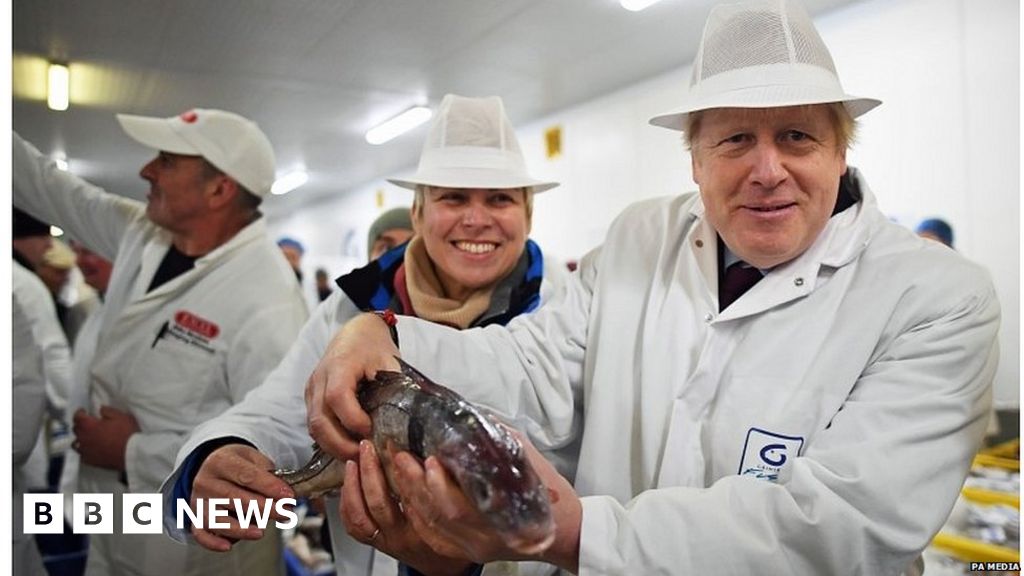
He started the day at a fish market in Grimsby, one of a number of longstanding Labour constituencies that voted heavily to leave the EU in the 2016 referendum that both the Conservatives and the Brexit Party are targeting.

On a visit to Sunderland later, Mr Johnson is expected to say: "It's now been 1,264 days since Sunderland's roar was heard on the night of 23 June 2016.

"1,264 days in which parliament should have delivered what you voted for, taken us out of the EU, and addressed all the reasons you voted so decisively for change."

He will attack Parliament, saying that it has "bent every rule and broken every convention as it has delayed, diluted and denied Brexit".

And he will suggest that Mr Corbyn, who is promising another Brexit referendum within six months if he wins power, has "let down" traditional Labour supporters,

"Under Jeremy Corbyn, they promised to honour the result of the referendum - before voting against Brexit every chance they had," he will say.

Mr Johnson has repeatedly warned that the only alternative to a Conservative majority is a hung Parliament, with Mr Corbyn and SNP leader Nicola Sturgeon forming a coalition and resulting in further referendums on Brexit and Scottish independence.

Ms Sturgeon has said she is confident an agreement on a second independence vote could be done if Labour needed SNP support to form a government if there is a hung parliament.

But Mr Corbyn has ruled out supporting a Scottish independence referendum until after the next Holyrood election in 2021.

On Sunday, Mr Johnson insisted there will not be any checks for goods travelling from Northern Ireland to Great Britain under his Brexit deal.

He told Sky News that a leaked Treasury analysis document was "wrong" to suggest this would be the case.

His Brexit deal means there will be goods checks from GB to NI, but there has been confusion on whether there will be checks in the other direction. Labour said the PM's claims about his deal with the EU were "fraudulent".

Between now and the election on 12 December, we want to help you understand the issues behind the headlines.

Keep up to date with the big questions in our newsletter, Outside The Box.

Sign up to our Outside The Box here (UK users only).

Let's block ads! (Why?)


https://news.google.com/__i/rss/rd/articles/CBMiL2h0dHBzOi8vd3d3LmJiYy5jb20vbmV3cy9lbGVjdGlvbi0yMDE5LTUwNzA2OTMy0gEzaHR0cHM6Ly93d3cuYmJjLmNvbS9uZXdzL2FtcC9lbGVjdGlvbi0yMDE5LTUwNzA2OTMy?oc=5

2019-12-09 07:59:28Z
52780464144156

Five dead, many missing, after volcanic eruption on New Zealand island popular with tourists - The Washington Post

Dangerous conditions have prevented police and rescue services from reaching the island, Tims said, citing experts who found that the area is unstable and said more eruptions could be possible.

“The physical environment is unsafe for us to return to the island,” Tims said. “It is important that we consider the health and safety of those that are going to rescue those on the island.”

Prime Minister Jacinda Ardern told reporters at an earlier news conference that both New Zealanders and foreign visitors were on or near the island when the volcano erupted at 2:11 p.m. White Island is located roughly 30 miles from New Zealand’s North Island in the Bay of Plenty. It is uninhabited, but is frequented by tourists.

“I know there will be a huge amount of concern and anxiety for those who have loved ones on or around the island at the time, and I can assure them police are doing everything they can,” said Ardern, who noted that she will be traveling to the island Monday night along with New Zealand’s Minister of Civil Defence, Peeni Henare.

A number of visitors to the island during the eruption came from the Ovation of the Seas cruise ship, which is visiting the nearby city of Tauranga. In a statement to The Washington Post, the New Zealand Cruise Association’s CEO Kevin O’Sullivan extended “heartfelt concern to the passengers and their families.”

The eruption, described by GNS Science’s Ken Gledhill as a “throat-clearing kind of eruption,” released ash 12,000 meters above the island.

“On the scheme of things for volcanic eruptions, it’s not large, but if you were close to that, it is not good,” Gledhill said at the news conference. Photos of the volcano’s crater rim minutes before the eruption showed people walking nearby, the New Zealand Herald reported.

One video taken of the eruption from a boat offshore captured thick clouds rising from the island. A voice could be heard frantically telling passengers to go inside the boat’s cabin. In another clip, the island appeared to be completely enveloped by ash.

On Twitter Monday afternoon, New Zealand’s National Emergency Management Agency warned that it continues to be “hazardous in the immediate vicinity of the volcano” and urged people to pay attention to detailed safety advice, adding, “Act on it promptly.”

White Island bills itself as “New Zealand’s most active volcano,” according to its official website, which advertises a “fully-guided exploration” of the volcano’s inner crater complex as a “must-do experience.” The island’s last eruption occurred in 2016, but no one was hurt, according to the Guardian.

In the weeks before Monday’s incident, GeoNet, an agency that provides geological hazard information for New Zealand, issued multiple reports of “volcanic unrest” on the island.

“Moderate volcanic unrest continues at Whakaari/White Island, with substantial gas, steam and mud bursts observed at the vent located at the back of the crater lake,” stated a report from last Tuesday.

During Monday’s news conference, Ardern declined to answer a question about whether visitors should have been allowed to go to the island given the recent increase in volcanic activity.

“In this moment in time, the absolute focus needs to be the search and rescue operation,” she said. “There will be a time and a place to undertake further assessments. Now, we have to focus on allowing the police to do their job and focus on those who were in the vicinity of the island at the time.”

Emanuel Stoakes in Christchurch, NZ contributed to this report.

Let's block ads! (Why?)


https://news.google.com/__i/rss/rd/articles/CBMia2h0dHBzOi8vd3d3Lndhc2hpbmd0b25wb3N0LmNvbS9uYXRpb24vMjAxOS8xMi8wOC93aGl0ZS1pc2xhbmQtd2hha2FhcmktZXJ1cHRpb24tbmV3LXplYWxhbmQtamFjaW5kYS1hcmRlcm4v0gF6aHR0cHM6Ly93d3cud2FzaGluZ3RvbnBvc3QuY29tL25hdGlvbi8yMDE5LzEyLzA4L3doaXRlLWlzbGFuZC13aGFrYWFyaS1lcnVwdGlvbi1uZXctemVhbGFuZC1qYWNpbmRhLWFyZGVybi8_b3V0cHV0VHlwZT1hbXA?oc=5

2019-12-09 08:59:00Z
52780477258387

Minggu, 08 Desember 2019

Congress just kicked Trump's trade deal in the teeth for all the right reasons - Business Insider

Donald Trump smiling teethPresident Donald Trump smiles as he speaks during an event to honor the 2019 Stanley Cup Champions, the St. Louis Blues hockey team in the Rose Garden of the White House, Tuesday, Oct. 15, 2019, in Washington.AP

  • Over the past few weeks Congress has passed two bills that ensure Donald Trump's dreams of a trade deal that would reshape the Chinese economy are dead.
  • The bills condemn the Chinese government for political repression and violence in Hong Kong and Xinjiang, a province in Western China. As such, to Beijing they represent a violation of Chinese sovereignty.
  • Here in the US the bills should represent a commitment to US values.
  • And politically, they show that US sentiment toward China has darkened to the point that even Republicans know they cannot be seen as soft on the country — even when it means destroying one of the Trump administration's most important initiatives.
  • Visit Business Insider's homepage for more stories.

If — and it's a big if — Donald Trump gets his "Phase 1 trade deal" with China, there will be no "Phase 2." He'll suffer this loss, in part, because Congress passed two bills standing up for human rights on Chinese territory. The US is a better country for it.

The two bills angered Beijing by stepping on the third rail of Chinese politics — China's territorial integrity. It's a red line Washington, and the Trump administration, have been warned of in no uncertain terms.

In 2017 Lu Kang, an official in the Chinese Ministry of Foreign Affairs, gave a rare American interview to NBC News and made it clear that Beijing would be happy to work with the new US President on any issue except for one — Taiwan. To China, Taiwan is still a part of its territory. And the message was that any perceived threat to China's territorial integrity would not be tolerated.

Almost three years later it is not Taiwan that has Beijing crying foul over US interference on its land, but rather Xinjiang and Hong Kong. Both places have garnered international attention for the Chinese government's trampling of human rights in those regions.

The first bill addressing the two regions, passed a few weeks ago, is called the Hong Kong Human Rights and Democracy Act, and the legislation articulates US support for the months-long protests in Hong Kong. The second bill, passed last week, is The Uighur Human Rights Policy Act. It condemns China's internment of Uighur Muslim minorities in "reeducation" camps in the country's western Xinjiang province.

After each bill was passed China's propaganda machine went into overdrive. The country's Foreign Ministry didn't sound much different from nationalist newspaper The Global Times. For example, this week Foreign Ministry spokesperson Hua Chunying compared China's actions in Xinjiang to the US's anti-terrorism drive after 9/11, and reminded the US of its own past.

"What ignorance, what brazenness, what hypocrisy!" Hua said. "Have they forgotten? The two-century long American history is tainted with the blood and tears of native Indians, who were originally masters of the continent."

So, if you were under the impression that working on 'Phase 1' of the trade deal implied that there would also be a 'Phase 2' you can put that to rest. There will be no grand bilateral trade deal with China that opens up its economy through negotiation. The best we can hope for now is a cessation of hostilities, some small adjustments to how China treats US companies, and some agricultural purchases on China's part.

On one hand, this failure can ultimately be attributed, in part, to Congress' decision to stand up for American values. Good. On the other hand, it is a testament to the intense anti-China sentiment that has taken over Washington in the age of Donald Trump — a sentiment that is bound to linger beyond his administration and change the tenor of relationships across the planet.

Mitch's House  

The GOP-controlled US Senate is not supposed to pass bills that wreck a Republican President's agenda, especially in this age of Trump. But it did.

Both the Xinjiang and Hong Kong bills were passed by unanimous consent (UC). That means that bill was not brought to the floor by Majority Leader Mitch McConnell as bills normally are. Instead, under UC any Senator can bring a bill to the floor, but any of the other 99 Senators can hold up the bill with a word.

In both the Xinjiang and Hong Kong bill's cases, not a single Senator stopped the passage of the legislation which gave both bills veto-proof majorities. 

"Train left the station and was moving full steam ahead, and the White House couldn't stop it," one Senate aide involved with the efforts to pass the Hong Kong bill told Business Insider. "The public sentiment in favor of Hong Kong and against China was too strong." 

President Donald Trump, left, hugs Senate Majority Leader Mitch McConnell of Ky., right, as he comes up on stage during a campaign rally in Lexington, Ky., Monday, Nov. 4, 2019.  (AP Photo/Susan Walsh)President Donald Trump, left, hugs Senate Majority Leader Mitch McConnell of Ky., right, as he comes up on stage during a campaign rally in Lexington, Ky., Monday, Nov. 4, 2019. (AP Photo/Susan Walsh)Associated Press

McConnell couldn't stop the bills and risk looking weak when the legislation was likely forced through, and the White House couldn't find a Senator willing to stand up and stop its passage. Compare that to a bill condemning the Armenian genocide, which — in part as an effort to placate the Turkish government — the White House has been able to stop three separate times using three different Senators over the past few weeks.

Sources on Capitol Hill told Business Insider that members of both houses were too afraid of looking weak on China to stop the bill. After all, for years the Trump administration has made it clear that the rivalry between the US and China was to intensify on virtually every front, attacking individual Chinese companies and the government alike.

"Trump stirred up an anti-China fever among Republicans, so they're all looking for ways to f--k with China," one House Democratic source told Business Insider, citing Congresses move to ban the purchase of Chinese made buses and trains as an example. 

"But then [members of Congress] also realize that their districts stand to lose a lot of the trade war escalates," the person continued. "So they tried to balance that [with pleasing Trump]. But that can only last so long." 

Phase forever

You can be forgiven for not knowing exactly where we stand on "Phase 1" of the trade deal with China.

This week Bloomberg reported that the deal was close. Reuters said the Chinese are waiting for Trump to agree to roll back existing tariffs on Chinese goods. Commerce Secretary Wilbur Ross told CNBC that the deal still lacked details, that what the parties had on paper was a view "from 40,000 feet."

The President himself said he may postpone the deal until after the 2020 elections (if he's reelected), and finally the Wall Street Journal reported Jared Kushner — the President's son-in-law, advisor, and White House patron saint of hopeless causes —  has added pushing "Phase 1" past the finished line to his seemingly ever-growing list of duties.

It's exhausting and all roads lead to virtually nowhere. Here's the most optimistic scenario: The White House will not increase tariffs on China on December 15th, meaning "Phase 1" could materialize, if not this month, then next quarter. But it would require Donald "Tariff Man" Trump to roll back tariffs on China — something we have yet to see him do.

"We may have a deal, we may have a punt, I don't think we'll have a blow up," Leland Miller, founder of private Chinese business survey, China Beige Book, told Business Insider. 

And then there are the pessimists, who know that —whatever happens next — the game is over. One former US State Department official who spent their career in Asia assumed the passage of the Hong Kong and Xinjiang bills meant Trump had given up on a deal all-together.

"There is not going to be a trade deal," they said. "Someone should tell the markets."

Let's block ads! (Why?)


https://news.google.com/__i/rss/rd/articles/CBMiZmh0dHBzOi8vd3d3LmJ1c2luZXNzaW5zaWRlci5jb20vY29uZ3Jlc3MtaG9uZy1rb25nLXVpZ2h1ci1iaWxscy10cnVtcC1jaGluYS10cmFkZS1kZWFsLXRhcmlmZnMtMjAxOS0xMtIBZmh0dHBzOi8vYW1wLmJ1c2luZXNzaW5zaWRlci5jb20vY29uZ3Jlc3MtaG9uZy1rb25nLXVpZ2h1ci1iaWxscy10cnVtcC1jaGluYS10cmFkZS1kZWFsLXRhcmlmZnMtMjAxOS0xMg?oc=5

2019-12-08 13:20:05Z
52780468330986

North Korea holds 'very important test' at supposedly closed missile site - New York Post

North Korea conducted a “very important test” at a long-range missile launch site that the reclusive regime had promised to close as part of nuclear weapons talks with the United States, state media reported on Sunday.

The development comes as Pyongyang has warned it would seek a “new path” with the stalled denuclearization talks if the US fails to make major concessions by the end of the year, according to KCNA, the Korean Central News Agency.

The test occurred Saturday at the Sohae Satellite Launching Ground and will have an “important effect on changing the strategic position of (North Korea) once again in the near future,” a spokesman for the North’s Academy of National Defense Science said in a statement carried by KCNA.

North Korean President Kim Jong-un agreed to dismantle the Sohae facility during talks with President Trump in Singapore last year, but reports in March said it was being restored.

North Korea didn’t elaborate on what the test included.

Missile experts said it appears North Korea tested a rocket engine rather than a missile launch, which are typically quickly detected by South Korea.

South Korea and the US closely monitor activity at such sites.

“If it is indeed a static engine test for a new solid or liquid fuel missile, it is yet another loud signal that the door for diplomacy is quickly slamming, if it isn’t already,” Vipin Narang, a nuclear affairs expert at the Massachusetts Institute of Technology, told Reuters.

“This could be a very credible signal of what might await the world after the New Year,” Narang said.

Solid fuel increases a weapon’s mobility and lessens the amount of preparation time for a launch. In the past, North Korean long-range missiles used liquid fuel.

Pyongyang informed the United Nations on Saturday that denuclearization talks with Washington are not needed.

“The results of the recent important test will have an important effect on changing the strategic position of the DPRK once again in the near future,” KCNA reported, referring to North Korea’s official name, the Democratic People’s Republic of Korea.

North Korea, which launched two short-range projectiles last month, has been ramping up its rhetoric against the Trump administration.

It once again referred to Trump as a “dotard” last week after the president called Kim “Rocket Man.”

A dotard refers to an elderly person with weakening mental or physical capabilities.

Asked on Saturday about reestablishing negotiations with North Korea, Trump said he and Kim have a good relationship.

“I think we both want to keep it that way. He knows I have an election coming up. I don’t think he wants to interfere with that. But we’ll have to see,” Trump said at the White House.

With Post wires

Let's block ads! (Why?)


https://news.google.com/__i/rss/rd/articles/CBMiZmh0dHBzOi8vbnlwb3N0LmNvbS8yMDE5LzEyLzA4L25vcnRoLWtvcmVhLWhvbGRzLXZlcnktaW1wb3J0YW50LXRlc3QtYXQtc3VwcG9zZWRseS1jbG9zZWQtbWlzc2lsZS1zaXRlL9IBamh0dHBzOi8vbnlwb3N0LmNvbS8yMDE5LzEyLzA4L25vcnRoLWtvcmVhLWhvbGRzLXZlcnktaW1wb3J0YW50LXRlc3QtYXQtc3VwcG9zZWRseS1jbG9zZWQtbWlzc2lsZS1zaXRlL2FtcC8?oc=5

2019-12-08 13:46:00Z
52780469273462

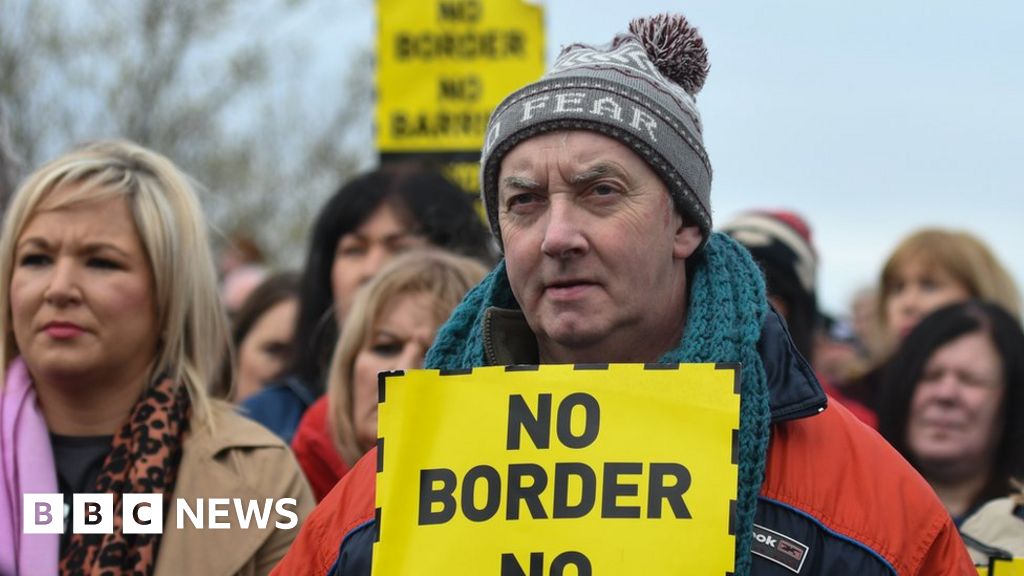
Election 2019: Will there be checks between Great Britain and NI? - BBC News

The claim: Boris Johnson said goods entering Northern Ireland from Great Britain would only be checked if they are expected to be moved onwards into the Republic of Ireland. He told Sky News "the only checks that there would be, would be if something was coming from GB via Northern Ireland and was going on to the Republic, then there might be checks at the border into Northern Ireland".

Reality Check verdict: Some goods entering Northern Ireland from Great Britain will have to be checked even if they are staying in Northern Ireland.

The Brexit Withdrawal Agreement signed in October means that Northern Ireland will remain part of a "single regulatory zone" with the Republic of Ireland, a zone that will apply EU rules.

A Treasury document leaked a few days ago suggested this would mean new checks on goods being traded between Great Britain and Northern Ireland.

For example, the EU has particularly strict rules on importing "products of animal origin" - that is to say meat, fish and dairy products.

Those products must enter the EU through a border inspection post where all shipments are subject to document checks and a high proportion are physically checked.

Products of animal origin from Great Britain entering Northern Ireland would be subject to these checks whether they are destined to remain there or be moved to the Republic of Ireland.

The island of Ireland is already a single regulatory zone for animal health.

This means that all livestock entering Northern Ireland from GB is currently checked at the point of entry.

A few countries, such as New Zealand, have a deal with the EU where only 1% of consignments of meat and dairy product are checked.

It is possible that the UK could negotiate a similar deal but it would not be able to get rid of checks entirely unless the whole of the UK was going to stay in the single market.

The current political declaration, which sets out the broad shape of the future EU-UK relationship, suggests that is unlikely.

What claims do you want BBC Reality Check to investigate? Get in touch

Read more from Reality Check

Follow us on Twitter

Let's block ads! (Why?)


https://news.google.com/__i/rss/rd/articles/CBMiIWh0dHBzOi8vd3d3LmJiYy5jb20vbmV3cy81MDcwNTI2MdIBJWh0dHBzOi8vd3d3LmJiYy5jb20vbmV3cy9hbXAvNTA3MDUyNjE?oc=5

2019-12-08 12:12:03Z
52780464144156

Trump chucks Clinton's impeachment playbook - NBC News

WASHINGTON — Donald Trump and his allies have predicted the president will see a similar impeachment outcome as former President Bill Clinton did: an acquittal in the Senate, a subsequent spike in popularity, and a backlash against the opposing party in the following elections.

Yet, two months into the process, it’s become clear that an expectation of Clinton's results hasn't translated into an embrace of his tactics. Trump isn’t following the Clinton playbook, the strategies that helped his predecessor weather the impeachment process — a reality that's frustrated and sparked concern among even his biggest defenders.

For much of Clinton’s impeachment hearings, his approval ratings were in the 60 percent range. They hit the highest point of his presidency at 73 percent approval following his impeachment trial in the Senate, according to Gallup.

Trump, on the other hand, has seen his approval rating stuck in the low-40s, with no sizable shift in public support in his favor since the impeachment process began. Despite Trump’s near-daily attacks on the inquiry, the public has remained split over whether he should be impeached and removed from office, with stronger voter support for that prospect than Clinton ever faced.

The divergent strategies are one factor that could explain the differing results, at least so far. Here are a few of the ways that the Clinton and Trump responses contrast:

Nov. 21, 201911:13

Into vs. above the fray

While Trump rarely goes more than a few hours without weighing in on the impeachment inquiry, Clinton’s strategy was to appear above the impeachment fray, a figure too busy working on behalf of the American people to spend his days focused on the investigation by Ken Starr or the impeachment proceedings that followed.

To do that, he left it to his lawyers and television defenders, such as James Carville and Lanny Davis, to combat Republicans and only addressed the controversy in key moments.

It’s the same advice Clinton has said he would give Trump today.

“My message would be, look, you got hired to do a job, you don’t get the days back you blow off. Every day is an opportunity to make something good happen,” Clinton said in an interview with CNN anchor Jake Tapper on Nov. 14. “I would say, ‘I’ve got lawyers and staff people handling this impeachment inquiry, and they should just have at it. Meanwhile, I’m going to work for the American people.’ That’s what I would do.”

Even Trump’s allies have pleaded with him to follow the Clinton model here, leveraging the Oval Office backdrop to foster the image of a president hard at work, not like one spending his days fuming on Twitter and watching cable news.

“President Clinton defended himself but he never stopped being presidential,” Sen. Lindsey Graham, R-S.C., told reporters earlier this fall of the Clinton White House. “... The public may not have liked what the president had done, but believed that he was still able to do his job, and as he governed during impeachment, I think that was the single best thing he did.”

There have been moments when it seemed Trump was listening to the advice of supporters like Graham.

He spent much of the first day of public impeachment hearings meeting at the White House with Turkish President Tayyip Recep Erdogan, with press secretary Stephanie Grisham saying he was “too busy” to watch the testimony.

During the second week of the hearings, as his ambassador to the European Union, Gordon Sondland, implicated him in a quid pro quo — alleging he had looked to pressure the Ukrainians to investigate his political rival, former Vice President Joe Biden, and his son Hunter — Trump toured an Apple manufacturing plant, talking about jobs.

But the presidential moments have been short-lived — and throughout, it has been clear Trump has been watching the proceedings.

Trump tweeted a real-time attack on the former U.S. ambassador to Ukraine, Marie Yovanovitch, in the middle of her testimony, causing Democrats to accuse him of witness intimidation. During a break in testimony last week, he reenacted to reporters testimony by Sondland that he argued had exonerated him, using notes he’d scrawled in black marker from the televised hearing. A day later, he gave an interview to Fox News where he denied all wrongdoing, insulted witnesses, and doubled down on conspiracy theories around Ukraine.

Let our news meet your inbox. The news and stories that matters, delivered weekday mornings.

“I have sinned” vs. a “perfect call”

Clinton, while denying he committed perjury and obstruction of justice, eventually issued a public apology for his affair: he had “sinned,” he said, asking for forgiveness and apologizing for the hurt he’d caused his family and the American people. The apology came after Clinton admitted to the relationship with former White House intern Monica Lewinsky in videotaped grand jury testimony.

It was a point his lawyers even emphasized in their opening statement before the Senate when arguing he doesn’t deserve to be impeached.

“The president wants everyone to know — the committee, the Congress, and the country — that he is genuinely sorry for the pain and the damage that he has caused and for the wrongs that he has committed” White House special counsel Gregory Craig said on the first day of Clinton’s impeachment trial.

Nov. 13, 201903:36

Trump, on the other hand, has repeatedly denied there was anything wrong with asking the Ukrainian president to investigate his political rival, saying around 200 times so far that his call at the center of the impeachment inquiry was “perfect.”

The lack of apology and remorse makes it difficult for his defenders, said Lanny Davis, who acted as the primary public spokesman for Clinton

“We had one situation where I, on television, was able to say President Clinton has acknowledged his mistake, apologized to the American people and went before the grand jury,” Davis said. “I could not have made that statement for President Trump."

Trump has instead swatted down any suggestion he may have acted inappropriately in any way — and encouraged his defenders to do the same, even as some Republicans in Congress have suggested it was inappropriate, though not impeachable, to ask the Ukrainian president for such a favor.

“The call to the Ukrainian President was PERFECT. Read the Transcript! There was NOTHING said that was in any way wrong,” Trump said in a tweet Nov. 10. “Republicans, don't be led into the fools trap of saying it was not perfect, but is not impeachable. No, it is much stronger than that. NOTHING WAS DONE WRONG!”

War room vs. “I’m the team”

Clinton assembled a team of aides and outside advisers singularly focused on impeachment to help free up White House staff to carry on with their daily duties and try to minimize the distraction the process created internally.

The Clinton team tasked a handful of people to serve as his public defenders to help keep the messaging focused, said Davis, a former White House counsel who was one of those surrogates.

Davis said he went on television almost daily during some periods, and would consult regularly with the White House lawyers and the political advisers on his message. He kept the talking points focused on the idea that what Clinton did was a personal matter, not an abuse of the office, and between him and his family.

“We had a very simple message based on facts," said Davis, while Trump's defenders "are in an impossible situation. They have my sympathy. ... They don’t have a message based on facts, so they are all over the place.”

Trump has dismissed the idea of a need for a so-called war room or dedicated staff to battle impeachment.

“I don’t have teams. Everyone’s talking about 'teams.' I’m the team. I did nothing wrong,” Trump told reporters Oct. 25.

But the White House and its surrogates have struggled to settle on a clear, consistent defense. Their messaging has instead been notable for headline-grabbing stumbles, such as acting chief of staff Mick Mulvaney's need to walk back his statement, made during a press briefing, that security funding to Ukraine was linked to the country committing to investigate 2016 election interference.

As the impeachment process moved into the public sphere this month, the White House brought in former Treasury spokesman Tony Sayegh and former Florida Attorney General Pam Bondi to help direct the messaging efforts. But the White House still lacks an individual solely focused on impeachment who reports directly to the president.

Instead, there has been internal infighting, with a rift between Mulvaney and White House counsel Pat Cipillone over who should be taking the lead on guiding the strategy, according to sources familiar with the situation.

Dec. 7, 201901:37

Discredit, dismiss

On the other hand, there has been at least one area in which the Trump and the Clinton strategies have overlapped: their attempts to discredit and dismiss the investigation itself, the officials directing it and the individuals conducting it.

Clinton’s team made a villain out of independent counsel Ken Starr, looking to paint him as a “prissy, partisan, pompous prosecutor," James Carville said during a speech last month. Starr fought back, at times grabbing the impeachment probe spotlight himself and distracting attention from Clinton.

"Of course, he played right into it and I had more fun slapping Ken Starr around than almost anything I've ever done in my life,” Carville said.

Trump has sought to do the same with House Speaker Nancy Pelosi, D-Calif., and House Intelligence Chairman Adam Schiff, D-Calif. He’s chucked one insult after another at them, calling them “human scum,” making fun of Schiff’s neck size, referring to Pelosi as “crazy Nancy,” and calling her congressional district a “disgusting slum.”

And the Clinton team, like Trump’s surrogates, sought to downplay the charges made against them.

“We trivialized the charge — 'You're looking to do this over that? Come on, guys?’” Carville said.

Trump’s allies have sought to make a similar argument. Even those Republicans who say it was improper for Trump to ask a foreign government to dig up dirt on a political rival have argued it wasn’t an impeachable offense. Others have proposed that the fact that Ukraine ultimately received the delayed aid, amid a congressional outcry, means that there is no longer an offense to investigate.

"Concern is different than rising to the level of impeachment," Rep. Tom Cole, R-Okla., told NBC's "Meet the Press" last month. "I look at it this way: The aid is there and the investigations didn't happen. So, if there was a quid pro quo, it certainly wasn't a very effective one."

Then again, that's another Clinton-era argument — that the president's actions may have been flawed in some fashion, but not fatally — that Trump himself has remained unwilling to embrace.

“I always say," Trump asked at a campaign rally last month, "how do you impeach a president who didn't do anything wrong?”

Let's block ads! (Why?)


https://news.google.com/__i/rss/rd/articles/CBMib2h0dHBzOi8vd3d3Lm5iY25ld3MuY29tL3BvbGl0aWNzL3RydW1wLWltcGVhY2htZW50LWlucXVpcnkvdHJ1bXAtY2h1Y2tzLWNsaW50b24tcy1pbXBlYWNobWVudC1wbGF5Ym9vay1uMTA5MTYyMdIBLGh0dHBzOi8vd3d3Lm5iY25ld3MuY29tL25ld3MvYW1wL25jbmExMDkxNjIx?oc=5

2019-12-08 12:01:00Z
52780451907398
North Korea says it has conducted 'significant' test at missile site - CNN

Let's block ads! (Why?)


https://news.google.com/__i/rss/rd/articles/CBMiK2h0dHBzOi8vd3d3LnlvdXR1YmUuY29tL3dhdGNoP3Y9b0RtZFR4Q1ZnSUnSAQA?oc=5

2019-12-08 11:42:45Z
52780469273462