Senin, 02 Desember 2019

London Bridge attacker Usman Khan's jihadi pal arrested amid copycat fears - New York Post

A jihadi associate of London Bridge killer Usman Khan has been arrested by British police amid fears of copycat attacks, according to reports.

Nazam Hussain, 34, was a member of a terror cell alongside Khan that saw them jailed in 2012 for plotting Mumbai-style attacks on London landmarks — and then released early thanks to controversial laws.

Hussain was busted Saturday — the day after Khan, 28, killed two in central London — as police raided his home in Stoke-on-Trent on suspicion of preparing terrorist acts, according to The Times of London.

He was held in prison for a suspected violation of conditions of his release, the paper said. Six of the nine cell members jailed in 2012 had been released and were back on the streets, The Times said. There is no information linking Hussain to the London Bridge attack.

Hussain was a close friend of Khan, who stabbed to death two people before being tackled by hero bystanders and then shot by cops, police told The Times.

Khan had masqueraded as a reformed jihadist to get out of jail early and be able to launch his attack.

His deadly attack has re-focused the spotlight on other convicted terrorists now also freed as part of a legal loophole that Prime Minister Boris Johnson blamed on old laws from a “Leftie government.”

“We will keep violent offenders and terrorists in jail longer and end the automatic early release system,” Johnson, whose home had been one of the targets for Khan’s cell, vowed on Twitter.

At least 74 convicted terrorists are being vetted after the attack and sources have told The Telegraph “a number” are expected to be sent back to prison in the coming days.

Government sources also told The Times that there was “very likely to be increased scrutiny of these men.”

Robert Buckland, the justice secretary, announced that his department would be reviewing the cases of a wider group of a “few hundred people” who might not have committed terrorist offenses but hold extremist views, The Times said.

Khan is believed to have acted alone, wearing a hoax suicide bomb vest because he wanted to be shot, The Times said.

Let's block ads! (Why?)


https://news.google.com/__i/rss/rd/articles/CBMiaGh0dHBzOi8vbnlwb3N0LmNvbS8yMDE5LzEyLzAyL2xvbmRvbi1icmlkZ2UtYXR0YWNrZXItdXNtYW4ta2hhbnMtamloYWRpLXBhbC1hcnJlc3RlZC1hbWlkLWNvcHljYXQtZmVhcnMv0gFsaHR0cHM6Ly9ueXBvc3QuY29tLzIwMTkvMTIvMDIvbG9uZG9uLWJyaWRnZS1hdHRhY2tlci11c21hbi1raGFucy1qaWhhZGktcGFsLWFycmVzdGVkLWFtaWQtY29weWNhdC1mZWFycy9hbXAv?oc=5

2019-12-02 13:51:00Z
52780452317702

Villa Union Coahuila state shootout in Mexico leaves at least 21 dead in apparent cartel siege near Texas border - CBS News

Mexico Coahuila Gunbattle
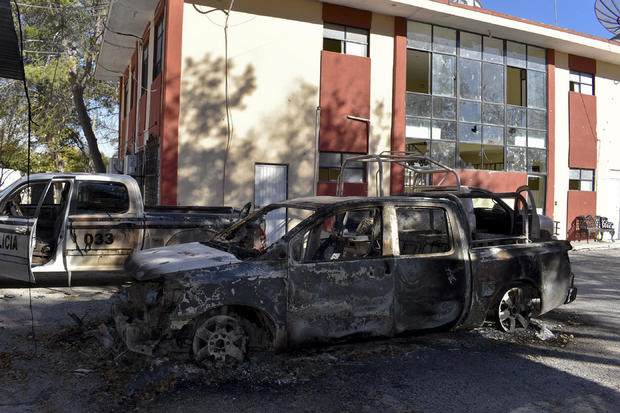
A damaged pick up truck marked with the initials C.D.N., which in Spanish stand for Cartel of the Northeast, sits on a street after a gun battle between Mexican security forces and suspected cartel gunmen, in Villa Union, Mexico, December 1, 2019. Gerardo Sanchez/AP

Mexico City — Mexican security forces on Sunday killed seven more members of a presumed cartel assault force that rolled into a town near the Texas border and staged an hour-long attack, officials said, putting the overall death toll at 21. The Coahuila state government said in a statement that lawmen aided by helicopters were still chasing remnants of the force that arrived in a convoy of pickup trucks and attacked the city hall of Villa Union on Saturday.

Gov. Miguel Angel Riquelme said late Sunday afternoon in a statement posted online by the state government that authorities had determined the casualty count from the gun battles stood at 15 gunmen dead and four police officers killed. He said two civilians also were slain by gunmen after being abducted.

The governor said six more officers were wounded as were four young people who had been taken by the attackers.

Trending News

Francisco Contreras, an official in the state security agency, said later that the two slain civilians were a firefighter and an engineer who worked for the municipality. He said a second firefighter was missing.

The reason for the military-style attack remained unclear. Cartels have been contending for control of smuggling routes in northern Mexico, but there was no immediate evidence that a rival cartel had been targeted in Villa Union.

The governor said the armed group — at least some in military style garb — stormed the town of 3,000 residents in a convoy of trucks, attacking local government offices and prompting state and federal forces to intervene. Bullet-riddled trucks left abandoned in the streets were marked C.D.N., the Spanish initials of the Cartel of the Northeast gang.

Mexico Coahuila Gunbattle
Burned out vehicles are seen next to the City Hall of Villa Union, Mexico, December 1, 2019, after it was attacked by gunmen. Gerardo Sanchez/AP

Several of the gunmen stole vehicles as they fled and kidnapped locals to help guide them on dirt tracks out of town, the governor said. At least one of the stolen vehicles was a hearse headed for a funeral, according to the newspaper Zocalo of Saltillo.

The town is about 35 miles south-southwest of Eagle Pass, Texas, and 12 miles from the town of Allende - site of a 2011 massacre involving the Zetas cartel in which officials say 70 died.

Rapid gunfire could be heard in videos posted to social media along with frantic people telling friends to stay indoors. Images of the aftermath of the shootout showed burned out vehicles, while the facade of Villa Union's city hall was riddled with bullets.

The governor said security forces would remain in the town for several days to restore a sense of calm.

Falko Ernst, senior Mexico analyst for the non-profit Crisis Group, which seeks to promote peace, said there are few incentives for armed groups in the country to refrain from violence.

"Solving this issue — which underpins impunity —- would have to be the centerpiece of an integrated security strategy. But such a thing is yet to be presented by (President) López Obrador and his team," said Ernst.

"The price of that absence is not least the flaring up of regional conflict scenarios."

Mexico's homicide rate has increased to historically high levels, inching up by 2% in the first 10 months of the presidency of Andrés Manuel López Obrador. Federal officials said recently that there have been 29,414 homicides so far in 2019, compared to 28,869 in the same period of 2018.

The November slaughter by Mexican drug cartel gunmen of three women who held U.S. citizenship and six of their children focused world attention on the rising violence.

Arrests made in connection with massacre of American Mormon family in Mexico

Saturday's attack also showed cartels again resorting to quasi-military operations in a brazen challenge to state authority.

In October, a massive operation by the Sinaloa cartel prompted the federal government to release the captured son of a drug lord and pull back the army, which found itself outmaneuvered on the streets of Culiacan.

U.S. President Donald Trump said in a radio interview last week that he plans to designate Mexican drug cartels as terrorist organizations, though he declined to say what actions might follow that designation.

Mexican officials have opposed such a designation, worried it could lead to unilateral U.S. interventions in its territory.

Coahuila state itself has been far from the worst-hit part of Mexico amid violence in recent years. The government census bureau's survey of public perceptions of security found that Coahuila ranked well this year, with only three other states having a higher public perception of safety.

Let's block ads! (Why?)


https://news.google.com/__i/rss/rd/articles/CBMigAFodHRwczovL3d3dy5jYnNuZXdzLmNvbS9uZXdzL3ZpbGxhLXVuaW9uLWNvYWh1aWxhLXNob290b3V0LW1leGljby1kZWF0aC10b2xsLWRlYWQtY2FydGVsLWNkbi1zaWVnZS1uZWFyLXRleGFzLWJvcmRlci0yMDE5LTEyLTAyL9IBhAFodHRwczovL3d3dy5jYnNuZXdzLmNvbS9hbXAvbmV3cy92aWxsYS11bmlvbi1jb2FodWlsYS1zaG9vdG91dC1tZXhpY28tZGVhdGgtdG9sbC1kZWFkLWNhcnRlbC1jZG4tc2llZ2UtbmVhci10ZXhhcy1ib3JkZXItMjAxOS0xMi0wMi8?oc=5

2019-12-02 13:35:00Z
52780453755153

China suspends US Navy visits to Hong Kong over support for protests - BBC News

China has suspended visits by US Navy ships and aircraft to Hong Kong after Washington passed legislation last week backing pro-democracy protesters.

Beijing also unveiled sanctions against a number of US human rights groups.

It comes after President Donald Trump signed the Human Rights and Democracy Act into law.

The act orders an annual review to check if Hong Kong has enough autonomy to justify special trading status with the US.

President Trump is currently seeking a deal with China in order to end a trade war.

What did China say?

The foreign ministry said it would suspend the reviewing of applications to visit Hong Kong by US military ships and aircraft from Monday - and warned that further action could come.

"We urge the US to correct the mistakes and stop interfering in our internal affairs," ministry spokeswoman Hua Chunying told reporters in Beijing.

"China will take further steps if necessary to uphold Hong Kong's stability and prosperity and China's sovereignty."

Non-governmental organisations (NGOs) targeted by sanctions include Human Rights Watch, Freedom House, the National Endowment for Democracy, the National Democratic Institute for International Affairs and the International Republican Institute.

"They shoulder some responsibility for the chaos in Hong Kong and they should be sanctioned and pay the price," Ms Hua said, without specifying what form the measures would take.

What effect will the ban have?

Several US Navy ships usually visit Hong Kong every year, although visits are sometimes suspended when ties between the two countries become strained.

The USS Blue Ridge, the amphibious command ship of the US Seventh Fleet, was the last American navy ship to visit Hong Kong, in April.

Media playback is unsupported on your device

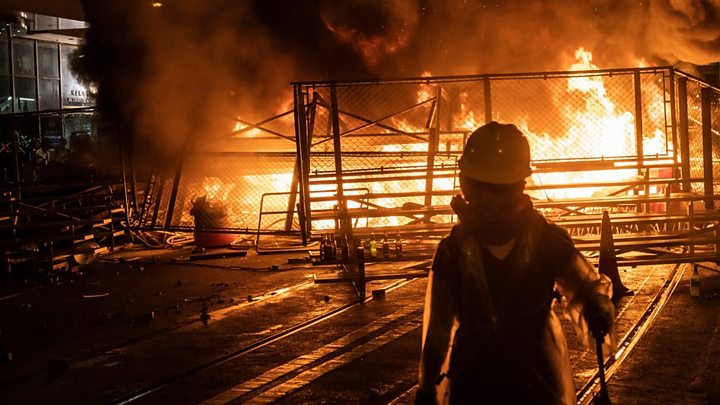
Mass protests broke out in the semi-autonomous territory in June and Chinese officials accused foreign governments, including the US, of backing the pro-democracy movement.

In August China rejected requests for visits by the guided missile cruiser USS Lake Erie and transport ship USS Green Bay, but did not give specific reasons.

In September last year, China refused a US warship entry to Hong Kong after the US imposed sanctions over the purchase of Russian fighter aircraft.

And in 2016, China blocked the nuclear powered aircraft carrier USS John C Stennis, and its escort ships, amid a dispute over China's military presence in the South China Sea.

Michael Raska, a security expert at Singapore's Nanyang Technological University, said that from a military point of view the US would not be affected by the latest ban "as they can use many naval bases in the region".

However, it sends a signal that US-China tensions will continue to deepen, he told AFP news agency.

What did the US do?

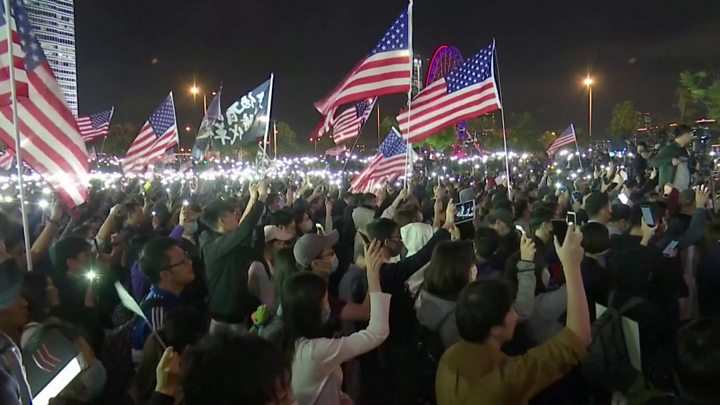
Protesters celebrated on the streets of Hong Kong after President Trump signed the act last week.

Media playback is unsupported on your device

However, China quickly warned the US it would take "firm counter-measures".

The new law requires Washington to monitor Beijing's actions in Hong Kong. The US could revoke the special trading status it has granted the territory if China undermines the city's rights and freedoms.

Among other things, Hong Kong's special status means it is not affected by US sanctions or tariffs placed on the mainland.

The bill also says the US should allow Hong Kong residents to obtain US visas if they have been arrested for being part of non-violent protests.

Analysts say the move could complicate negotiations between China and the US to end their trade war.

The bill was introduced in June in the early stages of the protests in Hong Kong, and was overwhelmingly approved by the House of Representatives in October.

Why are there protests in Hong Kong?

Hong Kong - a British colony until 1997 - is part of China under a model known as "one country, two systems".

Under this model, Hong Kong has a high degree of autonomy and people have freedoms not seen in mainland China.

However, months of protests have caused turmoil in the city.

Demonstrations began after the government planned to pass a bill that would allow suspects to be extradited to mainland China.

The bill was eventually withdrawn but unrest evolved into a broader protest against the police and the way Hong Kong is administered by Beijing.

Let's block ads! (Why?)


https://news.google.com/__i/rss/rd/articles/CBMiMmh0dHBzOi8vd3d3LmJiYy5jb20vbmV3cy93b3JsZC1hc2lhLWNoaW5hLTUwNjI2Nzk20gE2aHR0cHM6Ly93d3cuYmJjLmNvbS9uZXdzL2FtcC93b3JsZC1hc2lhLWNoaW5hLTUwNjI2Nzk2?oc=5

2019-12-02 12:35:49Z
52780452574535

Democrats escalate impeachment bid in end-of-year dash - CNN

The rising stakes come as Republicans on Sunday launched a new offensive to destroy the legitimacy of the Democratic process by claiming that Trump's enemies are rushing the somber business of making him the third impeached President in order to dodge a voter backlash.
The attack could not, however, disguise a public debate in the GOP over how much Trump should engage in the next stage of impeachment, or whether he should await a likely trial in the Senate where a Republican majority could offer him more protection. The White House said Sunday that neither Trump nor his lawyers would take part in the first House Judiciary Committee hearing on impeachment on Wednesday.
Democratic leaders built a strong case in two weeks of televised witness hearings before the Thanksgiving break that Trump abused his power by attempting to coerce Ukraine to intervene in the 2020 election.
Get smart on impeachment
But their efforts have not shifted the nation's tribal political divisions in a way that could seriously threaten Trump's presidency and cause Republicans to desert him in the Senate trial expected early next year.
The action now moves from Rep. Adam Schiff's House Intelligence Committee, expected to vote to release the report of its investigation on Tuesday, to the House Judiciary Committee.
Rep. Jerry Nadler's panel will draw up articles of impeachment -- effectively the charges on which Trump would be tried in the Senate -- ahead of a full House vote expected before Christmas.
The committee will begin its business on Wednesday with an examination of the constitutional grounds for impeachment for which Nadler is yet to release a witness list. But the chairman offered Trump and his lawyers a chance to join Judiciary Committee proceedings, presenting them with a new tactical conundrum.
On Sunday evening, White House counsel Pat Cipollone told Nadler that the President and his lawyers would skip the hearing on Wednesday, and would respond later to a Friday deadline about participation in future hearings.
"We cannot fairly be expected to participate in a hearing while the witnesses are yet to be named and while it remains unclear whether the Judiciary Committee will afford the President a fair process through additional hearings," Cipollone said.
Democratic leaders have already said that Trump's withholding of nearly $400 million in military aid to Ukraine allegedly in an attempt to force an investigation of a domestic political opponent -- Joe Biden -- could satisfy the offense of bribery included in the constitutional conditions for impeachment.
And the President's refusal to provide key evidence and senior officials for testimony to the investigation could be folded into a separate article of impeachment on obstruction.
Democrats are moving ahead without hearing from central witnesses, including Trump's attorney Rudy Giuliani who led his off-the-books diplomatic effort in Ukraine, and former national security adviser John Bolton.
The legal challenges likely to be required to force such testimony could drag on for months and frustrate House Speaker Nancy Pelosi's desire to shield her lawmakers in election year 2020 by swiftly wrapping the impeachment process. And Democrats also say they already have sufficient evidence to impeach the President.

Minds made up

Raising the curtain for critical weeks in the political duel over the Trump presidency, Democrats on Sunday argued that the case against the commander-in-chief already merited impeachment.
And Republicans intensified their complaints about the fairness of the process and fanned Trump's disinformation campaign in a way that reflects their challenge in countering the facts of a case that became even more damning just before Thanksgiving.
In the latest blow to Trump's claims of innocence, The New York Times reported last week that Trump released the hold on aid to Ukraine after he was briefed on a whistleblower's report raising the alarm at his pressure on the former Soviet state.
Republicans previously argued that there was no quid pro quo because Ukraine eventually got the money. But the Times report raises the possibility that the congressionally mandated taxpayer payment was only freed up after Trump got found out.
Democratic Sen. Amy Klobuchar of Minnesota, who is running for president, said on CNN's "State of the Union" on Sunday that she had all but made up her mind over Trump's fate.
"I'm someone that wants to look at every single count," Klobuchar said, but added: "I have made very clear I think this is impeachable conduct."
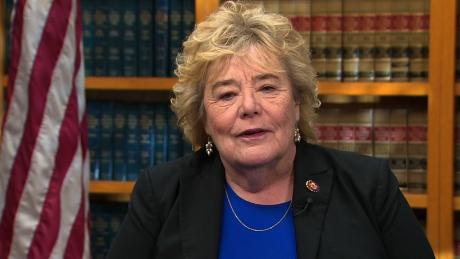
California Democratic Rep. Zoe Lofgren, the only lawmaker to have worked on all three modern impeachments, said Trump's transgressions were worse than those that led to President Richard Nixon's resignation.
Only lawmaker to have worked 3 impeachment probes says Trump's Ukraine conduct 'more serious' than Nixon's Watergate
"If you take a look at ... what the founding fathers were concerned about, it was the interference by foreign governments in our political system that was one of their gravest concerns," Lofgren, who sits on the House Judiciary Committee, said.
"Nixon's behavior didn't fall into that range. So, in that way, this conduct is more serious," Lofgren told CNN's Dana Bash.
But Louisiana Republican Sen. John Kennedy complained that the Democratic push for impeachment had been unfair from the start.
"Rounds one and two by Speaker Pelosi and Chairman Schiff are as rigged as a carnival ring toss," Kennedy said on NBC's "Meet the Press" in an appearance in which he again appeared to draw equivalences between Russian and Ukrainian election meddling.
Republicans have alleged that Ukraine interfered in 2016 to give a pretext for Trump's claim he withheld aid because he wanted to investigate political corruption in Kiev.
Georgia Rep. Doug Collins, the top Republican on the House Judiciary Committee, slammed Nadler's "made for TV event."
He complained that Republicans were not being given sufficient time to draw up witness lists given that the Intelligence committee would not vote on the Schiff report until Tuesday.
He said he didn't know if the White House would participate, but suggested Republicans want to call Schiff himself as a witness -- a step likely to be resisted by majority Democrats.
"It's an internal kind of time frame to try and finish this out by the end of the year because they want to get at this President right now before ... everybody completely sees through the process sham of the elections for next year. So we're rushing this," Collins said on "Fox News Sunday."

New tactical dilemma for the White House

Nadler's invitation to Trump to participate in his future hearings raises a dilemma for the White House -- especially after the President last week blasted Democrats as being "deranged" and "maniacs" for pursuing an impeachment probe.
By refusing to take part, Trump's team would be weakening their own arguments that Democrats are shutting them out of the process. But joining in would offer legitimacy to an investigation the President has dismissed as a sham and a hoax.
Nadler may be effectively laying a trap. If Trump's lawyers were to argue that his conduct does not reach the bar of impeachment they would implicitly be accepting that the President committed some kind of misconduct.
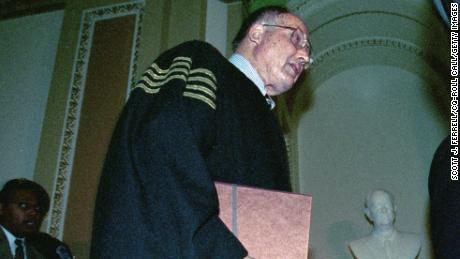
How the last chief justice handled an impeachment trial of the President of the United States
Trump has warned Republicans not to make such arguments, insisting his conduct -- including a call with Ukraine's president that shows him asking for a "favor" and a probe into Biden and his son Hunter -- is "perfect."
Trump's position increases political pressure on some Republican senators who are vulnerable in reelection races who might consider criticizing the President to give them political cover for a vote to acquit him.
One Republican Judiciary Committee member, California Rep. Tom McClintock, said it would be to the President's "advantage" to take part in the panel's proceedings. But he warned Trump had to weigh "enormous catastrophic damage" that could be done to the concept of executive privilege such a step might entail.
A White House official last week cast doubt on the sincerity of Nadler's offer, pointing out that Trump will be in London for the NATO summit during Wednesday's hearing.
Such debate highlights the challenge facing Nadler, a longtime antagonist of his fellow New Yorker Trump, as his committee takes the lead in driving the impeachment narrative.
Nadler's oversight efforts have so far been less successful in shaping a punchy, damaging case against the administration than Schiff's public hearings, which were disciplined and powerful and managed to largely neuter GOP efforts to disrupt them.

Can Democrats change the political game?

The coming weeks may offer the last best chance for Democrats to significantly alter the political temperature in the nation towards impeachment.
No, the new CNN poll is not good news for Donald Trump on impeachment
Although 50% of respondents approve of impeaching and removing Trump according to CNN polling, two weeks of televised hearings did not significantly change the equation.
The situation reflects the fact that perceptions of Trump's behavior generally follow partisan lines in a nation deeply polarized by his presidency. It also suggests that while Trump's apparent willingness to use his constitutional authority to pursue his own interests at the expense of the nation's appears to be an abuse of power, Ukraine is an issue that is remote for many Americans more concerned with considerations driving the 2020 election, including health care, education and the economy.

Let's block ads! (Why?)


https://news.google.com/__i/rss/rd/articles/CBMiXWh0dHBzOi8vd3d3LmNubi5jb20vMjAxOS8xMi8wMi9wb2xpdGljcy9kZW1vY3JhdHMtanVkaWNpYXJ5LXRydW1wLWltcGVhY2htZW50LW5hdG8vaW5kZXguaHRtbNIBYWh0dHBzOi8vYW1wLmNubi5jb20vY25uLzIwMTkvMTIvMDIvcG9saXRpY3MvZGVtb2NyYXRzLWp1ZGljaWFyeS10cnVtcC1pbXBlYWNobWVudC1uYXRvL2luZGV4Lmh0bWw?oc=5

2019-12-02 11:25:00Z
52780451907398

Democrats escalate impeachment bid in end-of-year dash - CNN

The rising stakes come as Republicans on Sunday launched a new offensive to destroy the legitimacy of the Democratic process by claiming that Trump's enemies are rushing the somber business of making him the third impeached President in order to dodge a voter backlash.
The attack could not, however, disguise a public debate in the GOP over how much Trump should engage in the next stage of impeachment, or whether he should await a likely trial in the Senate where a Republican majority could offer him more protection. The White House said Sunday that neither Trump nor his lawyers would take part in the first House Judiciary Committee hearing on impeachment on Wednesday.
Democratic leaders built a strong case in two weeks of televised witness hearings before the Thanksgiving break that Trump abused his power by attempting to coerce Ukraine to intervene in the 2020 election.
Get smart on impeachment
But their efforts have not shifted the nation's tribal political divisions in a way that could seriously threaten Trump's presidency and cause Republicans to desert him in the Senate trial expected early next year.
The action now moves from Rep. Adam Schiff's House Intelligence Committee, expected to vote to release the report of its investigation on Tuesday, to the House Judiciary Committee.
Rep. Jerry Nadler's panel will draw up articles of impeachment -- effectively the charges on which Trump would be tried in the Senate -- ahead of a full House vote expected before Christmas.
The committee will begin its business on Wednesday with an examination of the constitutional grounds for impeachment for which Nadler is yet to release a witness list. But the chairman offered Trump and his lawyers a chance to join Judiciary Committee proceedings, presenting them with a new tactical conundrum.
On Sunday evening, White House counsel Pat Cipollone told Nadler that the President and his lawyers would skip the hearing on Wednesday, and would respond later to a Friday deadline about participation in future hearings.
"We cannot fairly be expected to participate in a hearing while the witnesses are yet to be named and while it remains unclear whether the Judiciary Committee will afford the President a fair process through additional hearings," Cipollone said.
Democratic leaders have already said that Trump's withholding of nearly $400 million in military aid to Ukraine allegedly in an attempt to force an investigation of a domestic political opponent -- Joe Biden -- could satisfy the offense of bribery included in the constitutional conditions for impeachment.
And the President's refusal to provide key evidence and senior officials for testimony to the investigation could be folded into a separate article of impeachment on obstruction.
Democrats are moving ahead without hearing from central witnesses, including Trump's attorney Rudy Giuliani who led his off-the-books diplomatic effort in Ukraine, and former national security adviser John Bolton.
The legal challenges likely to be required to force such testimony could drag on for months and frustrate House Speaker Nancy Pelosi's desire to shield her lawmakers in election year 2020 by swiftly wrapping the impeachment process. And Democrats also say they already have sufficient evidence to impeach the President.

Minds made up

Raising the curtain for critical weeks in the political duel over the Trump presidency, Democrats on Sunday argued that the case against the commander-in-chief already merited impeachment.
And Republicans intensified their complaints about the fairness of the process and fanned Trump's disinformation campaign in a way that reflects their challenge in countering the facts of a case that became even more damning just before Thanksgiving.
In the latest blow to Trump's claims of innocence, The New York Times reported last week that Trump released the hold on aid to Ukraine after he was briefed on a whistleblower's report raising the alarm at his pressure on the former Soviet state.
Republicans previously argued that there was no quid pro quo because Ukraine eventually got the money. But the Times report raises the possibility that the congressionally mandated taxpayer payment was only freed up after Trump got found out.
Democratic Sen. Amy Klobuchar of Minnesota, who is running for president, said on CNN's "State of the Union" on Sunday that she had all but made up her mind over Trump's fate.
"I'm someone that wants to look at every single count," Klobuchar said, but added: "I have made very clear I think this is impeachable conduct."
California Democratic Rep. Zoe Lofgren, the only lawmaker to have worked on all three modern impeachments, said Trump's transgressions were worse than those that led to President Richard Nixon's resignation.
Only lawmaker to have worked 3 impeachment probes says Trump's Ukraine conduct 'more serious' than Nixon's Watergate
"If you take a look at ... what the founding fathers were concerned about, it was the interference by foreign governments in our political system that was one of their gravest concerns," Lofgren, who sits on the House Judiciary Committee, said.
"Nixon's behavior didn't fall into that range. So, in that way, this conduct is more serious," Lofgren told CNN's Dana Bash.
But Louisiana Republican Sen. John Kennedy complained that the Democratic push for impeachment had been unfair from the start.
"Rounds one and two by Speaker Pelosi and Chairman Schiff are as rigged as a carnival ring toss," Kennedy said on NBC's "Meet the Press" in an appearance in which he again appeared to draw equivalences between Russian and Ukrainian election meddling.
Republicans have alleged that Ukraine interfered in 2016 to give a pretext for Trump's claim he withheld aid because he wanted to investigate political corruption in Kiev.
Georgia Rep. Doug Collins, the top Republican on the House Judiciary Committee, slammed Nadler's "made for TV event."
He complained that Republicans were not being given sufficient time to draw up witness lists given that the Intelligence committee would not vote on the Schiff report until Tuesday.
He said he didn't know if the White House would participate, but suggested Republicans want to call Schiff himself as a witness -- a step likely to be resisted by majority Democrats.
"It's an internal kind of time frame to try and finish this out by the end of the year because they want to get at this President right now before ... everybody completely sees through the process sham of the elections for next year. So we're rushing this," Collins said on "Fox News Sunday."

New tactical dilemma for the White House

Nadler's invitation to Trump to participate in his future hearings raises a dilemma for the White House -- especially after the President last week blasted Democrats as being "deranged" and "maniacs" for pursuing an impeachment probe.
By refusing to take part, Trump's team would be weakening their own arguments that Democrats are shutting them out of the process. But joining in would offer legitimacy to an investigation the President has dismissed as a sham and a hoax.
Nadler may be effectively laying a trap. If Trump's lawyers were to argue that his conduct does not reach the bar of impeachment they would implicitly be accepting that the President committed some kind of misconduct.
How the last chief justice handled an impeachment trial of the President of the United States
Trump has warned Republicans not to make such arguments, insisting his conduct -- including a call with Ukraine's president that shows him asking for a "favor" and a probe into Biden and his son Hunter -- is "perfect."
Trump's position increases political pressure on some Republican senators who are vulnerable in reelection races who might consider criticizing the President to give them political cover for a vote to acquit him.
One Republican Judiciary Committee member, California Rep. Tom McClintock, said it would be to the President's "advantage" to take part in the panel's proceedings. But he warned Trump had to weigh "enormous catastrophic damage" that could be done to the concept of executive privilege such a step might entail.
A White House official last week cast doubt on the sincerity of Nadler's offer, pointing out that Trump will be in London for the NATO summit during Wednesday's hearing.
Such debate highlights the challenge facing Nadler, a longtime antagonist of his fellow New Yorker Trump, as his committee takes the lead in driving the impeachment narrative.
Nadler's oversight efforts have so far been less successful in shaping a punchy, damaging case against the administration than Schiff's public hearings, which were disciplined and powerful and managed to largely neuter GOP efforts to disrupt them.

Can Democrats change the political game?

The coming weeks may offer the last best chance for Democrats to significantly alter the political temperature in the nation towards impeachment.
No, the new CNN poll is not good news for Donald Trump on impeachment
Although 50% of respondents approve of impeaching and removing Trump according to CNN polling, two weeks of televised hearings did not significantly change the equation.
The situation reflects the fact that perceptions of Trump's behavior generally follow partisan lines in a nation deeply polarized by his presidency. It also suggests that while Trump's apparent willingness to use his constitutional authority to pursue his own interests at the expense of the nation's appears to be an abuse of power, Ukraine is an issue that is remote for many Americans more concerned with considerations driving the 2020 election, including health care, education and the economy.

Let's block ads! (Why?)


https://news.google.com/__i/rss/rd/articles/CBMiXWh0dHBzOi8vd3d3LmNubi5jb20vMjAxOS8xMi8wMi9wb2xpdGljcy9kZW1vY3JhdHMtanVkaWNpYXJ5LXRydW1wLWltcGVhY2htZW50LW5hdG8vaW5kZXguaHRtbNIBYWh0dHBzOi8vYW1wLmNubi5jb20vY25uLzIwMTkvMTIvMDIvcG9saXRpY3MvZGVtb2NyYXRzLWp1ZGljaWFyeS10cnVtcC1pbXBlYWNobWVudC1uYXRvL2luZGV4Lmh0bWw?oc=5

2019-12-02 10:53:00Z
52780451907398

Russia is now not the only pressing issue that NATO has to deal with - CNBC

US president Donald Trump is seen during his press conference at the 2018 NATO Summit in Brussels, Belgium on July 12, 2018.

NurPhoto | NurPhoto | Getty Images

As heads of state and government meet in the U.K. this week for the 70th anniversary of the military alliance NATO, discussions are likely to focus on shifting geopolitical relations and military threats, that thorny issue of defense spending and, crucially, the alliance's future.

NATO Secretary General Jens Stoltenberg said earlier this year that the summit on Dec. 3 and 4 will give members the opportunity to address "current and emerging security challenges and how NATO continues to invest and adapt to ensure it will remain a pillar of stability in the years ahead."

The summit on the outskirts of London comes at a tricky time for NATO with unsettled relationships countering older insecurities like its relations with Russia. Furthermore, the commitment of its most powerful member, the U.S., to the alliance is now more uncertain than ever.

"Rarely has NATO not been under verbal siege over these past few months," Judy Dempsey, a non-resident senior fellow at Carnegie Europe, said in an editorial piece on Tuesday last week.

"The fact that that this meeting will not be called a summit shows how NATO's seventieth birthday is not being celebrated with great fanfare but instead with a degree of self-doubt, if not anxiety."

That anxiety comes after a tough few years for the alliance, especially when it comes to the issue of who pays the most. NATO agreed at a summit in Wales in 2014 to reverse the trend of declining defense budgets and to raise them over the coming decade, a move that was designed to "further strengthen the transatlantic bond." Then, members agreed to spend a minimum of 2% of their GDP (gross domestic product) on defense.

At last year's summit in Brussels, President Donald Trump chided other members of the group for not meeting spending targets agreed at the NATO summit in 2014.

Experts note that discussions at this NATO "Leaders Meeting," as it's being called, will be informed as much by issues not on the formal agenda as those that are.

"Member states will be keen to bring their political differences back behind closed doors, whilst emphasizing the military coherence and credibility of their alliance," Sarah Raine, consulting senior fellow for geopolitics and strategy at the International Institute for Strategic Studies (IISS), told CNBC.

"The degree to which Europe should do more not just for itself, but also by itself, remains highly contentious. Assessment of the scope of NATO's engagement on China's challenge, including the U.S. push to include the issue of 5G within these discussions, risk further highlighting these sensitivities," she said.

Defense spending, again

Spending is likely to be a key issue again this week with the latest figures not making for comfortable reading. NATO estimates for 2019, released in June, show that only the U.S., U.K., Greece, Estonia, Romania, Poland and Latvia have met or surpassed that target. The highest defense spend was made by the U.S., at 3.4% of its GDP, while the lowest spend was by Luxembourg which only spent 0.55%.

Given the slow progress made by members, Trump is likely to be heavily critical again. Germany has been singled out for especially harsh treatment because of its budget surplus. The European nation only spent an estimated 1.36% of its GDP on defense spending in 2019, setting up another potential clash with the U.S.

US commitment to NATO

Defense spending, or the lack thereof, has created so much ire in Trump that there are reports that he frequently discussed pulling the U.S. out of the alliance, even with Congressional support.

In July, he also likened countries not meeting the defense spend target, like Germany, to delinquents.

"We're the schmucks that are paying for the whole thing," Trump said at a rally in July. "Frankly, many countries owe us a tremendous amount of money for many years back, where they're delinquent, as far as I'm concerned, because the United States has had to pay for them," singling out Germany as "the number one" culprit.

Perhaps the only thing Trump has in common with his predecessor Barack Obama was their shared dismay at the perception that the U.S. bears the brunt of NATO spending. Obama called out "free riders" in NATO that benefit from U.S. military support without contributing enough to defense themselves.

Europe's commitment to NATO

Ironically, questions over members' commitment to NATO could come from closer to home (it's headquartered in Brussels) with increasing talk in Europe about strengthening the EU's cooperation and coordination on defense.

French President Emmanuel Macron has caused a stir ahead of this week's NATO meeting after he said in early November that "what we are currently experiencing is the brain death of Nato."

Speaking to The Economist magazine, Macron cited the U.S. failure to consult NATO before pulling out of Syria as a reason for his comment, and also questioned NATO's validity. He argued that Europe should focus on its own defense alliance, although German Chancellor Angela Merkel believes the continent is too weak "for now" to defend itself.

Speaking to lawmakers last week, Merkel said that "we rely on this trans-Atlantic alliance, and that is why it is right for us to work for this alliance and take on more responsibility."

IISS's Raine told CNBC that the short-term priority for the alliance "must be to get NATO's public messaging back on track."

"That includes the presentation of an alliance that is militarily more capable than ever before, and that is adapting to the evolving security threats its members face, not at the expense of its traditional focus but in addition to it," she said.

The NATO secretary general will be hoping for summit headlines that focus attention away from the state of NATO's brain, Raine said, "and towards admiration for NATO's muscles, by highlighting the range and depth of NATO's operational commitments and capabilities."

The 'R'-word

NATO was set up in 1949 as a military alliance between 10 European countries, the U.S. and Canada "to promote cooperation among its members and to guard their freedom," the alliance says, "within the context of countering the threat posed at the time by the Soviet Union."

Seventy years on, and after several decades of relatively good relations and cooperation, NATO's relations with Russia are tense.

This comes after Moscow's 2014 annexation of Crimea and its role in a pro-Russian uprising in eastern Ukraine. NATO says that the channels of communication remain open with Russia but that "Russia's destabilizing actions and policies go beyond Ukraine" citing its "provocative military activities near NATO's borders stretching from the Baltic to the Black Sea."

It has also cited its "irresponsible and aggressive nuclear rhetoric," its support for the regime in Syria as well as the U.K. nerve agent attack which it said was "a clear breach of international norms." NATO has said it supported the U.S.' decision to withdraw from the 1987 Intermediate-Range Nuclear Forces Treaty in response to "Russia's material breach."

On Russia's part, perhaps the most controversial NATO decision has been the decision to deploy NATO missile defense systems in Romania and Poland (although completion of this Aegis Ashore — a land-based missile defense system — site is delayed to 2020). Along with the deployment of thousands of NATO troops to the Baltic nations and Poland in the last few years, these developments appear to have served only to exacerbate tensions with Russia.

Russia has widely criticized the deployment of missile defense shields in its former backyard. The prospect of Ukraine and Georgia, both of which used to be part of the former USSR, joining NATO (and even potentially the European Union) is also an unsavory prospect for Moscow.

In September 2019, Russian Foreign Minister Sergey Lavrov said that "NATO approaching our borders is a threat to Russia." That view was echoed by Russian President Vladimir Putin this month, when he told Russia's Security Council that he was "seriously concerned about the NATO infrastructure approaching our borders, as well as the attempts to militarize outer space."

The future?

Questions over NATO's future are bound to dominate this year's coverage of the meeting. Asked if NATO remained relevant, IISS' Raine replied with an emphatic "yes."

"NATO's responses to persistent and aggressive destabilizing actions by Russia have ensured the relevance of the alliance as the cornerstone of European security. The irony is that whilst NATO has become military more relevant, political debate within the alliance has become more fractious," she said.

"It is political deficiencies, not military deficiencies that are now threatening the future relevance of the alliance."

Let's block ads! (Why?)


https://news.google.com/__i/rss/rd/articles/CBMiYmh0dHBzOi8vd3d3LmNuYmMuY29tLzIwMTkvMTIvMDIvbmF0by1zdW1taXQtYWxsaWFuY2UtaGFzLW1vcmUtcHJlc3NpbmctaXNzdWVzLXRoYW4tcnVzc2lhLW5vdy5odG1s0gFmaHR0cHM6Ly93d3cuY25iYy5jb20vYW1wLzIwMTkvMTIvMDIvbmF0by1zdW1taXQtYWxsaWFuY2UtaGFzLW1vcmUtcHJlc3NpbmctaXNzdWVzLXRoYW4tcnVzc2lhLW5vdy5odG1s?oc=5

2019-12-02 07:39:00Z
52780452828964

China suspends review of request for U.S. military ships, aircraft visiting Hong Kong - Reuters

BEIJING (Reuters) - China said on Monday U.S. military ships and aircraft won’t be allowed to visit Hong Kong, and also announced sanctions against several U.S. non-government organizations for encouraging protesters to “engage in extremist, violent and criminal acts.”

Anti-government protesters raise their hands as they attend the "Lest We Forget" rally in Hong Kong, China December 1, 2019. REUTERS/Thomas Peter

The measures were announced by China’s Foreign Ministry in response to U.S. legislation passed last week supporting anti-government protesters. It said it had suspended taking requests for U.S. military visits indefinitely, and warned of further action to come.

“We urge the U.S. to correct the mistakes and stop interfering in our internal affairs. China will take further steps if necessary to uphold Hong Kong’s stability and prosperity and China’s sovereignty,” said ministry spokeswoman Hua Chunying said at a daily news briefing in Beijing.

China last week promised it would issue “firm counter measures” after U.S. President Donald Trump signed into law the “Hong Kong Human Rights and Democracy Act,” which supports anti-government protesters in Hong Kong and threatens China with potential sanctions.

There are fears that the row over Hong Kong could impact efforts by Beijing and Washington to reach preliminary deal that could de-escalate a prolonged trade war between the two countries.

The U.S.-headquartered NGOs targeted by Beijing include the National Endowment for Democracy, the National Democratic Institute for International Affairs, the International Republican Institute, Human Rights Watch, and Freedom House.

“They shoulder some responsibility for the chaos in Hong Kong and they should be sanctioned and pay the price,” said Hua.

In more normal times, several U.S. naval ships visit Hong Kong annually, a rest-and-recreation tradition that dates back to the pre-1997 colonial era which Beijing allowed to continue after the handover from British to Chinese rule.

Visits have at times been refused amid broader tensions and two U.S. ships were denied access in August.

The USS Blue Ridge, the command ship of the Japanese-based Seventh Fleet, stopped in Hong Kong in April – the last ship to visit before mass protests broke out in June.

Foreign NGOs are already heavily restricted in China, and have previously received sharp rebukes for reporting on rights issues in the country including the mass detention of Uighur Muslims in Xinjiang.

Reporting by Cate Cadell and Beijing Monitoring Desk; Editing by Tom Hogue & Simon Cameron-Moore

Let's block ads! (Why?)


https://news.google.com/__i/rss/rd/articles/CBMioAFodHRwczovL3d3dy5yZXV0ZXJzLmNvbS9hcnRpY2xlL3VzLWhvbmdrb25nLXByb3Rlc3RzLWNoaW5hLXVzYS9jaGluYS1zdXNwZW5kcy1yZXZpZXctb2YtcmVxdWVzdC1mb3ItdS1zLW1pbGl0YXJ5LXNoaXBzLWFpcmNyYWZ0LXZpc2l0aW5nLWhvbmcta29uZy1pZFVTS0JOMVk2MElR0gE0aHR0cHM6Ly9tb2JpbGUucmV1dGVycy5jb20vYXJ0aWNsZS9hbXAvaWRVU0tCTjFZNjBJUQ?oc=5

2019-12-02 07:20:00Z
52780452574535