Senin, 25 November 2019

The Brexit Party crashed the gates of the European Parliament — and got stuck there - The Washington Post

KENZO TRIBOUILLARD AFP/Getty Images Britain's Brexit Party leader Nigel Farage sits amid the blond wood of the European Parliament in Brussels.

BRUSSELS — There are some odd ducks in the 751-member European Parliament, plenty of ranters representing fringe parties and ascendant populists: Slovak neo-fascists, Greek Marxist-Leninists and French ultranationalists.

And then there is Britain’s Brexit Party, perhaps the most unusual of them all.

The 29 members of the Brexit Party in the European Union’s legislative body successfully campaigned for seats they say they did not want, in an organization they do not respect, in a political and economic union they intend to leave.

“I just hate it. I hate it more than I did before I was elected,” said Ann Widdecombe, a Brexit Party member in the European Parliament.

“There’s nothing useful or sensible about it,” said Widdecombe, who in her former life as a Conservative member of the British Parliament was best known for her opposition to fox hunting, abortion and gay rights. “I want to go home.”

But she’s stuck — trapped in a world of blond wood, modernist Mies van der Rohe replica chairs and signs in multiple languages.

And the Europeans are stuck with her and her kin.

The E.U. required Britain to hold elections for the Parliament last spring as a condition for granting a Brexit delay. But the United Kingdom, unable to agree on how to exit the E.U., has had to ask for two more Brexit extensions since then.

So the British representatives are still here, like a vestigial wing of Westminster politics. The Brexiteers in Brussels say they will not abandon their seats until their mission, leaving Europe, is accomplished.

“We’re the naughty kids,” said Claire Fox, who decades ago was a leader of Britain’s Revolutionary Communist Party and is now a Brexit Party member of the European Parliament. “We’re here to make the Euroskeptic argument, to keep fighting the good fight for leaving.”

Jason Alden

Bloomberg

“I just hate it,” the Brexit Party’s Ann Widdecombe said of the E.U.’s legislative body.

But they are not quite the true disrupters they believe themselves to be.

Their critics call them “furniture” — and worse. They are mostly mocked or ignored by their colleagues.

The Brexit Party — founded only last February by radio show host Nigel Farage — bested both Prime Minister Boris Johnson’s Conservative Party and the opposition Labour Party in European elections in May and has the most seats of any single national party in the 9th European Parliament.

Farage, an ally of President Trump, and his party could be kingmakers or spoilers in Britain’s general election next month. Or they might recede to the sidelines, as Johnson’s Conservatives co-opt their vow to “get Brexit done.”

[Nigel Farage offers Boris Johnson a truce, boosting prospects for Conservatives in December election]

In Brussels, to have any real clout, European Parliament members must belong to a group of like-minded legislators from seven of the 28-member nations.

The Brexit members have no allies, no veto, no power. They belong to no voting bloc, hold no committee chair, propose no legislation.

Outside the chambers, they are exiled to spartan offices, with a single aide each, in the far reaches of the Brussels compound. They idle away their time in buildings named after E.U. founding fathers — Altiero Spinelli, Paul-Henri Spaak — whom the Brexiteers confess they had never heard of before.

Mostly, they sit as members or as “substitutes” on committees, if they participate at all.

In debates, they get one minute to speak.

They try to make the most of it — for their YouTube videos, which can go viral back home.

In one session, the Brexit Party’s Martin Edward Daubney — a former tabloid newspaper editor who organized “straight pride” marches in London — compared Dutch politician Guy Verhofstadt to the “Darth Vader of Europe, and this place is his Death Star, where national democracy comes to die.”

The European Parliament likes to boast that it’s the only international assembly in the world where countries can vote for their representatives. Its lawmakers appoint E.U. executives, decide on the bloc’s budget and can approve or reject international agreements.

It has also earned a reputation as a dull, bureaucratic chamber, rubber-stamping legislation on when to apply manure to cow pastures.

But while there are many critics of the Parliament, and many Euroskeptics among its members, the Brexit Party often finds itself alone.

Brexit Party member Annunziata Rees-Mogg, whose brother Jacob is leader of the British House of Commons, intervened in one budget debate to compare the E.U. to England under the reign of King George III.

“Since the 1700s, it has been argued that there should be no taxation without representation,” she said. “I very much hope that this will be my final opportunity to speak in this democratic facade of a chamber.”

[Amid Brexit crisis, House of Commons leader infuriates lawmakers with his body language]

Heads were scratched. No one engaged.

In an interview with The Washington Post afterward, Rees-Mogg called the European Parliament “the most fake kind of democracy you could imagine. When you debate you don’t debate. It’s all just pretend.”

Frederick Florin

AFP/Getty Images

Brexit Party members turn their backs during the European anthem at the opening session of the European Parliament in Strasbourg, France, in July.

At the Parliament’s opening session, the Brexit Party’s lawmakers stood and turned their backs during the playing of Beethoven’s “Ode to Joy,” the anthem of the European Union.

Fox said the demonstration was intended to make a point: that the E.U. “is not a nation, but has a flag, an anthem, a foreign policy and, maybe soon, an army.”

But afterward, she said, she and her party were disparaged as “pigheaded ignorant chauvinist yobs who didn’t know who Beethoven was.”

Telegraph columnist Michael Deacon wrote that it looked like the Brexiteers were “having the time of their lives” — while “their European counterparts . . . looked thoroughly traumatized. It was as if they’d been confronted by a coach-load of English football fans from the 1980s, hurling plastic chairs through trattoria windows, throwing up in public fountains, and chanting ‘Two World Wars and one World Cup’ with their tops off.”

The Brexit Party members of Parliament “aren’t frozen out, they’re ignored,” said Fabian Zuleeg, chief executive of the European Policy Centre think tank in Brussels.

“Mostly, they’re no-shows,” he said. “They’re completely disinterested in the real work of Parliament.

“Farage? He’s accomplished two things. He’s promoted himself, and he uses his position to promote his cause, which is Brexit.”

Zuleeg noted that Farage has failed seven times to win a seat in the British House of Commons. “So it is the European Parliament that has given him his platform.”

It has given Farage an income, too.

The Brussels Brexiteers complain a lot about the “gravy train:” The salaries and perks doled out for European Parliament members.

The Brexiteers greedily slurp the gravy, say their critics.

Brexit Party members say they chafe at the chauffeured cars, the ample expense accounts, the long lunches and the low demands for most members, who are paid their per diems if they just show up.

Verhofstadt, the Dutch politician who leads the Brexit committee in the European Parliament, has countered: “The biggest waste of money in the European Union of today is the salary we all pay to Mr. Farage.”

Verhofstadt often trolls Farage as a no-show show-boater.

Members of the European Parliament make $9,700 a month before taxes and are entitled to a monthly $5,000 general expenditure allowance, which covers phones, computers and renting an office in their constituencies.

They also receive a flat rate of $350 daily to cover meals and hotels when they are in Brussels or Strasbourg, France — the Parliament splits its time between the two cities — and an additional $26,000 a month for staff salaries.

Henry Nicholls

Reuters

The Brexit Party could play a pivotal role in British elections next month. In Brussels, the party holds 29 seats but lacks power.

In interviews with The Post, Brexit Party members said they took the money.

“Why are we here? To give Westminster a kick in the backside to get on with it,” said Henrik Overgaard-Nielsen, a Brexit Party member of European Parliament.

He is not a British citizen. He is a Danish dentist, longtime Euroskeptic, self-described lefty and resident of Britain, married to an English wife.

He credited the Brexit Party with weakening Theresa May when she served as prime minister and thwarting her half-in, half-out vision of Brexit.

“If it wasn’t for the Brexit Party,” he said, “we’d still have Theresa May as prime minister and still have her bad [Brexit] deal.”

In next month’s general election in Britain, the Brexit Party, which is unique in being registered as a private company and not political party, could help deliver a mandate for a decisive Brexit. Or it could play the spoiler and produce another hung British Parliament, or even a victory for the opposition Labour Party — which could keep the Brexiteers in Brussels even longer.

“Get me out of this stupid job,” said Fox, the former communist.

After these few months sitting in the European Parliament, Fox assessed: “It’s deadly dull, technocratic. It’s politics with the guts ripped out of it.”

Plus, she said, “we’re not made to feel very welcome.”

Read more

Can Boris Johnson keep his seat? A young Muslim immigrant is challenging the British prime minister.

In first debate between Boris Johnson and Jeremy Corbyn, questions of trust dominate

In U.K. elections, free Internet for all is among the big-ticket promises on offer

Today’s coverage from Post correspondents around the world

Like Washington Post World on Facebook and stay updated on foreign news

Let's block ads! (Why?)


https://news.google.com/__i/rss/rd/articles/CBMiuQFodHRwczovL3d3dy53YXNoaW5ndG9ucG9zdC5jb20vd29ybGQvZXVyb3BlL3RoZS1icmV4aXQtcGFydHktY3Jhc2hlZC10aGUtZ2F0ZXMtb2YtdGhlLWV1cm9wZWFuLXBhcmxpYW1lbnQtLWFuZC1nb3Qtc3R1Y2stdGhlcmUvMjAxOS8xMS8yNC9kYjYyYTFkNi1lNDU2LTExZTktYjBhNi0zZDAzNzIxYjg1ZWZfc3RvcnkuaHRtbNIByAFodHRwczovL3d3dy53YXNoaW5ndG9ucG9zdC5jb20vd29ybGQvZXVyb3BlL3RoZS1icmV4aXQtcGFydHktY3Jhc2hlZC10aGUtZ2F0ZXMtb2YtdGhlLWV1cm9wZWFuLXBhcmxpYW1lbnQtLWFuZC1nb3Qtc3R1Y2stdGhlcmUvMjAxOS8xMS8yNC9kYjYyYTFkNi1lNDU2LTExZTktYjBhNi0zZDAzNzIxYjg1ZWZfc3RvcnkuaHRtbD9vdXRwdXRUeXBlPWFtcA?oc=5

2019-11-25 11:31:00Z
52780446346444

Julian Assange "could die in prison" if health not addressed in hospital, doctors say in letter to UK authorities today - CBS News

BRITAIN-US-ECUADOR-AUSTRALIA-DIPLOMACY-COURT-ASSANGE
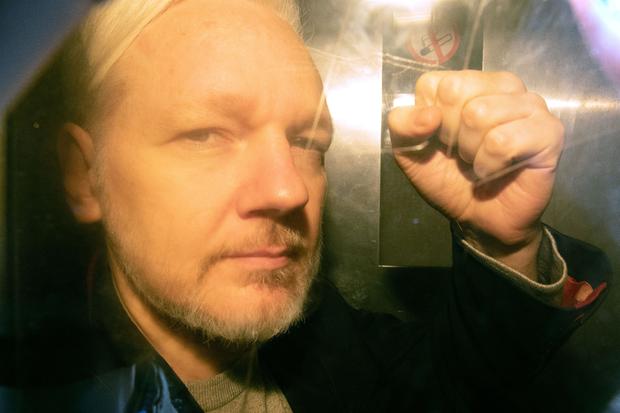
WikiLeaks founder Julian Assange arrives at court in London, May 1, 2019, to be sentenced for bail violation. He was sentenced to 50 weeks in prison. Getty

London — More than 60 doctors have written to British authorities asserting that WikiLeaks founder Julian Assange urgently needs medical treatment at a university hospital. The doctors said in a letter published Monday that Assange suffers from psychological problems including depression as well as dental issues and a serious shoulder ailment.

Assange is in Belmarsh Prison on the outskirts of London in advance of an extradition hearing set for February. He is sought by the U.S. on espionage charges relating to his WikiLeaks work.

The letter, distributed by WikiLeaks, was sent to Home Secretary Priti Patel, who heads up the British government agency in charge of law enforcement. It was also addressed to Patel's political counterpart from the opposition party, Shadow Home Secretary Diane Abbot.

Dr. Lissa Johnson of Australia, Assange's home country, said an independent medical assessment was needed to determine if Assange is "medically fit" to face legal proceedings.

In the letter, Johnson and the other doctors from a range of different countries warn that, in their opinion, if Assange does not receive the medical attention they say he requires, "we have real concerns, on the evidence currently available, that Mr Assange could die in prison. The medical situation is thereby urgent. There is no time to lose."

British foreign secretary says he wouldn't block Assange extradition

Last week Sweden dropped its investigation into an alleged rape by Assange because too much time has elapsed since the accusation was made over nine years ago. Assange has always denied the allegations made against him during a visit to Stockholm in August 2010.

"Nine years have gone," Swedish prosecutor Eve-Marie Persson said. "Time is a player in this. The oral evidence has weakened as time has passed."

Two months earlier, Assange was evicted from the Ecuadorean Embassy in London where he had been holed up for nearly seven years. He was immediately arrested and is currently serving a 50-week sentence in Britain for jumping bail in 2012.

Kristinn Hrafnsson, WikiLeaks editor-in-chief, said in a tweet that the focus should now move to the "threat" that Assange has been "warning about for years: the belligerent prosecution of the United States and the threat it poses to the First Amendment."

The Australian faces an 18-count indictment in the Eastern District of Virginia that accuses him of soliciting and publishing classified information and with conspiring with former Army intelligence analyst Chelsea Manning to crack a Defense Department computer password.

Let's block ads! (Why?)


https://news.google.com/__i/rss/rd/articles/CBMihAFodHRwczovL3d3dy5jYnNuZXdzLmNvbS9uZXdzL2p1bGlhbi1hc3NhbmdlLWNvdWxkLWRpZS1pbi1wcmlzb24taGVhbHRoLWhvc3BpdGFsLWRvY3RvcnMtb3Blbi1sZXR0ZXItdWstYXV0aG9yaXRpZXMtdG9kYXktMjAxOS0xMS0yNS_SAYgBaHR0cHM6Ly93d3cuY2JzbmV3cy5jb20vYW1wL25ld3MvanVsaWFuLWFzc2FuZ2UtY291bGQtZGllLWluLXByaXNvbi1oZWFsdGgtaG9zcGl0YWwtZG9jdG9ycy1vcGVuLWxldHRlci11ay1hdXRob3JpdGllcy10b2RheS0yMDE5LTExLTI1Lw?oc=5

2019-11-25 09:56:00Z
52780445318612

Navy Secretary Spencer fired for undermining military justice system in Gallagher Navy SEAL case - Fox News

Good morning and welcome to Fox News First. Here's what you need to know as you start your Monday morning ...

Navy secretary fired over handling, 'lack of candor' in Eddie Gallagher case; SEAL will keep Trident pin, Pentagon says
Defense Secretary Mark Esper fired Navy Secretary Richard Spencer on Sunday over his handling of the case of Navy SEAL Eddie Gallagher, who posed for a photo next to an Islamic State group terrorist’s corpse in Iraq. Spencer was fired for "lack of candor" -- for dishonesty and undermining the military justice system, the senior U.S. official told Fox News.

The controversy swirled around whether the Navy would strip Gallagher of his Trident pin, which is bestowed on SEALs to reinforce "good order and discipline" across the force, a source told Fox News. In July, Gallagher was cleared of serious 2017 war crimes charges in Iraq, including premeditated murder, but convicted on a lesser offense of posing with the corpse of an ISIS fighter. He was demoted from chief petty officer to a 1st class petty officer following his conviction. President Trump this month restored Gallagher’s rank and ordered that the Navy halt its internal review of his actions.

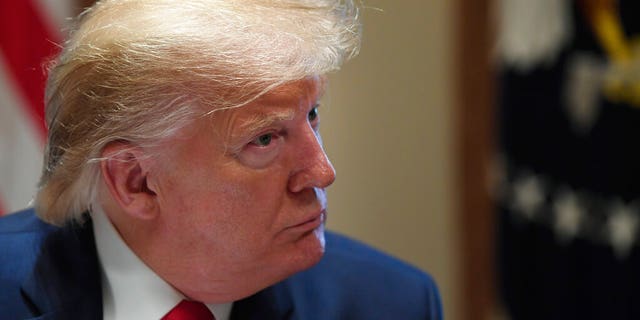
President Donald Trump listens during a meeting in the Cabinet Room of the White House in Washington, Friday, Nov. 22, 2019, on youth vaping and the electronic cigarette epidemic. (AP Photo/Susan Walsh)

President Donald Trump listens during a meeting in the Cabinet Room of the White House in Washington, Friday, Nov. 22, 2019, on youth vaping and the electronic cigarette epidemic. (AP Photo/Susan Walsh)

Esper and Chairman of the Joint Chiefs of Staff Mark Milley spoke to Trump on Friday with the intention of persuading the president to allow the Trident review board to go forward with its inquiry. Instead, Esper learned that Spencer previously and privately proposed to the White House – contrary to Spencer’s public position – to restore Gallagher’s rank and let him retire with his Trident pin, the Pentagon said. When Esper recently asked, Spencer confirmed that he'd never informed the defense secretary about his private proposal.

Spencer had asked Trump to let the Navy review board go forward, promising that the board would, in the end, allow Gallagher to keep his Trident and rank. He effectively suggested he would be willing to fix the results of the board, which is usually comprised of the defendant’s peers, a senior U.S. official told Fox News. Trump rejected the offer.

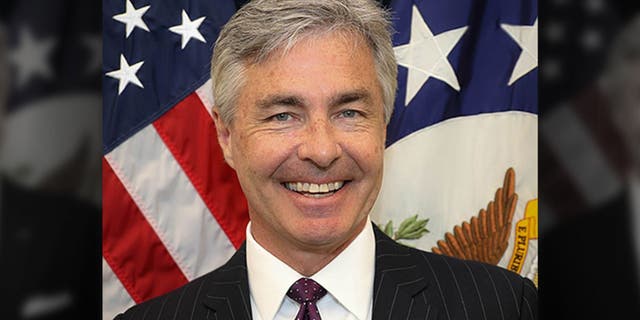
Esper ordered that Gallagher be allowed to keep his Trident pin, noting that it would be nearly impossible for him to get a fair hearing from the military in light of recent events, a senior official said. Trump late Sunday tweeted he would nominate Kenneth Braithwaite, the current U.S. ambassador to Norway and a retired Navy rear admiral, to replace Spencer. Click here for more on our top story.

Bloomberg officially enters 2020 presidential race - and his media company faces immediate ethics problems
Former New York City Mayor Michael Bloomberg officially launched his 2020 presidential campaign Sunday with the release of a one-minute video. However, his entry into the race has posed a dilemma for the news service that bears his name and editors at Bloomberg have already raised eyebrows with how they say they will approach their coverage.

Bloomberg Editor-in-Chief John Micklethwait announced Sunday it will not “investigate” the candidate or any of his Democratic rivals, and Bloomberg Opinion will no longer run unsigned editorials. The entry of Bloomberg into the presidential race also raises potential conflict-of-interest questions involving his extensive business holdings, which go well beyond his news service.

Nunes doubles down on promise to sue CNN and Daily Beast over impeachment coverage
Rep. Devin Nunes, R-Calif., who promised to sue CNN and the Daily Beast, told Fox News’ Maria Bartiromo this week on "Sunday Morning Futures" that the only way to hold the "corrupt" media accountable is to challenge them in federal court.

Nunes first threatened legal action against both news organizations Friday for their coverage of the Trump impeachment inquiry proceedings. Both outlets had published stories claiming the ranking member on the House Intelligence Committee had met with Ukrainian prosecutor Viktor Shokin in Vienna in 2018 to push for an investigation into Joe Biden and his son Hunter Biden. Both stories cite former Rudy Guliani associate Lev Parnas, who was indicted in October for conspiring to violate the ban on foreign donations, prompting Nunes to question the validity of the source.

MAKING HEADLINES:
Lee Zeldin on impeachment: 'Adam Schiff really does think that many Americans are idiots.'
Pro-democracy candidates triumph in Hong Kong after massive voter turnout.
Alabama sheriff fatally shot in head over loud music; suspect is son of a deputy: reports.

CLICK HERE TO GET THE FOX NEWS APP

TODAY'S MUST-READS
New York governor blasted for overreaction to Times Square bomb threat.
Washington Redskins' Dwayne Haskins takes selfie with fan, misses final snap.
Pink Taco founder Harry Morton found dead at 38.

THE LATEST FROM FOX BUSINESS
Airline catering workers to demonstrate at 18 airports during Thanksgiving travel.
China agrees to toughen intellectual property theft penalties, a key US priority.
Microsoft, Baker Hughes announce artificial intelligence partnership for oil and gas industry. 
 
#TheFlashback: CLICK HERE to find out what happened on "This Day in History."

SOME PARTING WORDS

Steve Hilton argues that everyday Americans face serious problems that Democrats are ignoring as they remain obsessed with impeaching President Trump.

Not signed up yet for Fox News First? Click here to find out what you're missing.

Click here to find out what's on Fox News and Fox News Radio today!
 
Fox News First is compiled by Fox News' Bryan Robinson. Thank you for making us your first choice in the morning! Enjoy your Monday! We'll see you in your inbox first thing Tuesday morning.

Let's block ads! (Why?)


https://news.google.com/__i/rss/rd/articles/CBMiS2h0dHBzOi8vd3d3LmZveG5ld3MuY29tL3VzL25hdnktc2VjcmV0YXJ5LXNwZW5jZXItdHJ1bXAtZ2FsbGFnaGVyLW5hdnktc2VhbNIBT2h0dHBzOi8vd3d3LmZveG5ld3MuY29tL3VzL25hdnktc2VjcmV0YXJ5LXNwZW5jZXItdHJ1bXAtZ2FsbGFnaGVyLW5hdnktc2VhbC5hbXA?oc=5

2019-11-25 09:59:18Z
52780444497515

Navy secretary Spencer fired for undermining military justice system in Gallagher Navy SEAL case - Fox News

Good morning and welcome to Fox News First. Here's what you need to know as you start your Monday morning ...

Navy secretary fired over handling, 'lack of candor' in Eddie Gallagher case; SEAL will keep Trident pin, Pentagon says
Defense Secretary Mark Esper fired Navy Secretary Richard Spencer on Sunday over his handling of the case of Navy SEAL Eddie Gallagher, who posed for a photo next to an Islamic State group terrorist’s corpse in Iraq. Spencer was fired for "lack of candor" -- for dishonesty and undermining the military justice system, the senior U.S. official told Fox News.

The controversy swirled around whether the Navy would strip Gallagher of his Trident pin, which is bestowed on SEALs to reinforce "good order and discipline" across the force, a source told Fox News. In July, Gallagher was cleared of serious 2017 war crimes charges in Iraq, including premeditated murder, but convicted on a lesser offense of posing with the corpse of an ISIS fighter. He was demoted from chief petty officer to a 1st class petty officer following his conviction. President Trump this month restored Gallagher’s rank and ordered that the Navy halt its internal review of his actions.

President Donald Trump listens during a meeting in the Cabinet Room of the White House in Washington, Friday, Nov. 22, 2019, on youth vaping and the electronic cigarette epidemic. (AP Photo/Susan Walsh)

President Donald Trump listens during a meeting in the Cabinet Room of the White House in Washington, Friday, Nov. 22, 2019, on youth vaping and the electronic cigarette epidemic. (AP Photo/Susan Walsh)

Esper and Chairman of the Joint Chiefs of Staff Mark Milley spoke to Trump on Friday with the intention of persuading the president to allow the Trident review board to go forward with its inquiry. Instead, Esper learned that Spencer previously and privately proposed to the White House – contrary to Spencer’s public position – to restore Gallagher’s rank and let him retire with his Trident pin, the Pentagon said. When Esper recently asked, Spencer confirmed that he'd never informed the defense secretary about his private proposal.

Spencer had asked Trump to let the Navy review board go forward, promising that the board would, in the end, allow Gallagher to keep his Trident and rank. He effectively suggested he would be willing to fix the results of the board, which is usually comprised of the defendant’s peers, a senior U.S. official told Fox News. Trump rejected the offer.

Esper ordered that Gallagher be allowed to keep his Trident pin, noting that it would be nearly impossible for him to get a fair hearing from the military in light of recent events, a senior official said. Trump late Sunday tweeted he would nominate Kenneth Braithwaite, the current U.S. ambassador to Norway and a retired Navy rear admiral, to replace Spencer. Click here for more on our top story.

Bloomberg officially enters 2020 presidential race - and his media company faces immediate ethics problems
Former New York City Mayor Michael Bloomberg officially launched his 2020 presidential campaign Sunday with the release of a one-minute video. However, his entry into the race has posed a dilemma for the news service that bears his name and editors at Bloomberg have already raised eyebrows with how they say they will approach their coverage.

Bloomberg Editor-in-Chief John Micklethwait announced Sunday it will not “investigate” the candidate or any of his Democratic rivals, and Bloomberg Opinion will no longer run unsigned editorials. The entry of Bloomberg into the presidential race also raises potential conflict-of-interest questions involving his extensive business holdings, which go well beyond his news service.

Nunes doubles down on promise to sue CNN and Daily Beast over impeachment coverage
Rep. Devin Nunes, R-Calif., who promised to sue CNN and the Daily Beast, told Fox News’ Maria Bartiromo this week on "Sunday Morning Futures" that the only way to hold the "corrupt" media accountable is to challenge them in federal court.

Nunes first threatened legal action against both news organizations Friday for their coverage of the Trump impeachment inquiry proceedings. Both outlets had published stories claiming the ranking member on the House Intelligence Committee had met with Ukrainian prosecutor Viktor Shokin in Vienna in 2018 to push for an investigation into Joe Biden and his son Hunter Biden. Both stories cite former Rudy Guliani associate Lev Parnas, who was indicted in October for conspiring to violate the ban on foreign donations, prompting Nunes to question the validity of the source.

MAKING HEADLINES:
Lee Zeldin on impeachment: 'Adam Schiff really does think that many Americans are idiots.'
Pro-democracy candidates triumph in Hong Kong after massive voter turnout.
Alabama sheriff fatally shot in head over loud music; suspect is son of a deputy: reports.

CLICK HERE TO GET THE FOX NEWS APP

TODAY'S MUST-READS
New York governor blasted for overreaction to Times Square bomb threat.
Washington Redskins' Dwayne Haskins takes selfie with fan, misses final snap.
Pink Taco founder Harry Morton found dead at 38.

THE LATEST FROM FOX BUSINESS
Airline catering workers to demonstrate at 18 airports during Thanksgiving travel.
China agrees to toughen intellectual property theft penalties, a key US priority.
Microsoft, Baker Hughes announce artificial intelligence partnership for oil and gas industry. 
 
#TheFlashback: CLICK HERE to find out what happened on "This Day in History."

SOME PARTING WORDS

Steve Hilton argues that everyday Americans face serious problems that Democrats are ignoring as they remain obsessed with impeaching President Trump.

Not signed up yet for Fox News First? Click here to find out what you're missing.

Click here to find out what's on Fox News and Fox News Radio today!
 
Fox News First is compiled by Fox News' Bryan Robinson. Thank you for making us your first choice in the morning! Enjoy your Monday! We'll see you in your inbox first thing Tuesday morning.

Let's block ads! (Why?)


https://news.google.com/__i/rss/rd/articles/CBMiS2h0dHBzOi8vd3d3LmZveG5ld3MuY29tL3VzL25hdnktc2VjcmV0YXJ5LXNwZW5jZXItdHJ1bXAtZ2FsbGFnaGVyLW5hdnktc2VhbNIBT2h0dHBzOi8vd3d3LmZveG5ld3MuY29tL3VzL25hdnktc2VjcmV0YXJ5LXNwZW5jZXItdHJ1bXAtZ2FsbGFnaGVyLW5hdnktc2VhbC5hbXA?oc=5

2019-11-25 09:38:40Z
52780444497515

In Hong Kong elections, big defeat for elites pressures Beijing to rethink approach - The Washington Post

Kin Cheung AP Pro-democracy supporters celebrate Monday after pro-Beijing politician Junius Ho lost his seat. Hong Kong’s election result marked a stunning repudiation of the Beijing-backed establishment after months of unrest.

HONG KONG — Election posters promoting the candidate for Mongkok North left no doubt about his affiliations: wearing all black, a yellow-hard-hat, respirator and goggles, he was firmly aligned with protesters seeking full democracy.

“Five demands, not one less,” read the banner, the mantra of the grass-roots uprising countering China’s tightening grip on Hong Kong.

In defeating the incumbent establishment candidate, Lucifer Siu contributed to a landslide win for the democracy camp in Hong Kong’s district council elections. A similar story unfolded citywide: a 23-year-old graduate beat a three-time incumbent in an establishment stronghold; a 25-year-old who crowdfunded his campaign ousted the vice-chairman of the main pro-Beijing party.

A record turnout of over 2.9 million voters delivered the pro-democracy camp control of 17 of 18 districts and over 80 percent of contested seats, the biggest electoral victory for the movement since Hong Kong’s handover from British rule in 1997. But it was also a rare chance for people within China to send their leaders a clear electoral message — that they want democracy, not overbearing control by Beijing, and they were prepared to look past protesters’ violence.

With this rebuke of its affiliates in the city, Beijing faces a choice between opening up politics as promised in Hong Kong’s mini-constitution, extending a crackdown on the pro-democracy protesters by the city’s police force and government, or trying to navigate a delicate middle path.

[Hong Kong’s pro-democracy parties sweep pro-Beijing establishment aside in local elections]

Beijing can continue to dig in, but would risk escalating and prolonging the conflict now that the electorate has spoken, said Ho-Fung Hung, an expert on the Chinese political economy and Hong Kong politics at the Johns Hopkins University’s School of Advanced International Studies.

“A wiser path is to replace Carrie Lam and reset the conversation,” he added, referring to Hong Kong’s chief executive.

Reacting to the outcome on Monday, Chinese state media blamed foreign forces, particularly the United States, for interfering. “China will respond tit-for-tat and resolutely counter any move by the U.S. that undermines China’s interests, and will never let them act willfully on Hong Kong affairs,” Xinhua News Agency said in an editorial.

Billy H.C. Kwok

AFP/Getty Images

Residents celebrate the defeat of Junius Ho, a pro-Beijing incumbent, outside a polling station early on Monday.

In a commentary, the nationalist Global Times tabloid called for “rational analysis,” noting that the unrest of recent months helped the democracy camp to mobilize support. “It is crucial to rationally interpret” the results, it said, “lest mobs should be emboldened by misreading them.”

The vote’s outcome surpassed even the most optimistic predictions among the pro-democracy camp, which had barely held 30 percent of district council seats previously.

[Day of rage plunges Hong Kong into turmoil after police shoot protester]

By midday Monday, pro-democracy parties had won 344 district council seats to the pro-Beijing camp’s 58, with independents winning 41 seats and nine constituencies still to declare, according to figures compiled by the South China Morning Post.

The district councils get to nominate 117 members to the 1,200-member election committee that chooses Hong Kong’s chief executive. That committee is typically dominated by pro-Beijing forces and sympathetic business interests, but pro-democracy forces will now have considerably more influence, to add to their existing support.

“It gives them probably not a majority but a meaningful chunk, and puts them in a position to be kingmakers,” said Antony Dapiran, a lawyer and author of books on Hong Kong’s protest movement.

Lam, Hong Kong’s embattled leader, said in a statement Monday that her government respects the election results and acknowledged “various analyses and interpretations.”

“Quite a few are of the view that the results reflect people’s dissatisfaction with the current situation and the deep-seated problems in society,” Lam added. “The Hong Kong government will listen to the opinions of members of the public humbly, and seriously reflect.”

Kin Cheung

AP

Candidates from the DAB, the main pro-Beijing political party, bow to apologize for their defeat in the local district council election in Hong Kong on Monday.

Susan Shirk, a China expert and former official in the Clinton administration who is now at the University of California, San Diego, said it was possible that Chinese leader Xi Jinping had not been receiving accurate information from lower-level officials on the public dissatisfaction in Hong Kong, despite months of protests.

“No one has wanted to give him bad news,” she said, describing the vote as a plebiscite on Beijing’s management of the financial hub. “The more than 70 percent of the Hong Kong public who voted in this election sent him a message he can’t ignore.”

Frank Pieke, director of the Mercator Institute for China Studies think-tank in Berlin, said China’s leaders must have been factoring in the possibility of a fairly heavy loss.

“Nevertheless it was so unequivocal, they must be scratching their heads and wondering ‘what are we going to do now?’” he said. “What they will have to do in Beijing is finally think about some concessions they will have to make.”

Pieke said those concessions did not necessarily have to be large, but could include, for example, an independent inquiry into allegations of brutality by Hong Kong police and protesters during the demonstrations.

There is no sign, however, that Beijing is prepared to grant Hong Kong the freedom to elect a government truly accountable to its own people, and one that could potentially represent the interests of the territory against those of the Communist Party, experts said.

Fazry Ismail

EPA-EFE/REX/Shutterstock

Prominent pro-Beijing lawmaker Regina Ip is escorted by police while surrounded by pro-democracy activists during a lunch time anti-government rally in central Hong Kong on Monday.

Hong Kong’s democratic bloc was quick to celebrate the victory, and its new status as the largest party in the district council, ending the dominance of the pro-Beijing Democratic Alliance for the Betterment and Progress of Hong Kong, or DAB, which fielded 181 candidates but only won 21 seats.

“The district council election fully shows that Hong Kong people will not accept the authoritarianism of the central government,” said Wu Chi-Wai, chairman of the democratic party. “The Hong Kong government must now seriously consider public opinion.”

Wu added that his party will push for Lam’s resignation and the reform of Hong Kong’s government, accountability for the Hong Kong police force and an overhaul of the political system.

[Attackers wielding Chinese flags bash Hong Kong protesters]

The DAB, meanwhile, acknowledged in a news conference that its showing was a record low. The party, which has the support of Beijing’s liaison office in the city and maintains close links to the Chinese Communist Party, explicitly backed a now-scrapped extradition bill that would have allowed criminal suspects to be sent to mainland China for trial. That bill was the spark for the discontent that has since morphed into a broader pro-democracy uprising.

“We have faced many challenges,” said Starry Lee, the party’s leader, who narrowly won reelection against Leung Kwok-hung, a Marxist social activist known as Long Hair. “We do not want to find any excuses for our loss,” Lee said, vowing to listen to Hong Kong communities and open a dialogue.

In downtown Hong Kong, dozens of officer workers wearing masks emerged from skyscrapers to celebrate the result. A man had popped a bottle of champagne and was distributing it in plastic cups to the crowd.

The celebrations kicked off when results first started trickling in early Monday, particularly in the constituency where Junius Ho, a stridently pro-Beijing politician, lost his seat.

In July, Ho was seen shaking hands with members of a mob on the night they attacked pro-democracy protesters in a subway station. He has threatened to kill advocates of Hong Kong independence, and recently used vulgar language toward a pro-democracy lawmaker. He has denied culpability in the mob attacks and says his threats have been taken out of context. He was also attacked with a knife and lightly injured during campaigning.

Anna Kam in Hong Kong and Liu Yang in Beijing contributed to this report.

Read more

Hong Kong’s pro-democracy parties sweep pro-Beijing establishment aside in elections

‘We are in a war’: Hong Kong accountant becomes street fighter by night

Hong Kong bars democracy activist Joshua Wong from elections

Today’s coverage from Post correspondents around the world

Like Washington Post World on Facebook and stay updated on foreign news

Let's block ads! (Why?)


https://news.google.com/__i/rss/rd/articles/CBMivwFodHRwczovL3d3dy53YXNoaW5ndG9ucG9zdC5jb20vd29ybGQvYXNpYS1wYWNpZmljL2luLWhvbmcta29uZy1lbGVjdGlvbnMtYmlnLWRlZmVhdC1mb3ItZWxpdGVzLXByZXNzdXJlcy1iZWlqaW5nLXRvLXJldGhpbmstYXBwcm9hY2gvMjAxOS8xMS8yNS9lZjdiMWRiYy0wZjI5LTExZWEtOTI0Yy1iMzRkMDliYmM5NDhfc3RvcnkuaHRtbNIBzgFodHRwczovL3d3dy53YXNoaW5ndG9ucG9zdC5jb20vd29ybGQvYXNpYS1wYWNpZmljL2luLWhvbmcta29uZy1lbGVjdGlvbnMtYmlnLWRlZmVhdC1mb3ItZWxpdGVzLXByZXNzdXJlcy1iZWlqaW5nLXRvLXJldGhpbmstYXBwcm9hY2gvMjAxOS8xMS8yNS9lZjdiMWRiYy0wZjI5LTExZWEtOTI0Yy1iMzRkMDliYmM5NDhfc3RvcnkuaHRtbD9vdXRwdXRUeXBlPWFtcA?oc=5

2019-11-25 08:48:00Z
52780447335136

Hong Kongers show not only the depths of their discontent, but also their power - CNN

The landslide victory for pro-democracy candidates in Sunday's district council elections is a stinging rebuke to the city's government -- and an example of what protesters can achieve given the opportunity.
By avoiding unrest and trusting voters to support them, protesters scored a bigger victory than if they had disrupted the polls. They also demonstrated that far from devolving into anarchy, as some on the government side have claimed, the protest movement can -- unlike the police, Beijing or the city's leaders -- control when and where the unrest takes place.
Sunday saw beautiful blue skies, long queues and one of the calmest days in Hong Kong since the protests began in June. Far from the visions of destruction and anger that have dominated coverage recently, this was a city that worked. And judging by the results, it worked in spite of, not because of, its government.
According to public broadcaster RTHK, opposition candidates took nearly 90% of the seats up for grabs. Going into Sunday's elections, all 18 district councils were controlled by pro-Beijing parties. As counting wrapped up Monday, all but one had flipped to overall pro-democratic control. The only outlier, the Islands council, includes a number of appointed members -- even then, pro-democracy candidates took a majority of the elected seats.
In this, the elections were a demonstration of people power in more ways than one. Protesters showed they had the discipline to let people speak, and they were rewarded with a resounding vote of confidence. The question now is whether the government will listen.

Stunning results

District council elections should be boring. Only in a system like Hong Kong's, where other avenues for democracy have been increasingly stifled, could they gain such outsized importance.
Sunday's vote was framed as a de facto referendum on the protests by all sides. With turnout high from the moment polls opened -- and overtaking the 2015 total by midday -- many were predicting a win for pro-democracy candidates, but few expected the utter drubbing they delivered.
From the heart of the city's financial district, to outlying islands and working-class estates in Kowloon, pro-democracy and anti-government candidates turfed out established pro-Beijing councilors.
Even the Democratic Alliance for the Betterment and Progress of Hong Kong (DAB), the city's largest pro-Beijing party and possessor of one of the most effective get-out-the-vote operations, could not withstand the tide of anti-government feeling. Less than 20% of the party's candidates were victorious — 21 out of 181 -- and many leading figures, including vice-chairman Holden Chow, were turfed out of their seats.
Speaking to CNN ahead of the vote, Chow said he expected a defeat but that pro-establishment parties would bounce back. Asked why Hong Kongers should be allowed to vote for local representatives but not the city's leader, he said "we want democracy which is pragmatic and fits Hong Kong's situation, and would not ruin our relationship with the central government."
Beyond just the symbolism of Sunday's vote, control over a majority of district councils gives pro-democracy members the right to select 117 of the 1,200-member "broadly representative" committee that chooses the city's leader. This means the opposition will have more of a say in who succeeds embattled current leader, Carrie Lam, in 2022.

Will the government listen?

With the elections wrapped up and the district councils transformed, the fight to frame the narrative will now begin.
On the government side, the scale of the losses for pro-Beijing candidates and the fact that many prominent establishment figures cast this as a referendum on the protests will make avoiding the blame difficult.
From an extradition bill to a political crisis: A guide to the Hong Kong protests
For months now, the government has refused to brook any political settlement, framing the protests as a law and order issue and putting the onus on the city's beleaguered police force to bring them under control. The theory was that as protests became more disruptive and violent, they would alienate many moderates to the government's benefit.
The supposed "silent majority" of anti-protest voters failed to show up on Sunday however. If anything, what was previously understated was the degree of anti-government feeling, not anti-protest sentiment. The pressure will now be on leader Lam to come up with some kind of new tactic or solution to the protesters' "five demands," or risk even larger protests from a reinvigorated movement.
Those five demands are: withdraw the extradition bill that kicked off the entire crisis (since achieved); launch an independent inquiry into allegations of police brutality; retract any categorization of a protest on June 12 as a "riot"; amnesty for arrested protesters; and introducing universal suffrage for how the Chief Executive and Legislative Council are elected.
Joseph Cheng, a professor of political science at the City University of Hong Kong, said the government needs to seriously consider the risk of failing to effectively respond to the elections -- even if it remains unwilling to brook any compromise.
"There must be a process of reconciliation, a dialogue with the pro-democracy movement," Cheng added. "But if no such responses are made in the near future, then the protesters will return to protests and clashes with police and so on."
In a terse statement Monday, Lam said her government "respects the election results."
"There are various analyses and interpretations in the community in relation to the results, and quite a few are of the view that the results reflect people's dissatisfaction with the current situation and the deep-seated problems in society," she added. "(The government) will listen to the opinions of members of the public humbly and seriously reflect."

Moving forward

Protesters cannot afford to be too complacent about Sunday's results. While they may seem a full-throated approval of the movement, it will likely be impossible to know whether people voted in favor of pro-democracy candidates or for the protests themselves, or simply to send a message to the government.
Sunday's results also indicate some desire for reorienting the protests' demands. While some victorious candidates did mention an inquiry into alleged police brutality -- by far the chief demand since the extradition bill was officially withdrawn in September -- the majority ran on a broader democracy plank, and it is this that connects all opposition voters, and even some in the pro-establishment camp.
Movement towards full universal suffrage has been stalled since 2014, when Beijing's refusal to allow truly free elections for the city's leader sparked the Umbrella Movement.
Of the five demands, the call to restart the political reform process has been the least emphasized -- but it is also the only one which looks forward and seeks to achieve fundamental change. Even calls for investigating the police only look at past alleged crimes, not a way to change the makeup or behavior of the force in future.
The lack of trust in the city's leader and legislature due to their undemocratic selection is at the root of the protests -- Lam was not trusted to oversee extraditions, and elected lawmakers cannot exercise effective oversight of police -- but convincing Beijing to allow any changes to this system is perhaps the most difficult of all the demands.
It has been pointed out many times that had Lam responded to the initial mass protests against the extradition bill, she might have avoided the entire crisis. Equally, had an independent inquiry been announced months ago when the bill was finally withdrawn, it might have ended there.
Now voters have shown not only the depths of the discontent, but also their power. And it may be the only thing that can truly satisfy them is overhauling the entire system.

Let's block ads! (Why?)


https://news.google.com/__i/rss/rd/articles/CBMiZWh0dHBzOi8vd3d3LmNubi5jb20vMjAxOS8xMS8yNS9hc2lhL2hvbmcta29uZy1kaXN0cmljdC1jb3VuY2lsLWVsZWN0aW9ucy1wcm90ZXN0cy1pbnRsLWhuay9pbmRleC5odG1s0gFpaHR0cHM6Ly9hbXAuY25uLmNvbS9jbm4vMjAxOS8xMS8yNS9hc2lhL2hvbmcta29uZy1kaXN0cmljdC1jb3VuY2lsLWVsZWN0aW9ucy1wcm90ZXN0cy1pbnRsLWhuay9pbmRleC5odG1s?oc=5

2019-11-25 07:53:00Z
52780447335136

Minggu, 24 November 2019

Live updates: Trump impeachment inquiry - CNN International

Photo by Andrew Harrer-Pool/Getty Images

The House Intelligence Committee wrapped its testimonies in the impeachment inquiry into President Trump this week.

Here's a breakdown of who spoke on what days and what each person had to say:

Tuesday, Nov. 19: Lt. Col. Alexander Vindman, Jennifer Williams, an aide to Vice President Mike Pence, Kurt Volker, former US special envoy to Ukraine, and Tim Morrison, former National Security Council aide

  • Vindman and Williams described the July 25 call: They said the July 25 call between President Trump and the Ukrainian leader was not “perfect.” The President was acting on his own in the July call in asking for the investigations and was provided with no talking points to back that up.
  • What Volker admitted: He told lawmakers that he drew a “sharp distinction” between Burisma and Biden, but admits that he was wrong to view them separately. “In hindsight, I now understand that others saw the idea of investigating possible corruption involving the Ukrainian company, “Burisma,” as equivalent to investigating former Vice President Biden. I saw them as very different. The former being appropriate and unremarkable, the latter being unacceptable,” Volker said in his opening statement. “In retrospect, I should have seen that connection differently, and had I done so, I would have raised my own objections.”

Wednesday, Nov. 20: US Ambassador to the European Union Gordon Sondland, Laura Cooper, a deputy assistant secretary of defense, and David Hale, the under secretary of State for political affairs

  • Sondland pressed Ukraine at Trump's direction: In his opening statement and throughout his testimony, Sondland said he was working with Trump's attorney Rudy Giuliani on Ukraine matters at the "express direction of the President of the United States." Sondland recounted several conversations between himself and Trump about Ukraine opening two investigations: one into Burisma, a company where former Vice President Joe Biden's son was on the board, and another into conspiracies about Ukrainian meddling in the 2016 US election.
  • Sondland implicated Pence, Pompeo and Mulvaney: Republicans have argued that Giuliani could have been running a shadow foreign policy without the involvement or knowledge of other senior White House and State Department officials, but Sondland contradicted that several times in his testimony. He said "everyone" in the State Department was aware. He also implicated key White House officials, including Vice President Mike Pence, Secretary of State Mike Pompeo and acting White House chief of staff Mick Mulvaney, who also directs the Office of Management and Budget.
  • Cooper showed Ukraine knew about aide issues in July: She testified that Ukrainian officials knew as early as July 25 that there was an issue with US aid to the country. This undercuts a key Republican rebuttal to accusations of a "quid pro quo" linking the aid to investigations into President Trump's political rivals. In their defense of Trump, Republicans have alleged that no bribery could exist if the Ukrainians weren't aware the aid was being held.

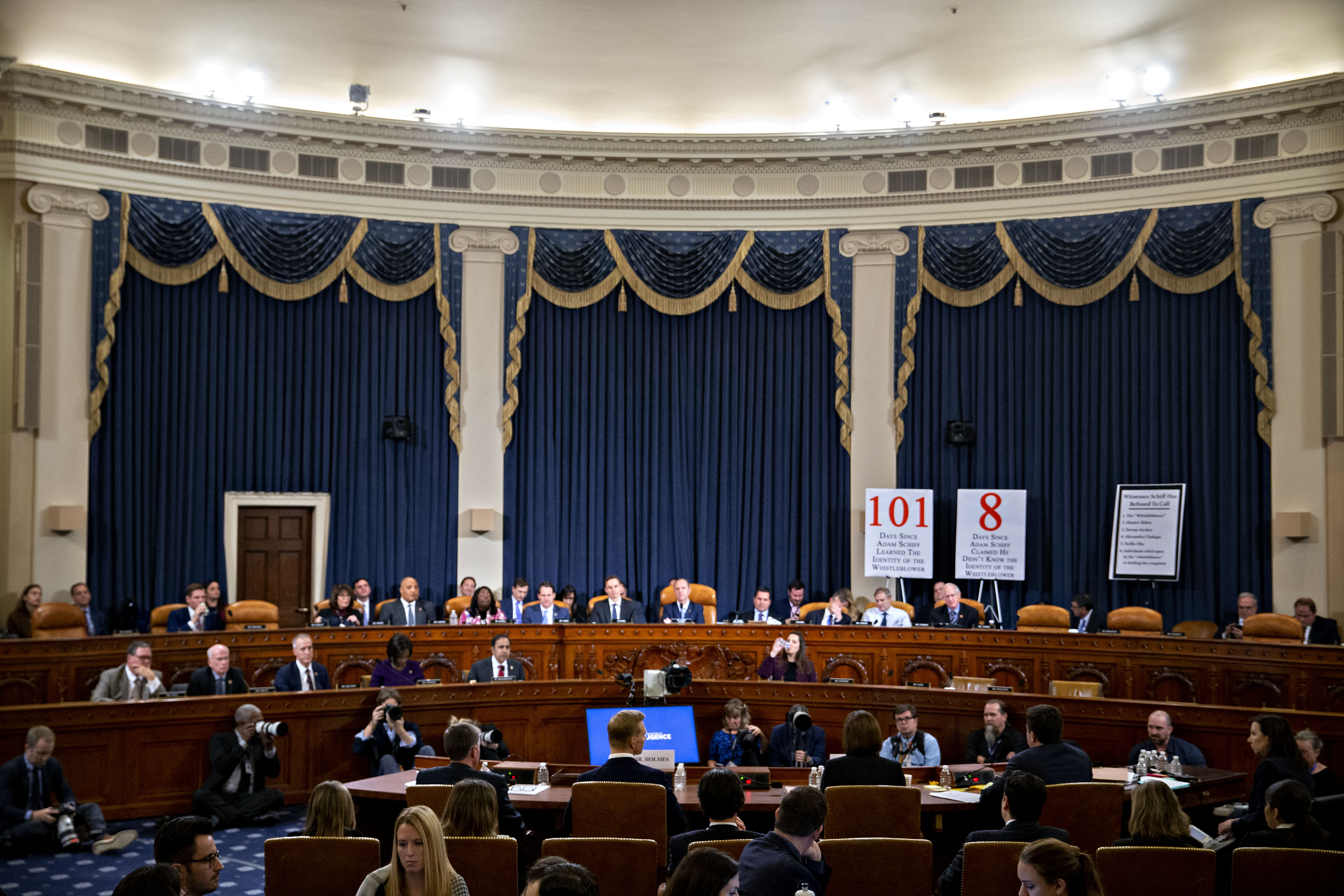
Thursday, Nov. 21: Fiona Hill, the former White House Russia expert, and David Holmes, the counselor for political affairs at the US Embassy in Ukraine

  • Pressure on Ukraine: Holmes undercut the GOP's defense that there was no pressure on Ukraine. He testified that the Ukrainians felt pressure to move ahead with probes. He said the Ukrainians want to keep White House happy because “they still need us now.” 
  • "Not credible": Hill said she found Ambassador Gordon Sondland’s testimony “not credible” when he claimed that it took him many months to connect the Ukrainian energy company Burisma to former Vice President Joe Biden. Both Holmes and Hill make clear it was obvious Burisma was about the Bidens. Sondland and Kurt Volker, the former US special envoy to Ukraine, claimed to be clueless and uncurious about why this was the one company the President wanted investigated.

CNN's Phil Mattingly, Lauren Fox, Manu Raju and Jeremy Herb contributed to this report.

Let's block ads! (Why?)


https://news.google.com/__i/rss/rd/articles/CBMiUGh0dHBzOi8vd3d3LmNubi5jb20vcG9saXRpY3MvbGl2ZS1uZXdzL2ltcGVhY2htZW50LWlucXVpcnktMTEtMjQtMjAxOS9pbmRleC5odG1s0gEA?oc=5

2019-11-24 13:32:00Z
52780440506525